The Medieval Centre
A reconstructed medieval market town on Falster where staff work the crafts, fire the trebuchets and sail replica ships through the summer.
Updated 19 October 2026
The Medieval Centre outside Nykobing Falster is a working reconstruction of a small Danish market town of about 1400, built from archaeological and documentary evidence rather than guesswork. Staff and volunteers in period clothing run the smithy, the pottery, the kitchen and the boatyard, and the site is best known for its full-size working trebuchets, loaded and fired most days in season. Replica ships lie at the wooden quay and sail on the water. There is a manor house, a tavern kitchen, animals and craft workshops, and the tone stays closer to experimental archaeology than to costume entertainment.
History
The centre began with the reconstruction of a medieval siege engine, a trebuchet, built for the 700th anniversary of Nykøbing Falster in 1989; the experiment ran for three weeks and drew thousands of visitors. Given that interest, a trial project called the Medieval Technology Centre ran for two months in the summer of 1991, with workshops and a kitchen tent around the trebuchet, and the Middle Ages Centre was founded as a private institution in 1992. In 1994 a donation from the non-profit Arbejdsmarkedets Feriefond made it possible to build a whole settlement, with houses, tournament lists, a harbour and an entrance building, and one major new project has been added each year since. A technology park of full-size medieval inventions opened in 2013, among them a car built from a drawing by the Italian engineer Giovanni Fontana, and in 2014 a war wagon based on a manuscript at Schloss Wolfegg joined the daily display of siege engines (Wikipedia, Middelaldercentret).
What to look for
- The trebuchets - full-size working machines fired most days in season.
- The craft workshops - the smithy, pottery, rope walk and kitchen at work.
- The replica ships - medieval boats built on site and sailed on the water.
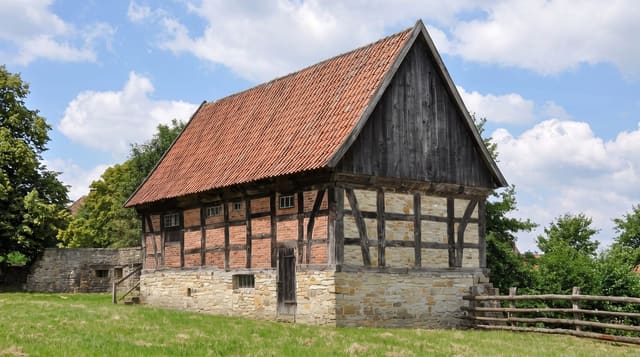
- The market town - timber and daub houses laid out as a working settlement.
When to go
Roughly May to September, and closed for much of the rest of the year, so check the dates before travelling. The programme is fullest in July and around the annual medieval market, which is also the busiest week. Wear boots: the site is grass and earth and holds water badly after rain.
Things to know
It is seasonal, and out of season there is simply nothing open. The site is spread over wet ground with limited shelter. Ticket prices are family scale and the food on site is basic. Adults travelling without children may find the pace slow, and the daily programme carries the visit, so arriving late means missing most of it.
Nearby
Nykobing Falster is a short drive; the beaches at Marielyst run down the east coast of the island.
Key facts
Source: Wikidata, item Q10659122, read on 18 October 2026.
What to pack for The Medieval Centre
Chosen from what this place is for. Tap a kit for the full checklist.
- Reef-safe sunscreen - High SPF that will not bleach the coral you are swimming over. Find on Amazon
- Comfortable walking shoes - Sightseeing means kilometres of pavement and cobbles daily. Find on Amazon
- Quick-dry towel - A microfibre towel packs small and dries in minutes. Find on Amazon
- A slim anti-theft daypack - Zips that close properly; keep it in front in crowds and on transit. Find on Amazon
Some links on this page are Amazon affiliate links - if you buy through them we may earn a small commission at no extra cost to you.
All packing kitsPlan your trip
Where to start if The Medieval Centre is going on the list.
Booking links on this page are affiliate links - if you book through them we may earn a small commission at no extra cost to you. It never changes what we write about a place.
Opening times, ticket prices and seasonal closures change - check the official source before you go: official site.