Assistens Cemetery
A walled Norrebro burial ground used as a public park, holding Hans Christian Andersen and Kierkegaard.
Updated 31 August 2026
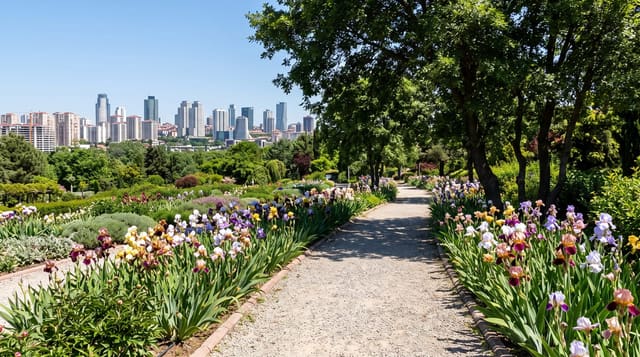
Assistens was opened in 1760 outside the city walls as an overflow burial ground for the poor of central Copenhagen, and it became fashionable in the nineteenth century, filling with the graves of the people who made Danish cultural life: Hans Christian Andersen, Soren Kierkegaard, Niels Bohr, the painter Christen Kobke, the sculptor Bertel Thorvaldsen's circle, and later the jazz musician Ben Webster, who died in Copenhagen. What makes it unusual is how it is used. It is still a working cemetery, but Copenhageners treat it as a park: people run, cycle, picnic, sunbathe and read on the grass between the graves under mature limes and chestnuts, which visitors from other countries often find startling and locals consider entirely normal.
What you'll find
- Hans Christian Andersen's grave - the most visited stone in the cemetery.
- Kierkegaard's family plot - the philosopher buried with his relatives.
- Niels Bohr's grave - the physicist among the scientists' section.
- A cemetery used as a park - picnics and sunbathing between the stones.
When to go
April to October, and particularly late spring when the trees come into leaf. Two hours. It opens early and closes at dusk, earlier in winter. Weekends bring the local crowds who use it as a lawn.
Good to know
It is a working cemetery with funerals and mourners; the park use is accepted but noise and photography around a service are not. Finding specific graves takes a map, available at the gates. Paths are gravel and uneven. Gates close early in winter.
Nearby
Norrebro's cafes are around it; Superkilen is a short walk north.
What to pack for Assistens Cemetery
Chosen from what this place is for. Tap a kit for the full checklist.
- Comfortable walking shoes - Sightseeing means kilometres of pavement and cobbles daily. Find on Amazon
- A slim anti-theft daypack - Zips that close properly; keep it in front in crowds and on transit. Find on Amazon
- A refillable water bottle - Many cities have public fountains; save money and plastic. Find on Amazon
- A light layer + compact umbrella - For museum air-con and a sudden shower. Find on Amazon
Some links on this page are Amazon affiliate links - if you buy through them we may earn a small commission at no extra cost to you.
All packing kitsPlan your trip
Where to start if Assistens Cemetery is going on the list.
Booking links on this page are affiliate links - if you book through them we may earn a small commission at no extra cost to you. It never changes what we write about a place.
Opening times, ticket prices and seasonal closures change - check the official source before you go: official site.