The Lednice-Valtice Cultural Landscape
A UNESCO-listed designed landscape of some three hundred square kilometres, shaped by one noble family into parkland dotted with palaces, temples and a minaret.
Updated 18 October 2026
AI illustration
UNESCO World Heritage
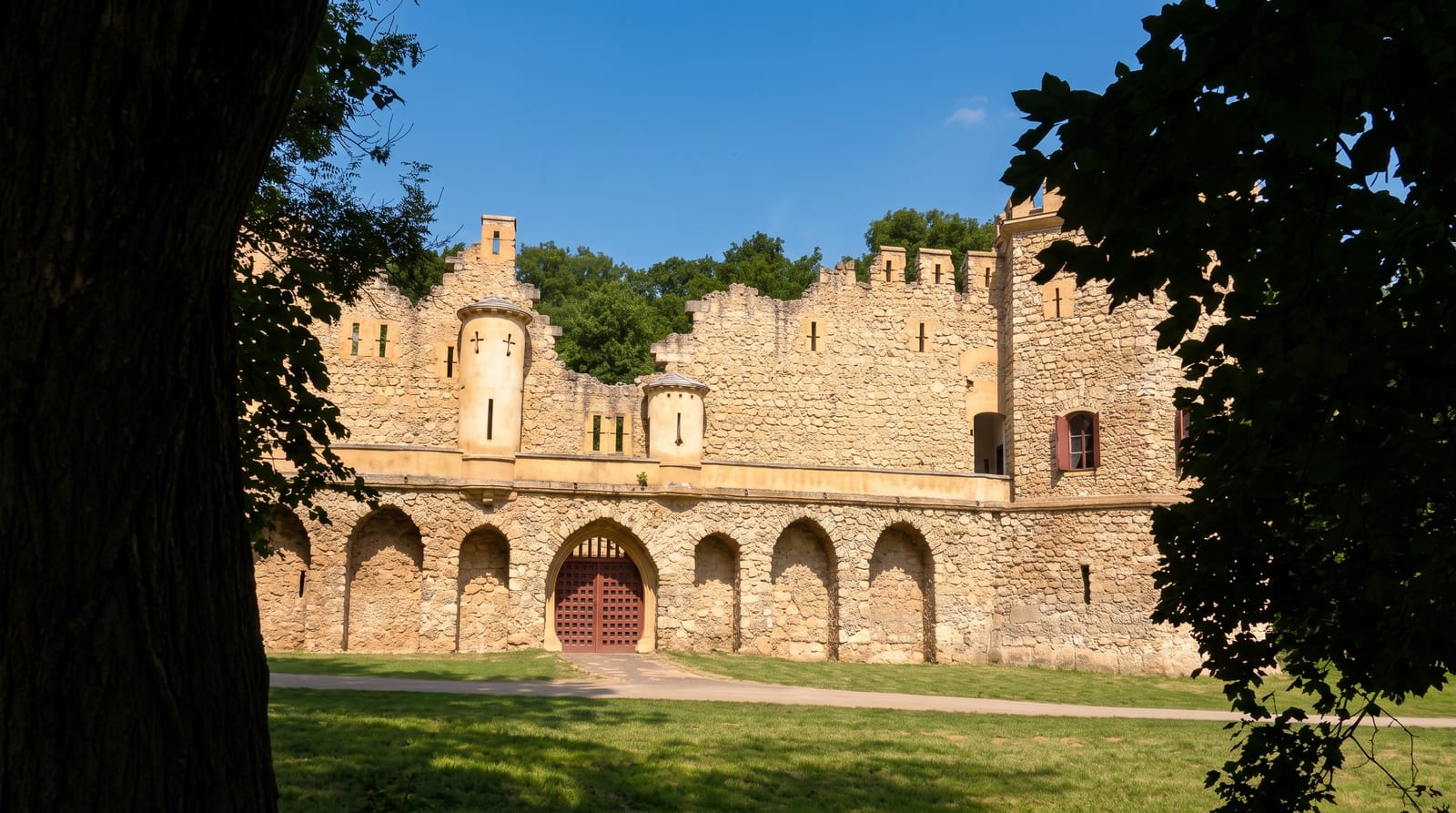
Over several centuries the Liechtenstein family reshaped a huge stretch of South Moravia into a single composed landscape, planting woods, digging lakes, laying avenues and scattering follies across some three hundred square kilometres, which makes it one of the largest designed landscapes anywhere and a World Heritage Site. Its two poles are the palaces: Lednice, rebuilt in the nineteenth century in an extravagant neo-Gothic style with a vast palm house of iron and glass, and Valtice, a solid baroque residence that was the family's main seat. Between them run avenues and cycle paths linking a set of romantic follies built as points in the composition, among them a working minaret some sixty metres tall from which you can look out over the whole park, a mock ruin, a colonnade on a ridge, and various temples and hunting lodges. It is a landscape to cycle through rather than merely visit.
History
The House of Liechtenstein acquired Valtice Castle in 1249, and it stayed their principal residence for 700 years, until 1939; Lednice, a fortified manor of the Valtice estate from the 14th century, was enlarged into a palace from 1680 and redesigned in Tudor Gothic Revival style between 1846 and 1858 by Prince Aloys II. Between the 17th and 20th centuries the princes turned their two estates into one great designed park, linked in 1715 by a 7-kilometre avenue, and in the 19th century reshaped it as an English landscape park, with the Austrian-Bohemian border running through it until 1919, when Valtice too became part of Czechoslovakia. In 1996 the 283-square-kilometre landscape was inscribed as a World Heritage Site as a cultural landscape designed by a single family (Wikipedia, Lednice-Valtice Cultural Landscape).
What you'll find
- Lednice Palace and palm house - the neo-Gothic residence and its iron-and-glass greenhouse.
- Valtice Palace - the baroque seat of the family at the other pole of the park.
- The Minaret - the tall folly with a climbable viewing gallery over the parkland.
- The avenues and follies - the temples, colonnade and mock ruin linking the composition.
When to go
April to October, when the palaces open and the parkland is green; spring and early autumn are loveliest for cycling between the follies. The wine harvest in September and October adds cellars and festivals to the region. Palace interiors are seen on guided tours with set times and close in winter.
What to expect
The scale is the point and also the problem: the follies are scattered kilometres apart, so without a bicycle or a car you will see only Lednice and its immediate park. Palace interiors are visited on timed guided tours, often in Czech with a printed translation, which some find slow. In peak summer Lednice is very busy with Czech families. The minaret's stairs are narrow and steep.
Nearby
The Moravian wine villages of Mikulov and Valtice surround it; Vienna is about an hour and a half south.
What to pack for The Lednice-Valtice Cultural Landscape
Chosen from what this place is for. Tap a kit for the full checklist.
- Padded shorts - The one thing that makes a full day in the saddle bearable. Find on Amazon
- Comfortable walking shoes - Sightseeing means kilometres of pavement and cobbles daily. Find on Amazon
- Modest clothing - Shoulders and knees covered - the single most common requirement. Find on Amazon
- Helmet - Bring your own if you have a good one; rentals vary wildly. Find on Amazon
Some links on this page are Amazon affiliate links - if you buy through them we may earn a small commission at no extra cost to you.
All packing kitsPlan your trip
Where to start if The Lednice-Valtice Cultural Landscape is going on the list.
Booking links on this page are affiliate links - if you book through them we may earn a small commission at no extra cost to you. It never changes what we write about a place.
Opening times, ticket prices and seasonal closures change - check the official source before you go: official site.