The Hato Caves
A limestone world beneath the island - a network of ancient caves near Willemstad, of dramatic stalactites and stalagmites, underground pools, colonies of fruit bats and centuries-old indigenous rock drawings, explored on guided walks.
Updated 19 October 2026
AI illustration
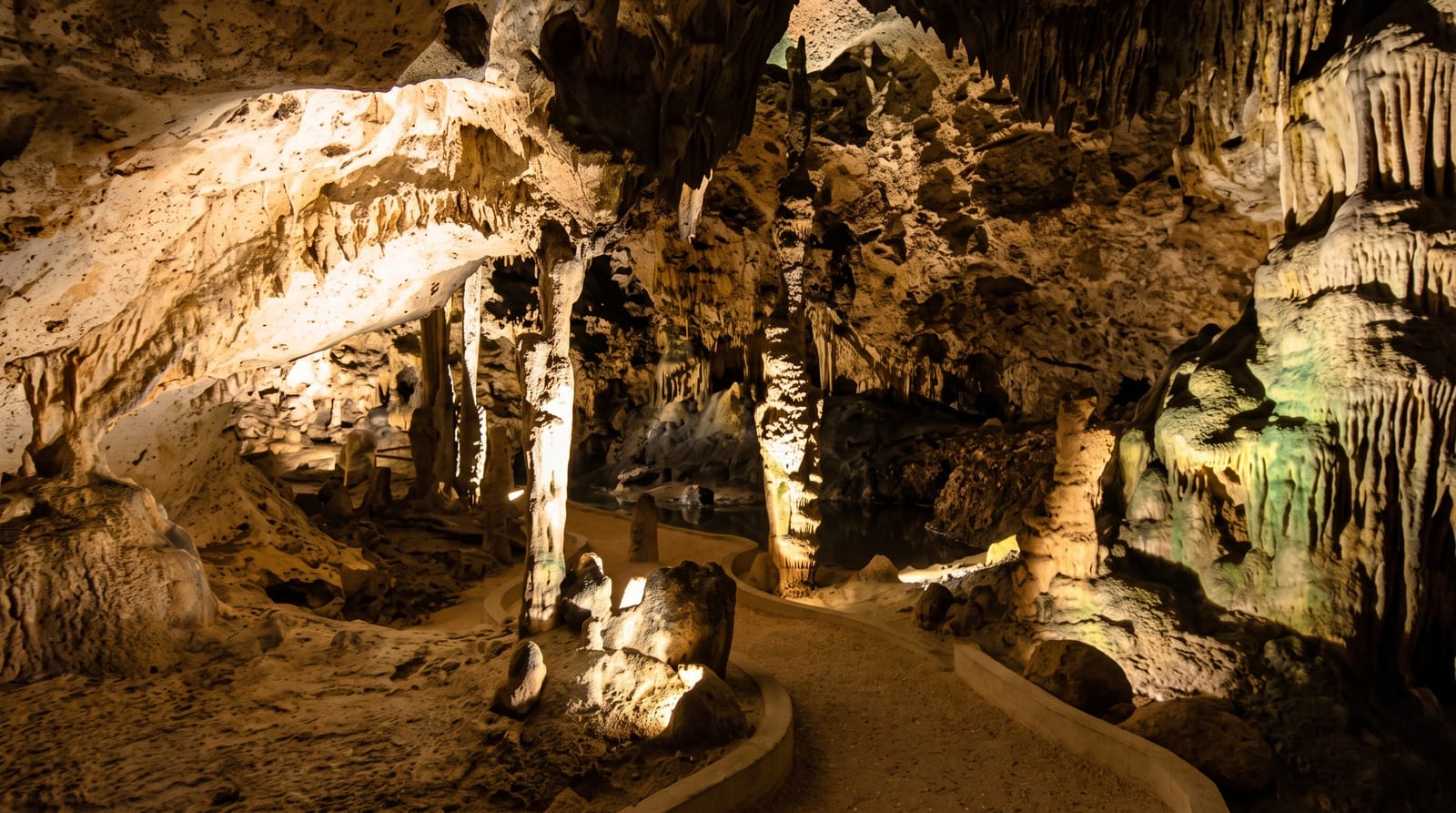
The Hato Caves, in the limestone hills near Willemstad and the airport, are one of Curaçao's most popular land attractions, a network of ancient caverns formed over hundreds of thousands of years when the island rose from the sea. Explored on guided walks, the caves reveal dramatic formations of stalactites and stalagmites, flowing curtains of rock, underground pools and chambers with evocative names, home to colonies of harmless fruit bats. The caves also preserve centuries-old rock drawings left by the island's indigenous Arawak people, adding a layer of human history to the natural spectacle beneath the ground.
History
The caves were formed in marine coral limestone that built up over millions of years and, once the sea level fell, was worn into caverns by rain and karst processes; they run about 240 metres and cover 4,900 square metres. Their earliest known users, about 1,500 years ago, were Arawak and Caiquetio people, who also buried their dead here and left the many petroglyphs and drawings on the walls. Before slavery was abolished, people escaping from slavery hid in them. The caves have been open to the public as a show cave since 1991 (Wikipedia, Hato Caves).
What's there
- The cave formations - the stalactites, stalagmites and rock curtains.
- The underground pools - the still chambers and pools.
- The fruit bats - the colonies living in the caves.
- The Arawak rock drawings - the ancient indigenous art.
When to go
Year-round; the caves stay cool and comfortable whatever the weather outside, making them a good option on a hot day, and are explored on regular guided tours. Being close to Willemstad and the airport, they are easily combined with the city or a beach day.
Before you go
The caves are explored only on a set guided tour along a fixed route rather than freely, the walkways can be humid and slippery, and it is a relatively short, family-oriented attraction rather than an extensive caving adventure; photography of the bats is sometimes restricted. As an easily reached, cool and atmospheric glimpse of the island's underground world, with its formations, bats and ancient indigenous rock art, though, the Hato Caves are an enjoyable and interesting stop.
Nearby
Willemstad, the beaches and the Christoffel park are within reach.
Key facts
Source: Wikidata, item Q5681711, read on 18 October 2026.
What to pack for The Hato Caves
Chosen from what this place is for. Tap a kit for the full checklist.
- Reef-safe sunscreen - High SPF that will not bleach the coral you are swimming over. Find on Amazon
- Head torch + spare batteries - Hands-free light is essential; caves are truly dark. Find on Amazon
- Strong insect repellent - DEET or picaridin; the jungle is where bites and disease risk are highest. Find on Amazon
- Quick-dry towel - A microfibre towel packs small and dries in minutes. Find on Amazon
Some links on this page are Amazon affiliate links - if you buy through them we may earn a small commission at no extra cost to you.
All packing kitsPlan your trip
Where to start if The Hato Caves is going on the list.
Booking links on this page are affiliate links - if you book through them we may earn a small commission at no extra cost to you. It never changes what we write about a place.
Opening times, ticket prices and seasonal closures change - check the official source before you go: official site.