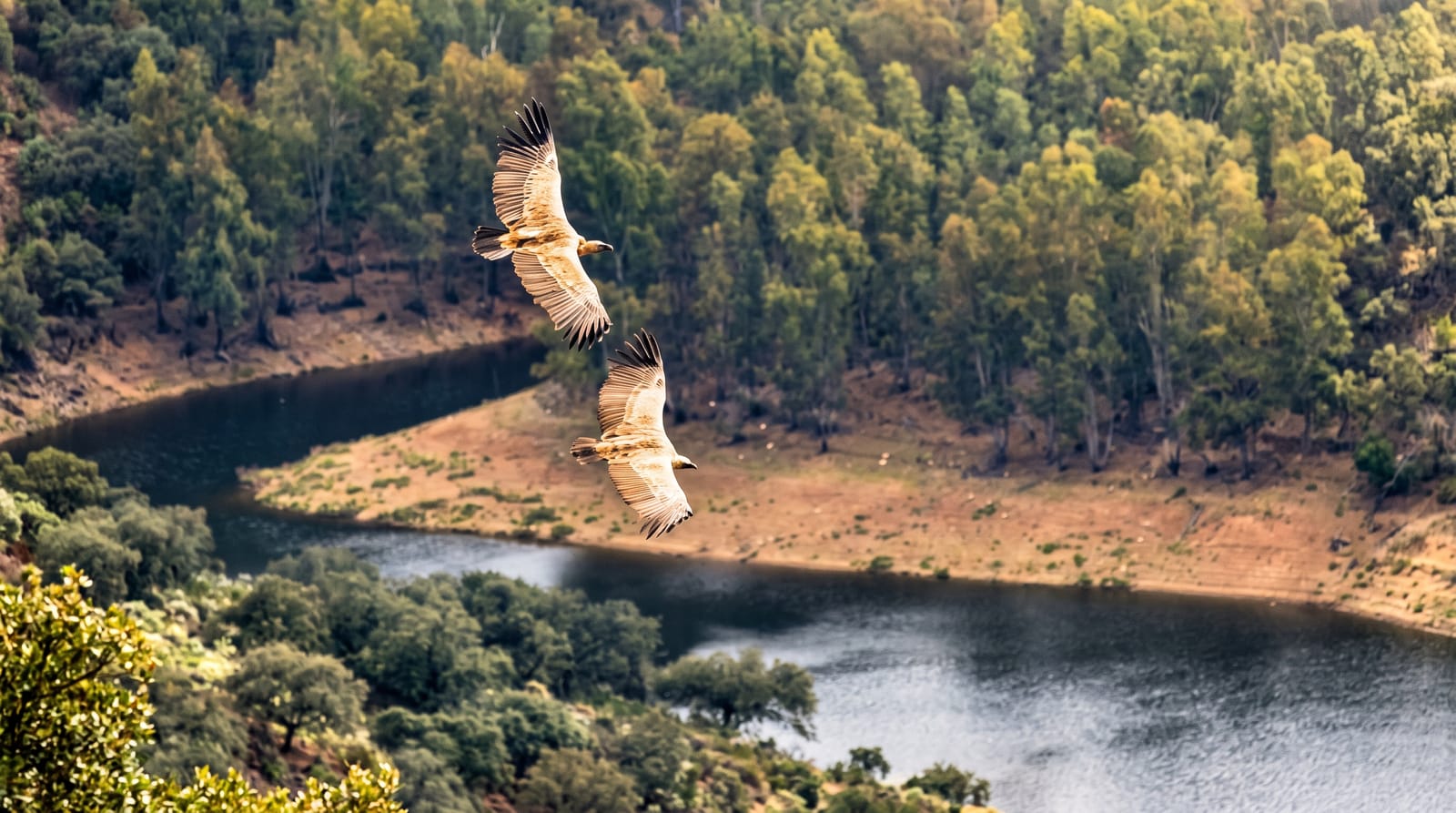
Lonjsko Polje Nature Park
One of the largest protected floodplains left in Europe, kept wet on purpose to save Zagreb from flooding.
Updated 30 August 2026
Lonjsko Polje covers around five hundred square kilometres of the Sava floodplain and it is deliberately allowed to flood: the retention system here holds water back that would otherwise reach Zagreb and Sisak, which means the wet meadows and flooded oak forests have survived where nearly every comparable European floodplain has been drained. The consequences are ecological - white storks in numbers, spoonbills, herons, and one of the last places where Turopolje pigs and Posavina horses graze free in the forest through the season - and cultural, in the oak villages that had to be built for floods. Cigoc and Krapje are the two best known.
What you'll find
- A floodplain still allowed to flood - part of the flood defence for Zagreb.
- Flooded oak forest and wet meadow - habitat drained almost everywhere else.
- Free-grazing pigs and horses - Turopolje pigs and Posavina horses in the woods.
- Oak villages built for water - Cigoc, Krapje and the others.
When to go
April to August for storks and breeding birds; autumn for the grazing herds. A full day.
Good to know
Roads flood and can close without warning. Mosquitoes are severe from late spring. Distances inside the park are large and there is little public transport. Village services are minimal.
Nearby
Cigoc and Krapje are inside the park; Sisak is upstream.
Key facts
Source: Wikidata, item Q1933800, read on 18 October 2026.
What to pack for Lonjsko Polje Nature Park
Chosen from what this place is for. Tap a kit for the full checklist.
- Broken-in walking shoes or boots - Grip and ankle support matter more than looks; never hike in brand-new boots. Find on Amazon
- Layers + a waterproof shell - Mountain weather turns fast; a packable rain jacket saves the day. Find on Amazon
- Daypack with rain cover - 20-30 litres holds water, snacks, layers and a first-aid kit. Find on Amazon
- Offline maps + a power bank - Download the trail before you lose signal; carry backup charge. Find on Amazon
Some links on this page are Amazon affiliate links - if you buy through them we may earn a small commission at no extra cost to you.
All packing kitsPlan your trip
Where to start if Lonjsko Polje Nature Park is going on the list.
Booking links on this page are affiliate links - if you book through them we may earn a small commission at no extra cost to you. It never changes what we write about a place.
Opening times, ticket prices and seasonal closures change - check the official source before you go: official site.