Altmühltal Nature Park
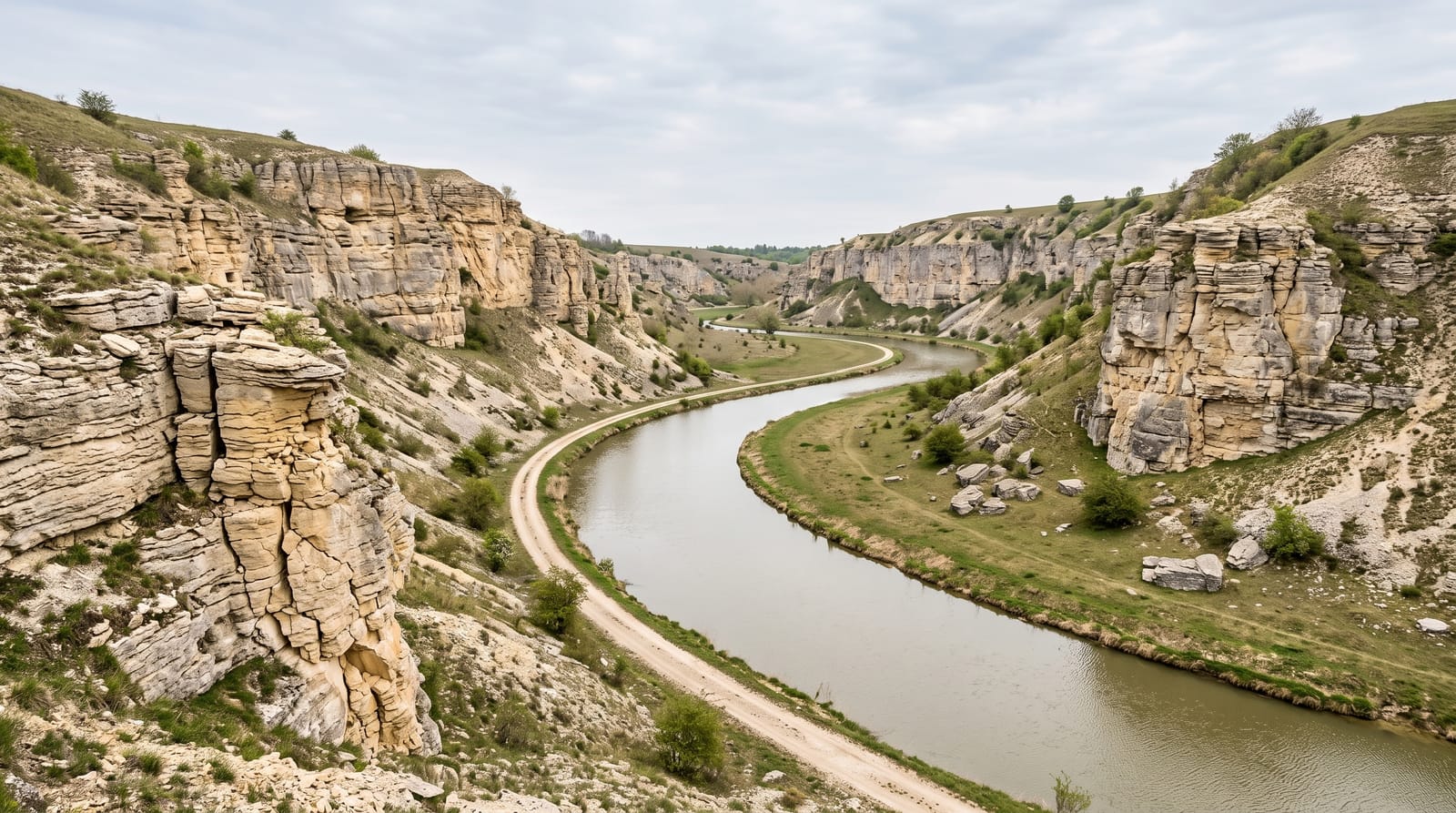
A slow river winding between limestone crags, in rock that produced the first Archaeopteryx fossil.
Updated 4 September 2026
AI illustration
The Altmühl runs slowly through a valley far too wide for it, cut when the Danube took this course before shifting south, leaving dolomite crags standing above meadows and juniper slopes. The limestone here is Solnhofen plattenkalk, laid down in still lagoons in the Jurassic and splitting into flat plates that preserve fine detail; the first Archaeopteryx skeleton was found in it in 1861, and most known specimens have come from this small area. Quarries around Solnhofen and Eichstätt let visitors split slabs and keep what they find. A cycle path and canoe route follow the river the length of the park.
What's there
- The dolomite crags - rock towers above meadows in an oversized valley.
- The Solnhofen limestone - fine plates that preserved Archaeopteryx.
- The public quarries - sites where visitors split slabs and keep fossils.
- The river route - a cycle path and canoe run along the valley.
When to go
April to October; the quarries operate seasonally and canoe hire runs in summer. Autumn colour on the juniper slopes is good. Winter closes most facilities.
Things to know
Fossil finds in the visitor quarries are usually small plants, fish or insects; anything significant must be reported. The valley is long and needs a bike or car.
Nearby
Kelheim and the Danube gorge lie east; Nuremberg is north.
Key facts
Source: Wikidata, item Q49412, read on 18 October 2026.
What to pack for Altmühltal Nature Park
Chosen from what this place is for. Tap a kit for the full checklist.
- Broken-in walking shoes or boots - Grip and ankle support matter more than looks; never hike in brand-new boots. Find on Amazon
- Reef-safe sunscreen - High SPF that will not bleach the coral you are swimming over. Find on Amazon
- Quick-dry clothing - Board shorts or synthetics that shrug off spray and dry fast. Find on Amazon
- Padded shorts - The one thing that makes a full day in the saddle bearable. Find on Amazon
Some links on this page are Amazon affiliate links - if you buy through them we may earn a small commission at no extra cost to you.
All packing kitsPlan your trip
Where to start if Altmühltal Nature Park is going on the list.
Booking links on this page are affiliate links - if you book through them we may earn a small commission at no extra cost to you. It never changes what we write about a place.
Opening times, ticket prices and seasonal closures change - check the official source before you go: official site.