Diocletian's Palace, Split
A living Roman palace at the heart of a city - the vast retirement fortress of an emperor, now a warren of lanes, homes and cafes, the beating centre of Split, a UNESCO site.
Updated 4 August 2026

AI illustration
UNESCO World Heritage
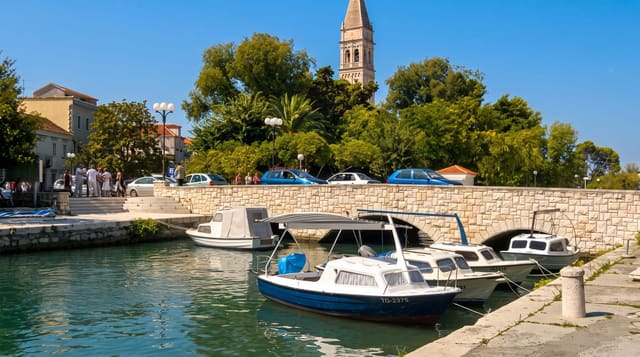
Diocletian's Palace is one of the most remarkable Roman monuments anywhere, the vast seaside fortress-palace built around 300 AD for the retiring emperor Diocletian, which never became a ruin but grew into the living heart of Split. Within its walls, a warren of marble lanes, squares and Roman remains is woven with homes, shops, cafes and a cathedral, a UNESCO site inhabited without a break for seventeen centuries.
Highlights
- The Peristyle - the colonnaded central square of the palace.
- The cathedral and bell tower - the emperor's mausoleum turned cathedral, with a climbable tower.
- The cellars - the vast preserved substructures beneath the palace.
- The living lanes - the inhabited streets, cafes and squares within the walls.
When to go
Late spring and early autumn for warm weather without the peak crush; summer is hot and busy, and cruise days crowd the lanes. Evenings, when the marble squares fill with life, are especially atmospheric.
Before you go
It is a living, inhabited quarter rather than a museum, so it blends genuine Roman remains with bars, shops and heavy tourism; that fusion is the charm. Cruise days crowd it. It takes some imagination, or a guide, to picture the original palace beneath the modern life.
Nearby
The Dalmatian islands of Hvar and Brac are a ferry away; the coast and Trogir are close.
What to pack for Diocletian's Palace, Split
Chosen from what this place is for. Tap a kit for the full checklist.
- Comfortable walking shoes - Sightseeing means kilometres of pavement and cobbles daily. Find on Amazon
- Modest clothing - Shoulders and knees covered - the single most common requirement. Find on Amazon
- A slim anti-theft daypack - Zips that close properly; keep it in front in crowds and on transit. Find on Amazon
- A scarf or shawl - To cover the head or shoulders on entry; women especially at mosques. Find on Amazon
Some links on this page are Amazon affiliate links - if you buy through them we may earn a small commission at no extra cost to you.
All packing kitsPlan your trip
Where to start if Diocletian's Palace, Split is going on the list.
Booking links on this page are affiliate links - if you book through them we may earn a small commission at no extra cost to you. It never changes what we write about a place.
Opening times, ticket prices and seasonal closures change - check the official source before you go: official site.