Palo Verde
Seasonal wetland on the Tempisque river that fills each wet season with tens of thousands of waterbirds, watched from a boat.
Updated 19 October 2026
AI illustration
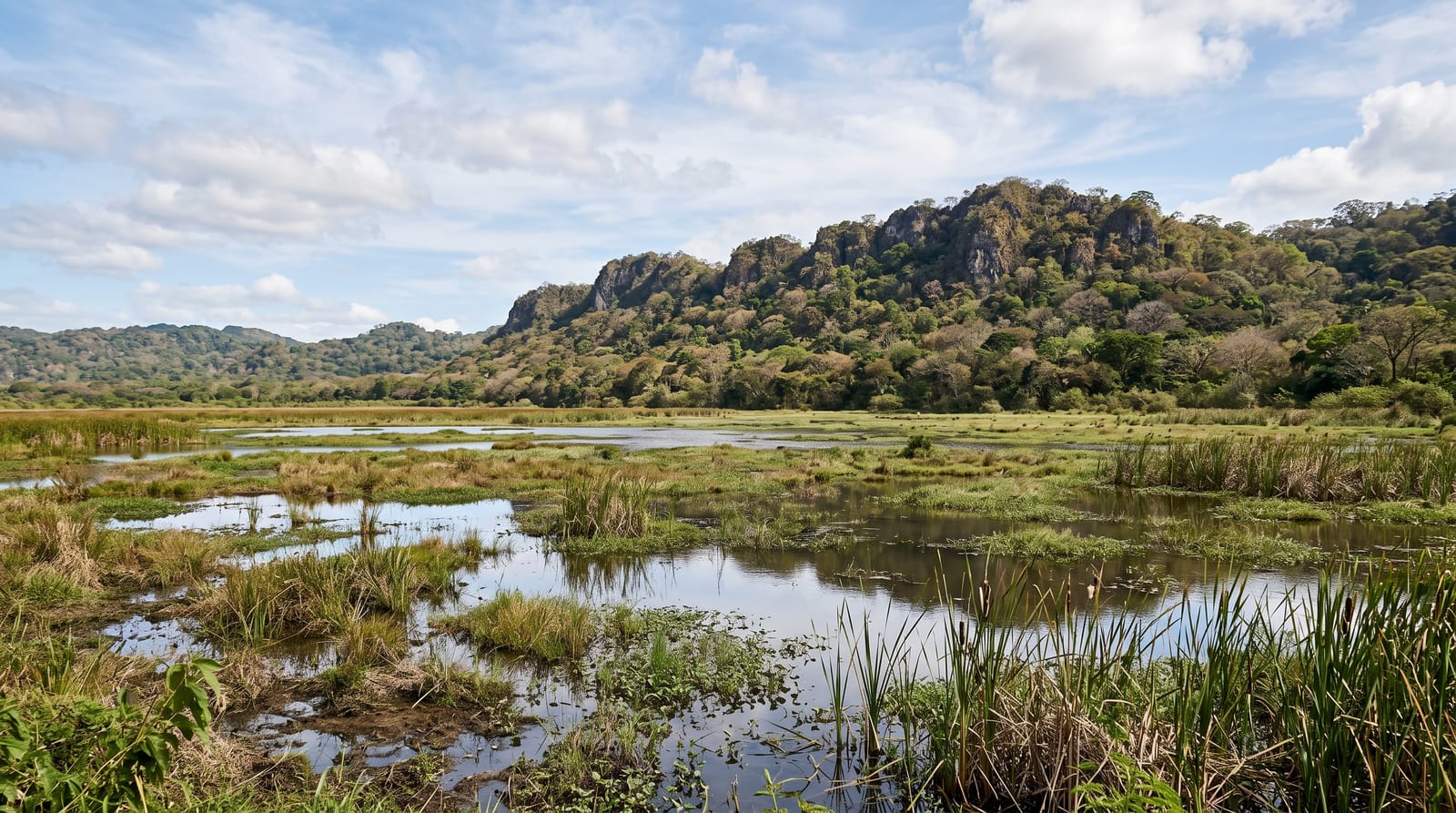
Palo Verde protects a stretch of the lower Tempisque where the river floods each wet season into seasonal marsh, and as the water recedes through the dry months the birds concentrate: tens of thousands of waterfowl, herons, storks, spoonbills and the jabiru, the tallest flying bird in Central and South America, along with the black-crowned night heron and one of the region's largest colonies of nesting waterbirds on Isla de Pájaros. Boat trips run up the river past crocodiles hauled out on the banks and monkeys in the gallery forest. The park also holds dry forest and a limestone ridge with a lookout over the whole floodplain.
History
Palo Verde was declared a wildlife refuge in the 1970s because more than 60 species of birds used its lagoon as a stop on migration, and in the dry season it once held some 35,000 black-bellied whistling ducks and 25,000 blue-winged teal. It was later made a national park, now covering 18,400 hectares of the Tempisque valley, and in the 1990s it was added to the Ramsar list of wetlands of international importance and to the Montreux Record (Wikipedia, Palo Verde National Park).
Highlights
- The seasonal marsh - filling and draining, concentrating birds as it goes.
- Isla de Pájaros - a major nesting colony in the river.
- Jabiru storks - the tallest flying birds in Central and South America.
- The ridge lookout - the whole floodplain from the limestone hill.
When to go
December to March is when the water is receding and the bird concentration is highest. Boat trips run in the morning, which is cooler and best for activity. The wet season floods the marsh and disperses the birds.
Before you go
The park is hot, flat and buggy, and outside the dry season the bird spectacle largely disappears. Boat trips are usually sold from Cañas or as excursions from Guanacaste resorts and vary a great deal in quality. Access roads into the park itself are rough. Invasive cattail has choked parts of the marsh and requires active management.
Nearby
Cañas is half an hour north; the Nicoya beaches are an hour and a half west.
Key facts
Source: Wikidata, item Q11697913, read on 18 October 2026.
What to pack for Palo Verde
Chosen from what this place is for. Tap a kit for the full checklist.
- Broken-in walking shoes or boots - Grip and ankle support matter more than looks; never hike in brand-new boots. Find on Amazon
- Reef-safe sunscreen - High SPF that will not bleach the coral you are swimming over. Find on Amazon
- Binoculars - The single best wildlife tool - even a compact pair transforms a sighting. Find on Amazon
- Layers + a waterproof shell - Mountain weather turns fast; a packable rain jacket saves the day. Find on Amazon
Some links on this page are Amazon affiliate links - if you buy through them we may earn a small commission at no extra cost to you.
All packing kitsPlan your trip
Where to start if Palo Verde is going on the list.
Booking links on this page are affiliate links - if you book through them we may earn a small commission at no extra cost to you. It never changes what we write about a place.
Opening times, ticket prices and seasonal closures change - check the official source before you go: official site.