Barrio Amón
The San José district where the coffee barons built their houses, a few blocks of Victorian and art nouveau villas among the concrete.
Updated 1 September 2026
AI illustration
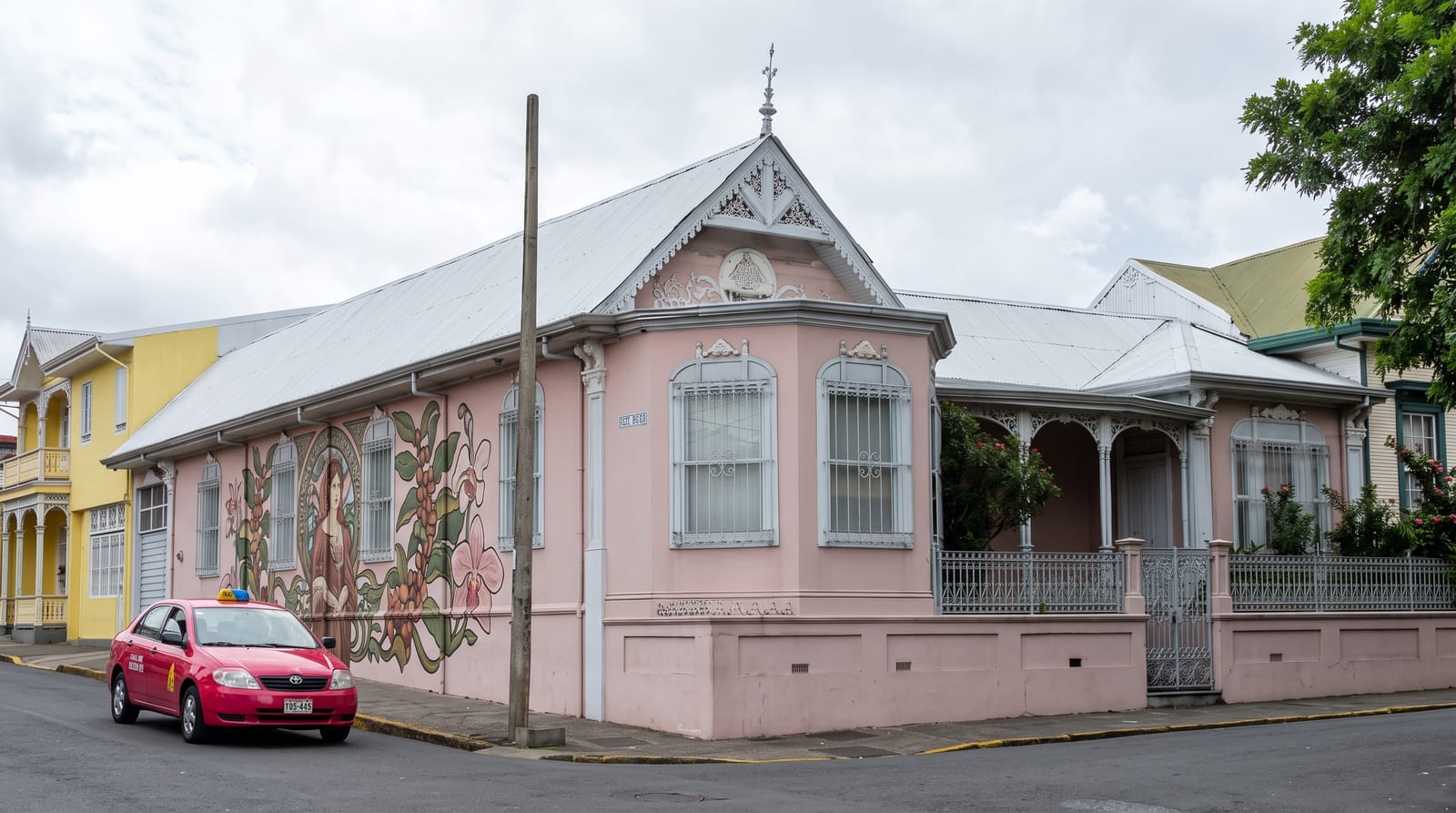
Barrio Amón was laid out in the 1890s by a French coffee entrepreneur and became the district where the families who ran the coffee trade built their houses, in whatever European manner was fashionable: Victorian timber with iron cresting, art nouveau, neoclassical, some of it prefabricated in Europe and shipped over. Enough survives to make a walk of a few blocks worthwhile, with a number of the houses now boutique hotels, restaurants and galleries, and a run of street art on the blank walls between them. It is the only part of central San José that rewards wandering, and it is quiet in a way the rest of the centre is not.
What you'll find
- The coffee-baron houses - Victorian, art nouveau and neoclassical villas.
- Casa Amarilla - the yellow neoclassical building with a ceiba tree outside.
- The street art - large murals on the blank walls between the villas.
- The converted hotels - several of the houses open as places to stay.
When to go
Year-round, in daylight. Weekday mornings are quiet. Two hours covers the walk. Combine it with the National Museum or the jade museum, both a short walk south.
What to expect
Many of the houses are in poor repair and the district has lost a good deal to demolition and to concrete infill; it is a scattering rather than an intact quarter. As with the rest of central San José, it is fine by day and should not be walked at night. There are no formal sights, only the buildings themselves.
Nearby
The National Museum is ten minutes south; the Mercado Central is fifteen minutes west.
Key facts
Source: Wikidata, item Q18326159, read on 18 October 2026.
What to pack for Barrio Amón
Chosen from what this place is for. Tap a kit for the full checklist.
- Comfortable walking shoes - Sightseeing means kilometres of pavement and cobbles daily. Find on Amazon
- A slim anti-theft daypack - Zips that close properly; keep it in front in crowds and on transit. Find on Amazon
- A refillable water bottle - Many cities have public fountains; save money and plastic. Find on Amazon
- A light layer + compact umbrella - For museum air-con and a sudden shower. Find on Amazon
Some links on this page are Amazon affiliate links - if you buy through them we may earn a small commission at no extra cost to you.
All packing kitsPlan your trip
Where to start if Barrio Amón is going on the list.
Booking links on this page are affiliate links - if you book through them we may earn a small commission at no extra cost to you. It never changes what we write about a place.
Opening times, ticket prices and seasonal closures change - check the official source before you go: official site.