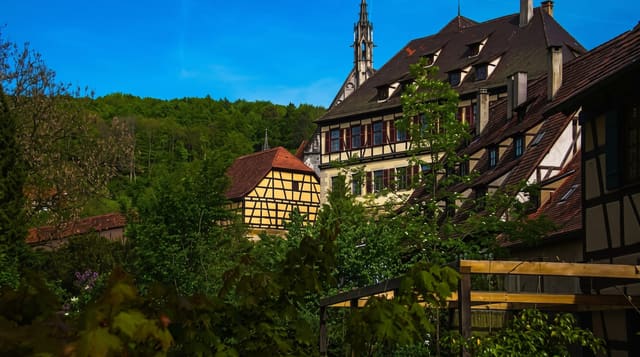
Convento del Santo Ecce Homo
A Dominican monastery of 1620 near Villa de Leyva, whose stone floors are laid with fossils quarried from the surrounding hills.
Updated 30 August 2026
The Dominicans founded the house in 1620 and built it from stone cut in the valley - which is where the detail that people come for arises: the floors and some walls are laid with slabs full of ammonites and other marine fossils, because these hills were seabed in the Cretaceous and the local rock is dense with them. You walk over fossils several centimetres across without any special arrangement having been made. The cloister has a walled garden, and the chapel holds colonial paintings and a carved altarpiece. Muisca stonework was reused in parts of the construction. Villa de Leyva nearby has a fossil museum and a complete plesiosaur left in the ground where it was found.
What's there
- Floors laid with fossil-bearing stone - ammonites underfoot.
- A Dominican house of 1620 - built from valley rock.
- A walled cloister garden - at the centre.
- Reused Muisca stone - in parts of the fabric.
When to go
Year round. An hour.
Practical notes
It is small and the visit is short. Opening hours are irregular and it sometimes closes without notice. Roads in are partly unpaved. Interpretation is minimal and in Spanish.
Nearby
Villa de Leyva is east; Raquira is south-west.
What to pack for Convento del Santo Ecce Homo
Chosen from what this place is for. Tap a kit for the full checklist.
- Comfortable walking shoes - Sightseeing means kilometres of pavement and cobbles daily. Find on Amazon
- Modest clothing - Shoulders and knees covered - the single most common requirement. Find on Amazon
- A slim anti-theft daypack - Zips that close properly; keep it in front in crowds and on transit. Find on Amazon
- A scarf or shawl - To cover the head or shoulders on entry; women especially at mosques. Find on Amazon
Some links on this page are Amazon affiliate links - if you buy through them we may earn a small commission at no extra cost to you.
All packing kitsPlan your trip
Where to start if Convento del Santo Ecce Homo is going on the list.
Booking links on this page are affiliate links - if you book through them we may earn a small commission at no extra cost to you. It never changes what we write about a place.
Opening times, ticket prices and seasonal closures change - check the official source before you go: official site.