Zhalong Nature Reserve
Reed marshes near Qiqihar holding one of the world's most important breeding populations of red-crowned cranes.
Updated 18 October 2026
AI illustration
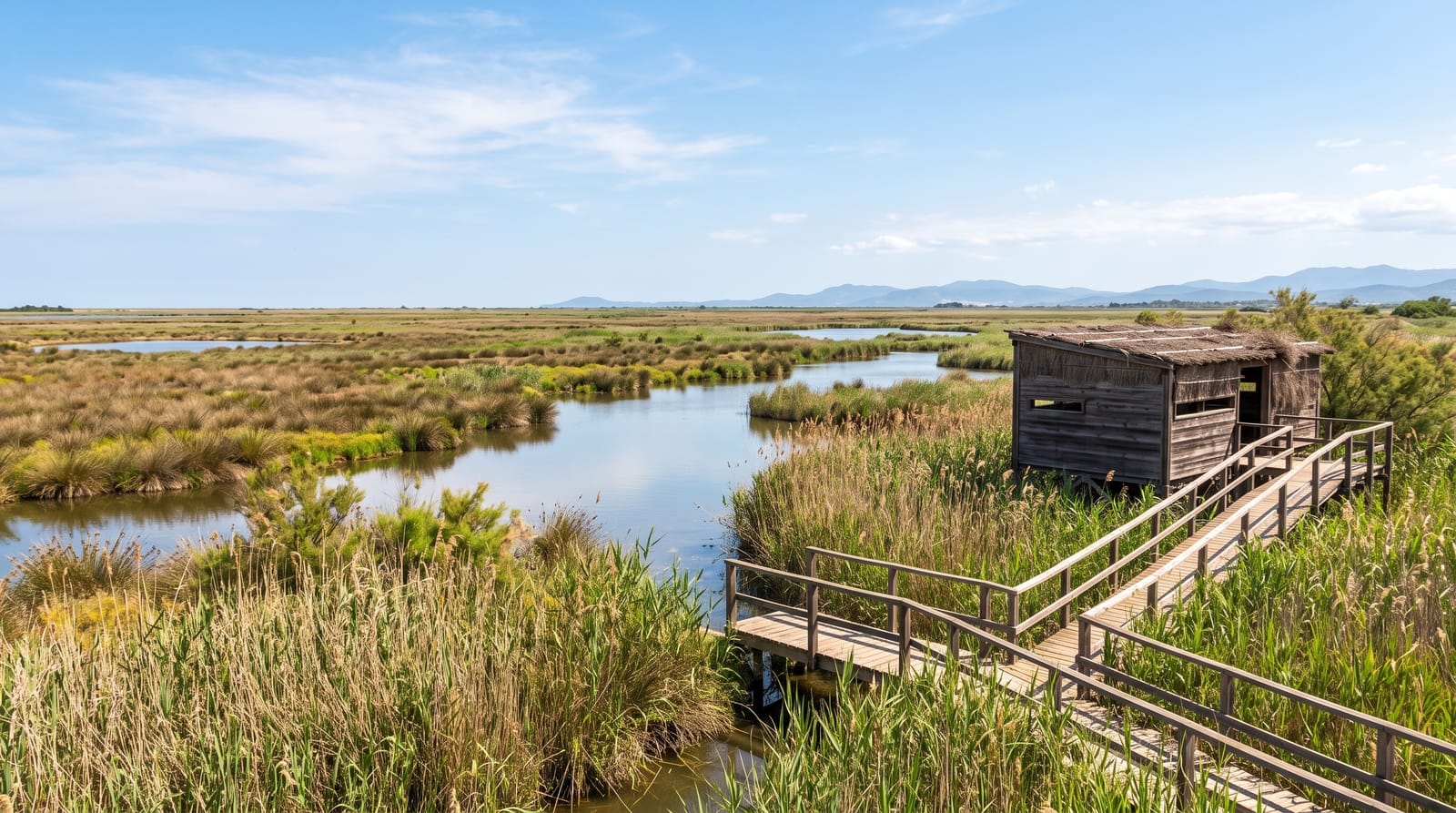
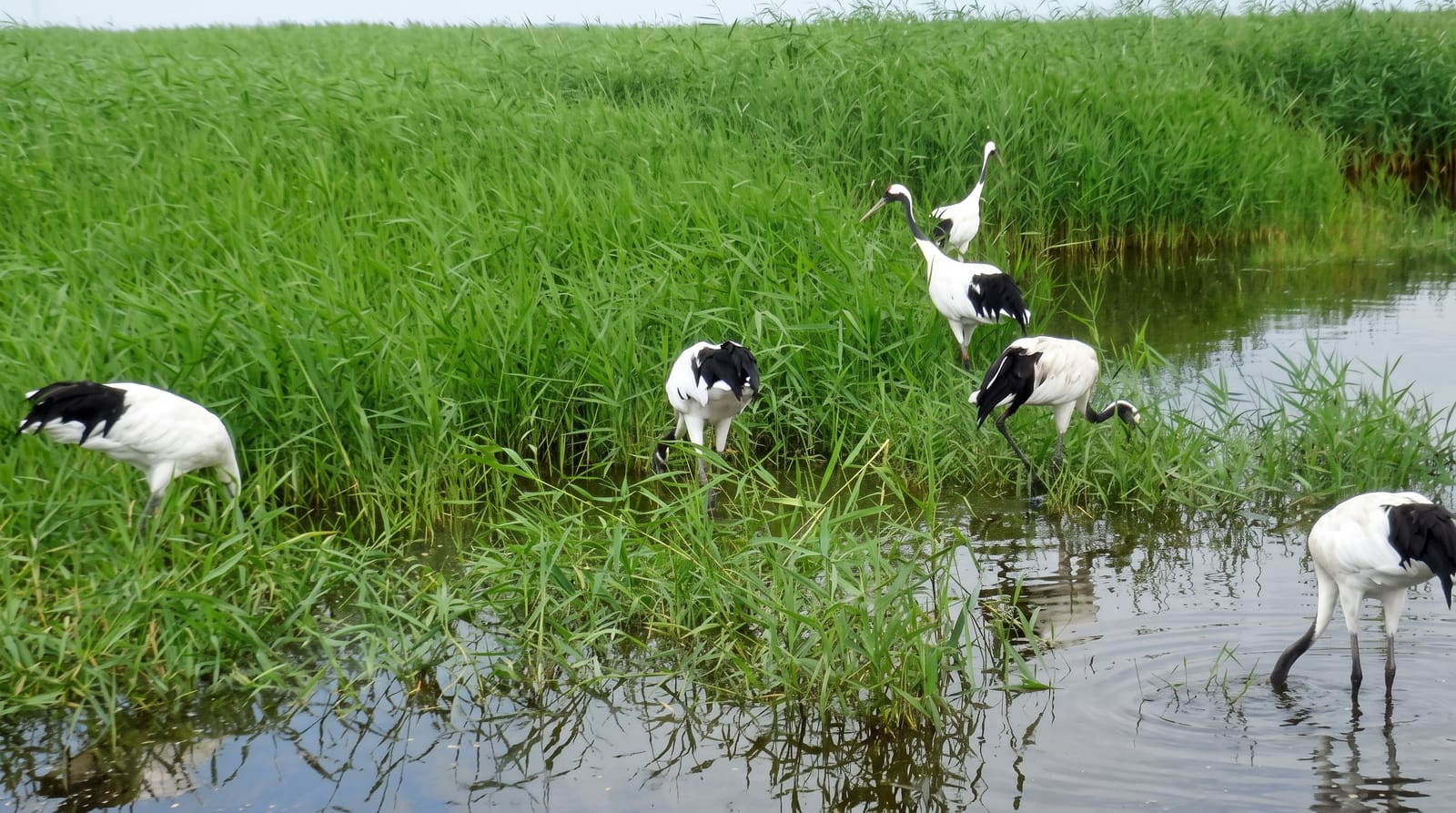
Zhalong covers around two thousand square kilometres of reed marsh and shallow water on the Songnen plain, a Ramsar site and one of the most significant breeding areas anywhere for the red-crowned crane, a bird of which only a few thousand survive worldwide and which carries deep symbolic weight in Chinese and Japanese culture. Several hundred use the reserve, alongside white-naped and demoiselle cranes and large numbers of other waterbirds. A captive-breeding and release programme operates, and released birds are flown daily for visitors, which is how most people see cranes here. The wild birds are harder to find in the reed beds and need patience, a scope and quiet.
History
The reserve was set up in 1979 to protect some 2,100 square kilometres of freshwater marsh, streams and ponds on a major route for birds migrating between the Arctic and South-East Asia. It is one of the few breeding grounds in the Far East for the marsh grassbird, holds more than 300 bird species, keeps a captive flock of red-crowned cranes for conservation and is listed as Ramsar wetland no. 549 (Wikipedia, Zhalong Nature Reserve).
The landscape
- The red-crowned cranes - the reserve's flagship species, wild and captive-bred.
- The daily flights - released birds flown on a schedule for visitors.
- The reed marsh - vast beds of phragmites across the plain.
- The other waterbirds - herons, egrets, ducks and other crane species.
When to go
May to September for breeding activity and green marsh; migration periods bring the largest numbers. Winter is severely cold and most birds have left. The flight displays run several times daily in season.
Practical notes
The crane flights are of captive-bred birds performing on schedule, not wild behaviour, which some visitors find disappointing. Wild cranes are distant and need optics. Boardwalk access is limited and the reserve is mostly closed to visitors.
Nearby
Qiqihar lies northwest; Harbin is southeast.
Key facts
Source: Wikidata, item Q197132, read on 18 October 2026.
What to pack for Zhalong Nature Reserve
Chosen from what this place is for. Tap a kit for the full checklist.
- Broken-in walking shoes or boots - Grip and ankle support matter more than looks; never hike in brand-new boots. Find on Amazon
- Warm base layers - Merino or synthetic against the skin - never cotton, which chills when damp. Find on Amazon
- Layers + a waterproof shell - Mountain weather turns fast; a packable rain jacket saves the day. Find on Amazon
- An insulated + windproof jacket - A down or synthetic layer under a hard shell handles most cold. Find on Amazon
Some links on this page are Amazon affiliate links - if you buy through them we may earn a small commission at no extra cost to you.
All packing kitsPlan your trip
Where to start if Zhalong Nature Reserve is going on the list.
Booking links on this page are affiliate links - if you book through them we may earn a small commission at no extra cost to you. It never changes what we write about a place.
Opening times, ticket prices and seasonal closures change - check the official source before you go: official site.