Mohe and Beiji Village
China's northernmost town and village, where midsummer nights barely darken and aurora is occasionally seen.
Updated 4 September 2026
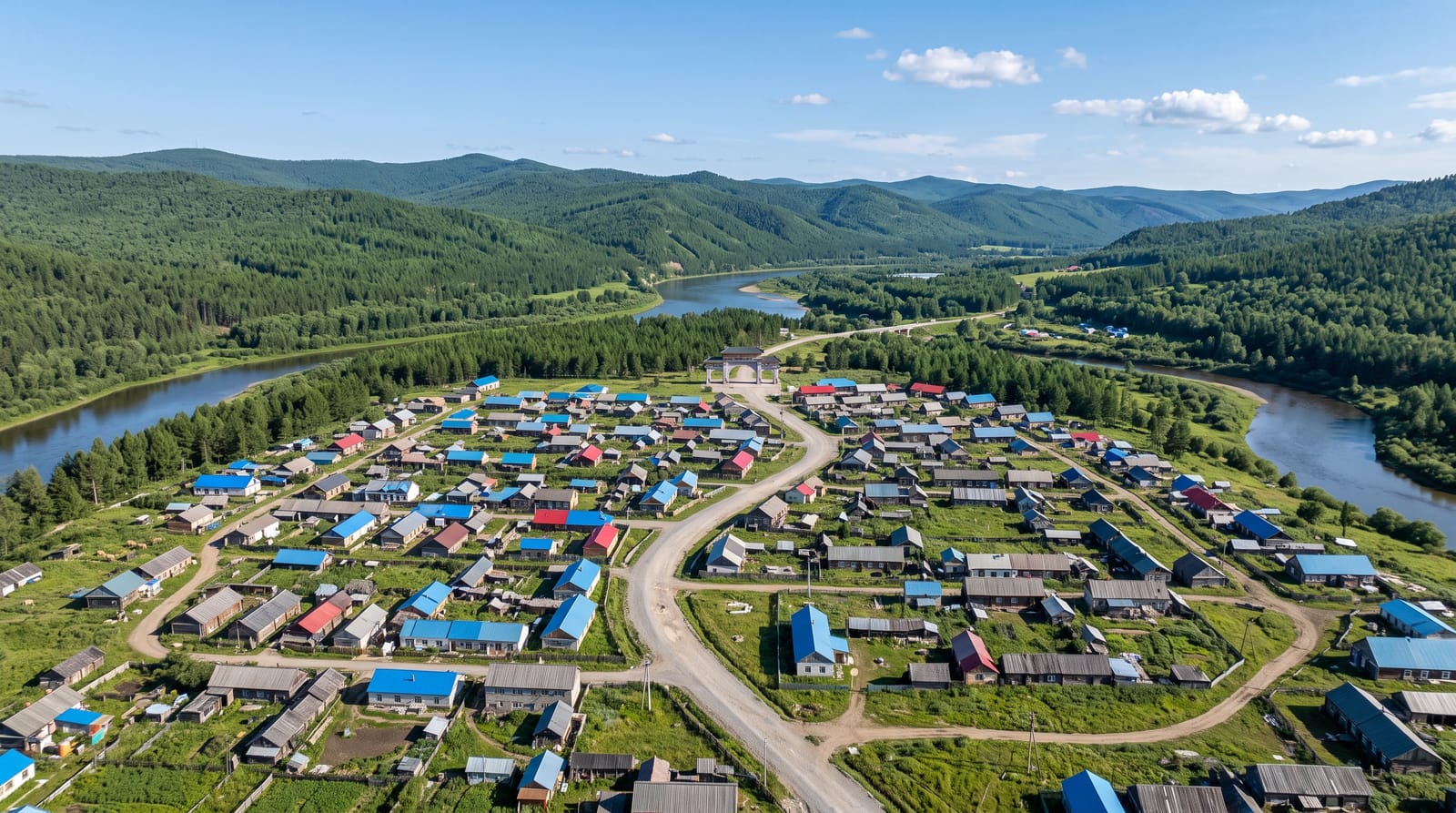
AI illustration
Mohe sits at the top of China on the Amur river, and Beiji, the arctic village, about eighty kilometres further north, is the northernmost settlement in the country at around 53 degrees north. Around the summer solstice the sky here barely darkens, producing what is marketed as the white nights, and the town holds a solstice festival. Aurora is occasionally visible during strong geomagnetic activity, though sightings are rare and heavily hyped. In winter Mohe records some of the coldest temperatures in China, below minus fifty at its extreme, and cold-weather tourism has grown around that: ice, frost, and a marker for the northernmost point. Forest and river fill the country between.
The landscape
- The northernmost markers - the point and monuments at Beiji village.
- The white nights - barely darkening skies around the summer solstice.
- The extreme cold - winter temperatures among the lowest recorded in China.
- The Amur river - the border river and the forest along it.
When to go
June to July for the solstice and long light, or December to January for extreme cold and snow. Aurora sightings are rare and cannot be planned for. Spring and autumn are short and unremarkable.
Practical notes
Aurora is heavily marketed and very rarely seen; expecting it is a mistake. The area is remote, with long journeys and limited services. Winter cold at minus forty is dangerous without proper equipment, and the border is patrolled.
Nearby
The Amur river marks the Russian border; Heihe lies far southeast.
What to pack for Mohe and Beiji Village
Chosen from what this place is for. Tap a kit for the full checklist.
- Broken-in walking shoes or boots - Grip and ankle support matter more than looks; never hike in brand-new boots. Find on Amazon
- Spare batteries + cards - Cold and long shoots drain power; never run out at the good light. Find on Amazon
- Warm base layers - Merino or synthetic against the skin - never cotton, which chills when damp. Find on Amazon
- Layers + a waterproof shell - Mountain weather turns fast; a packable rain jacket saves the day. Find on Amazon
Some links on this page are Amazon affiliate links - if you buy through them we may earn a small commission at no extra cost to you.
All packing kitsPlan your trip
Where to start if Mohe and Beiji Village is going on the list.
Booking links on this page are affiliate links - if you book through them we may earn a small commission at no extra cost to you. It never changes what we write about a place.
Opening times, ticket prices and seasonal closures change - check the official source before you go: official site.


