Tengwang Pavilion
A riverside tower rebuilt twenty-nine times, kept alive by a preface written at a banquet here in 675.
Updated 19 October 2026
AI illustration
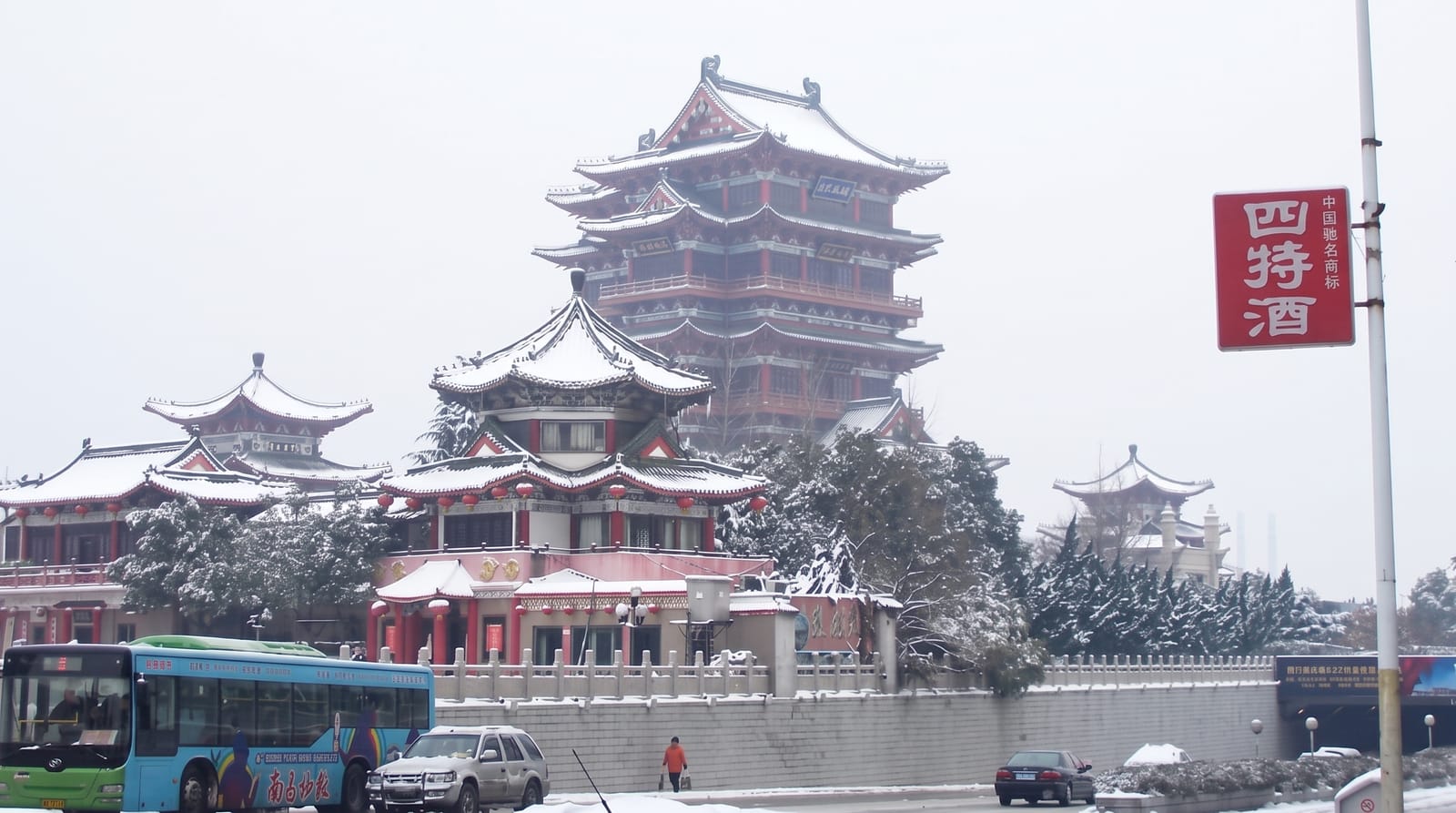
The Prince Teng Pavilion was first built in 653 by a Tang prince on the bank of the Gan river, and it would be a footnote had the young poet Wang Bo not attended a banquet here in 675 and composed a preface on the spot, a piece of parallel prose so admired that it has been memorised by students ever since and has kept the building's name alive through twenty-eight destructions by fire, war and flood. The current pavilion, the twenty-ninth, was completed in 1989 in reinforced concrete to a Song-style design by the architectural historian Liang Sicheng, nine levels of it, with performances of Tang music and dance staged inside and views over the river from the upper floors.
History
The pavilion was first built in 653 by Li Yuanying, a younger brother of Emperor Taizong of Tang, made Prince Teng in 639 and governor of Nanchang in 652, as his town residence on the Gan River. When a later governor rebuilt it, local scholars gathered to write about it, and Wang Bo's Preface to the Pavilion of Prince Teng made it known across China to this day; it was destroyed and rebuilt 29 times over the centuries, the last old building, of the Tongzhi era, was lost in 1926, and the present nine-storey pavilion was built on the old site in 1989 to a plan by Liang Sicheng (Wikipedia, Pavilion of Prince Teng).
The main sights
- The nine-level tower - the 1989 reconstruction to a Song-style design.
- The Wang Bo preface - the text displayed in calligraphy through the building.
- The Tang performances - music and dance staged on the upper floors.
- The river view - the Gan and Nanchang's skyline from the top.
When to go
March to May and September to November; Nanchang summers are among the hottest in China. Performances run to a daily schedule. Evenings light the tower and the riverfront.
Practical notes
The building is a 1980s concrete reconstruction, not a historic structure. Its significance is literary and largely inaccessible without the Chinese text. Entry is charged and the interior is exhibition space.
Nearby
The Gan river runs below; Poyang Lake lies north.
Key facts
Source: Wikidata, item Q1375487, read on 18 October 2026.
What to pack for Tengwang Pavilion
Chosen from what this place is for. Tap a kit for the full checklist.
- Comfortable walking shoes - Sightseeing means kilometres of pavement and cobbles daily. Find on Amazon
- A slim anti-theft daypack - Zips that close properly; keep it in front in crowds and on transit. Find on Amazon
- A refillable water bottle - Many cities have public fountains; save money and plastic. Find on Amazon
- A light layer + compact umbrella - For museum air-con and a sudden shower. Find on Amazon
Some links on this page are Amazon affiliate links - if you buy through them we may earn a small commission at no extra cost to you.
All packing kitsPlan your trip
Where to start if Tengwang Pavilion is going on the list.
Booking links on this page are affiliate links - if you book through them we may earn a small commission at no extra cost to you. It never changes what we write about a place.
Opening times, ticket prices and seasonal closures change - check the official source before you go: official site.