Poyang Lake
China's largest freshwater lake, shrinking to a fraction each winter and hosting most of the world's Siberian cranes in winter.
Updated 21 October 2026
AI illustration
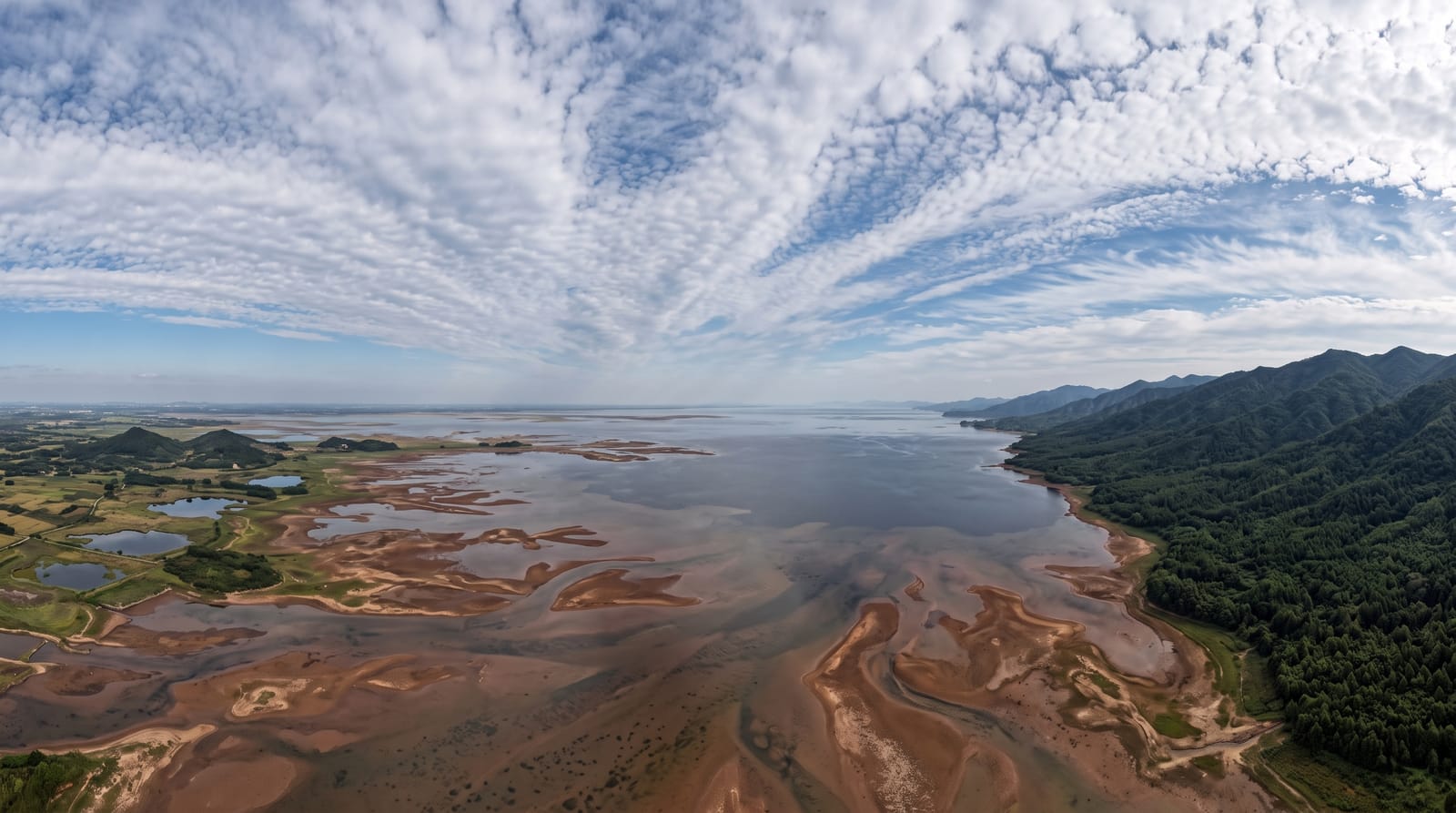
Poyang is the largest freshwater lake in China, and its size varies enormously: in the summer flood it can cover four thousand square kilometres, and by late winter it can shrink to a tenth of that, leaving grassland, channels and shallow pools across the exposed bed. That seasonal drawdown creates the feeding habitat that makes it the most important wintering ground in the world for the Siberian crane, with the great majority of the surviving population, several thousand birds, arriving from the Arctic each November, alongside oriental storks, swan geese and hundreds of thousands of other waterbirds. Water levels have fallen sharply in recent drought years, raising concern for the wintering flocks.
The landscape
- The Siberian cranes - up to nine-tenths of the world population wintering here.
- The seasonal drawdown - the lake shrinking to grassland and channels in winter.
- The waterbird concentrations - storks, geese and hundreds of thousands of birds.
- The reserve viewing areas - hides and platforms at Wucheng and elsewhere.
When to go
November to March for the cranes and the drawn-down lake; the birds leave by early spring. Summer is the flood season with few birds and high water. Access to reserve areas is controlled and a guide or permit may be needed.
What to expect
Serious birding needs a scope, a guide and transport; casual visitors see distant white shapes. Access to core reserve areas is restricted. Drought years have reduced both water and birds, and conditions vary sharply between seasons.
Nearby
Nanchang lies south; Mount Lu is northwest.
Key facts
Source: Wikidata, item Q207690, read on 18 October 2026.
What to pack for Poyang Lake
Chosen from what this place is for. Tap a kit for the full checklist.
- Broken-in walking shoes or boots - Grip and ankle support matter more than looks; never hike in brand-new boots. Find on Amazon
- Warm base layers - Merino or synthetic against the skin - never cotton, which chills when damp. Find on Amazon
- Layers + a waterproof shell - Mountain weather turns fast; a packable rain jacket saves the day. Find on Amazon
- An insulated + windproof jacket - A down or synthetic layer under a hard shell handles most cold. Find on Amazon
Some links on this page are Amazon affiliate links - if you buy through them we may earn a small commission at no extra cost to you.
All packing kitsPlan your trip
Where to start if Poyang Lake is going on the list.
Booking links on this page are affiliate links - if you book through them we may earn a small commission at no extra cost to you. It never changes what we write about a place.
Opening times, ticket prices and seasonal closures change - check the official source before you go: official site.