Shanghai Astronomy Museum
The largest planetarium in the world by floor area, a building of curves designed with no straight lines or right angles.
Updated 12 October 2026

AI illustration
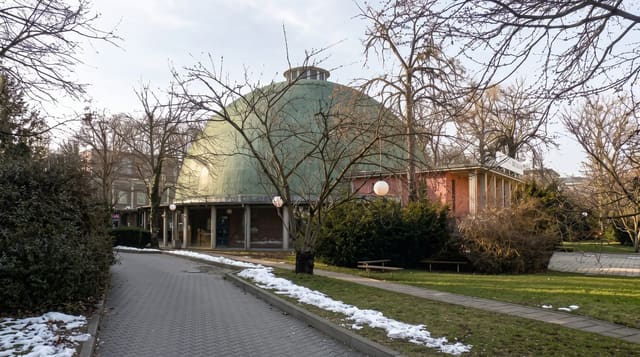
Opened in 2021 in the Lingang new town, the Shanghai Astronomy Museum covers around thirty-nine thousand square metres and is described as the largest planetarium in the world by floor area. The architects, Ennead, built it without straight lines: three curved forms, an oculus, an inverted dome and a sphere, arranged so that sunlight moving through them marks the passage of the day and the solstices, making the building itself an astronomical instrument. Inside are meteorites, a Foucault pendulum, immersive galleries on the solar system and cosmology, an optical planetarium theatre and a solar telescope. Tickets are capped and released online in advance, and slots disappear quickly.
What to look for
- The building - three curved forms designed to track sunlight through the year.
- The meteorite collection - specimens including lunar and Martian material.
- The planetarium theatre - the optical dome shows.
- The immersive galleries - solar system and cosmology exhibitions.
When to go
Year-round, since it is indoors; the museum closes on Mondays. Tickets are released online a set number of days ahead and sell out, particularly at weekends and holidays. Weekday mornings are calmest.
Good to know
Booking is required and the process is difficult for foreign visitors without a Chinese payment app. The site is seventy kilometres from central Shanghai, over an hour each way. Interpretation is largely in Chinese.
Nearby
Dishui Lake and the Lingang new town surround it; central Shanghai lies northwest.
Key facts
Source: Wikidata, item Q30595198, read on 18 October 2026.
What to pack for Shanghai Astronomy Museum
Chosen from what this place is for. Tap a kit for the full checklist.
- Comfortable walking shoes - Sightseeing means kilometres of pavement and cobbles daily. Find on Amazon
- A slim anti-theft daypack - Zips that close properly; keep it in front in crowds and on transit. Find on Amazon
- A refillable water bottle - Many cities have public fountains; save money and plastic. Find on Amazon
- A light layer + compact umbrella - For museum air-con and a sudden shower. Find on Amazon
Some links on this page are Amazon affiliate links - if you buy through them we may earn a small commission at no extra cost to you.
All packing kitsPlan your trip
Where to start if Shanghai Astronomy Museum is going on the list.
Booking links on this page are affiliate links - if you book through them we may earn a small commission at no extra cost to you. It never changes what we write about a place.
Opening times, ticket prices and seasonal closures change - check the official source before you go: official site.