Pingyao Ancient City
A walled Ming and Qing merchant town in Shanxi whose complete circuit of ramparts still encloses a grid of courtyard houses and shopfronts.
Updated 18 October 2026
AI illustration
UNESCO World Heritage
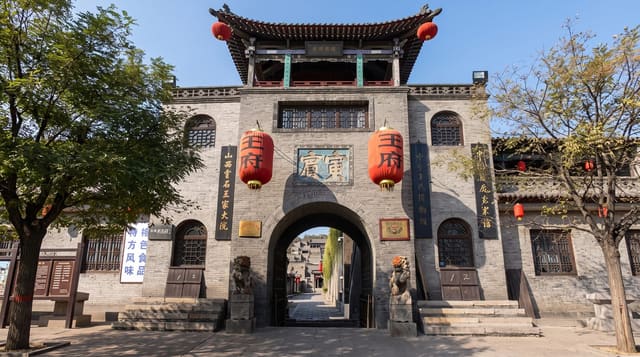
Pingyao is the rare Chinese town that kept its walls, its street grid and most of its low grey courtyard houses. The rammed earth and brick rampart runs about six kilometres around the old town, and you can walk long stretches of it above the tiled roofs. Inside, the two main axes are lined with restored shopfronts, and a combined ticket opens around twenty separate sites: the county government offices, temples, guild halls and the courtyard of an exchange house that handled remittances for merchants across the empire. The side lanes are quieter and still residential, with bicycles, drying laundry and workshops behind the grey brick.
History
A settlement already stood at Pingyao when the Zhou raised earthen ramparts round it in the reign of King Xuan (about 827-782 BC); the town belonged to Jin in the Spring and Autumn period, to Zhao in the Warring States, and was known as Pingtao under the Qin. From the 16th century it was the financial centre of the region and in the late 19th century of the whole Qing Empire, with more than 20 financial houses, over half of all those in the country; Rishengchang, the first and largest, controlled almost half of China's silver trade before going bankrupt in 1914 after the Xinhai Revolution. Restorations have been carried out periodically since the 15th century, the latest from 1979, and in 2004 part of the southern wall collapsed (Wikipedia, Pingyao).
Highlights
- The city wall - a near complete circuit you can walk, with watchtowers and a view over grey tiled roofs.
- Rishengchang exchange house - the courtyard offices of an early remittance business, with strongrooms and ledgers.
- The county government offices - a large yamen compound of halls, courtyards and a small opera stage.
- The back lanes - residential alleys where the town is still lived in rather than staged.
When to go
Spring and autumn are the most comfortable; Shanxi summers are hot and hazy and winter nights drop well below freezing, though the town looks its best under snow. Come midweek if you can, and stay overnight: the day-trip coaches leave by late afternoon and the streets are much calmer after dark.
Practical notes
The two main streets are a solid run of souvenir shops, vinegar sellers and costume photo studios, and the combined ticket pushes you through more museum courtyards than most people want. Some restoration looks new. Air quality in this part of Shanxi can be poor, and during national holidays the wall and the main crossroads are shoulder to shoulder.
Nearby
The Wang and Qiao family courtyard mansions and the painted statues of Shuanglin Temple are all short drives away.
Key facts
Source: Wikidata, item Q500061, read on 18 October 2026.
What to pack for Pingyao Ancient City
Chosen from what this place is for. Tap a kit for the full checklist.
- Padded shorts - The one thing that makes a full day in the saddle bearable. Find on Amazon
- Warm base layers - Merino or synthetic against the skin - never cotton, which chills when damp. Find on Amazon
- Comfortable walking shoes - Sightseeing means kilometres of pavement and cobbles daily. Find on Amazon
- Modest clothing - Shoulders and knees covered - the single most common requirement. Find on Amazon
Some links on this page are Amazon affiliate links - if you buy through them we may earn a small commission at no extra cost to you.
All packing kitsPlan your trip
Where to start if Pingyao Ancient City is going on the list.
Booking links on this page are affiliate links - if you book through them we may earn a small commission at no extra cost to you. It never changes what we write about a place.
Opening times, ticket prices and seasonal closures change - check the official source before you go: official site.