Kashgar Old City
The old quarter of a Silk Road oasis, with workshops, teahouses and lanes of earth-brick houses.
Updated 4 September 2026
AI illustration
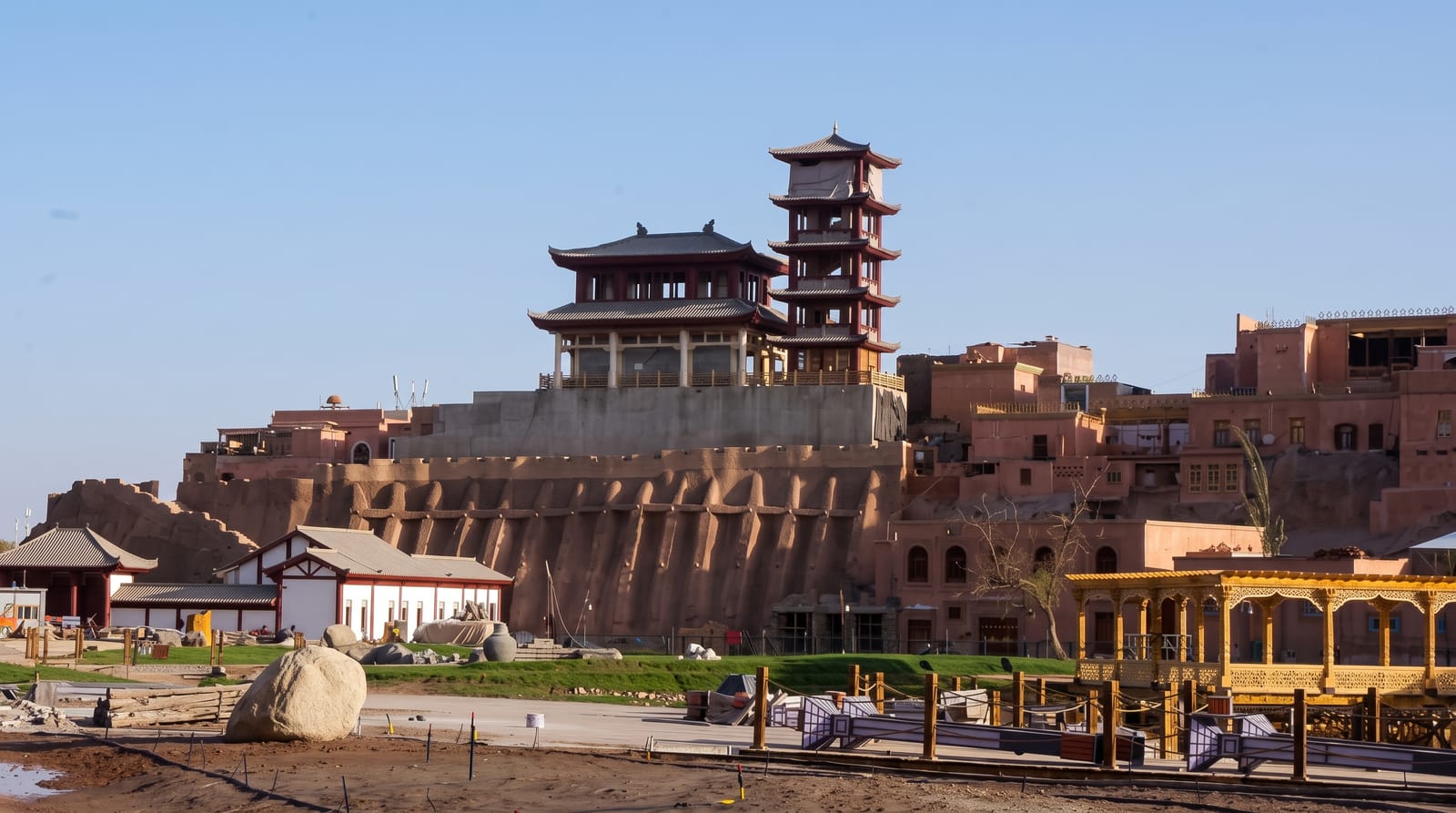
Kashgar sits where the routes around the northern and southern edges of the Taklamakan met before crossing the mountains toward Central Asia, and it has been an oasis market for two thousand years. The old city is a quarter of narrow lanes between earth-brick and timber houses with carved doors and painted balconies, workshops where copper, wood, musical instruments and hats are made by hand, teahouses on upper floors, and the Id Kah mosque at its edge. Much of the quarter was rebuilt in the 2000s and 2010s in reinforced form on the old plan, so the lanes remain but the fabric is largely new.
The main sights
- The lanes - narrow streets of earth-brick and timber houses.
- The craft workshops - copper, wood, instrument and hat makers.
- The teahouses - upper-floor rooms overlooking the street.
- Id Kah mosque - the large mosque at the edge of the quarter.
When to go
April to June and September to October; summer is very hot and winter cold. Mornings are the busiest for the workshops. Ramadan and Eid change the rhythm of the quarter considerably.
Practical notes
Most of the quarter is post-2009 reconstruction rather than original fabric, which surprises visitors expecting an unaltered old town. Some sections are ticketed. Photography of people should always be asked first.
Nearby
The Sunday bazaar lies east; Karakul Lake is south on the Karakoram Highway.
What to pack for Kashgar Old City
Chosen from what this place is for. Tap a kit for the full checklist.
- Comfortable walking shoes - Sightseeing means kilometres of pavement and cobbles daily. Find on Amazon
- Modest clothing - Shoulders and knees covered - the single most common requirement. Find on Amazon
- A slim anti-theft daypack - Zips that close properly; keep it in front in crowds and on transit. Find on Amazon
- A scarf or shawl - To cover the head or shoulders on entry; women especially at mosques. Find on Amazon
Some links on this page are Amazon affiliate links - if you buy through them we may earn a small commission at no extra cost to you.
All packing kitsPlan your trip
Where to start if Kashgar Old City is going on the list.
Booking links on this page are affiliate links - if you book through them we may earn a small commission at no extra cost to you. It never changes what we write about a place.
Opening times, ticket prices and seasonal closures change - check the official source before you go: official site.