Pamplona Old Town
A walled casco viejo of Gothic cathedral, arcaded square and pintxo bars, with a star fort and green ring around it.
Updated 4 September 2026
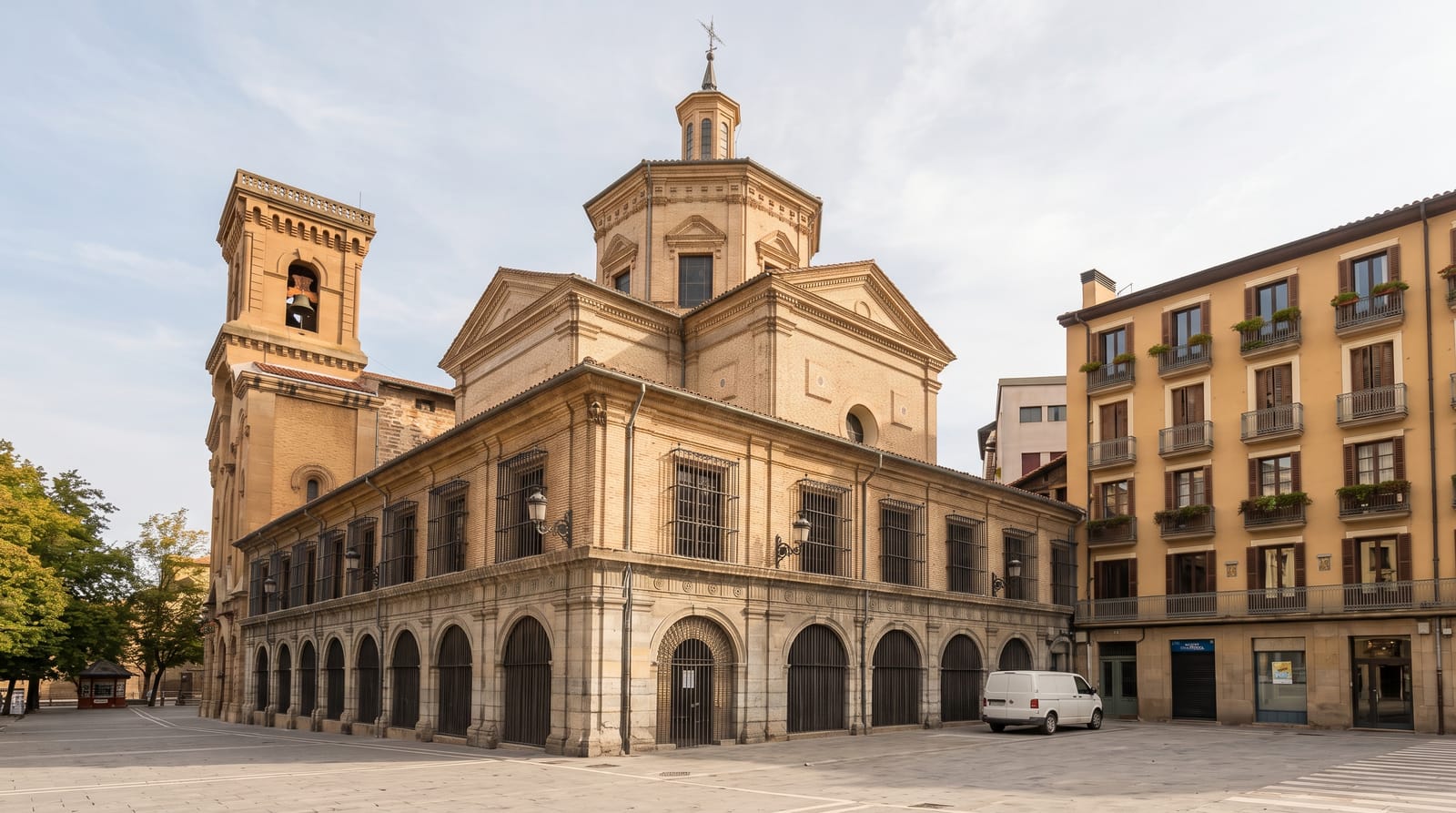
AI illustration
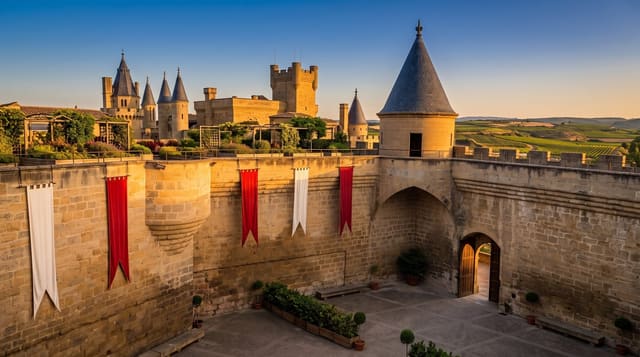
Pamplona kept its bastioned walls when most Spanish cities demolished theirs, and about five kilometres survive along with the Ciudadela, a pentagonal star fort begun in 1571 that is now a public park with its bastions and gates intact. Inside the walls, the casco viejo holds the Gothic cathedral with a fourteenth-century cloister often rated the finest in Spain, a neoclassical facade added later, and the tombs of Charles III of Navarre and his queen. The Plaza del Castillo is the social centre, arcaded and lined with cafes including the Iruna, which Hemingway used. Calle Estafeta, the narrow street along which the bulls run in July, is a pintxo street the rest of the year.
What's there
- The cathedral cloister - fourteenth-century Gothic work of exceptional quality.
- The Ciudadela - a pentagonal star fort, now a public park.
- Plaza del Castillo - an arcaded square at the centre of city life.
- Calle Estafeta - the bull run street, lined with pintxo bars year-round.
When to go
April to June and September to November; the city is at its most normal then, since July is entirely given over to San Fermin. Autumn brings the Navarrese food season. Winters are cold and wet.
Before you go
During San Fermin the old town is impassable and accommodation impossible. Outside it, Pamplona is a quiet provincial capital with fewer visitors than its fame suggests. The cathedral charges and keeps limited hours.
Nearby
The Camino Frances passes through the city; the Baztan valley and the Pyrenees lie north.
What to pack for Pamplona Old Town
Chosen from what this place is for. Tap a kit for the full checklist.
- Comfortable walking shoes - Sightseeing means kilometres of pavement and cobbles daily. Find on Amazon
- Modest clothing - Shoulders and knees covered - the single most common requirement. Find on Amazon
- A slim anti-theft daypack - Zips that close properly; keep it in front in crowds and on transit. Find on Amazon
- A scarf or shawl - To cover the head or shoulders on entry; women especially at mosques. Find on Amazon
Some links on this page are Amazon affiliate links - if you buy through them we may earn a small commission at no extra cost to you.
All packing kitsPlan your trip
Where to start if Pamplona Old Town is going on the list.
Booking links on this page are affiliate links - if you book through them we may earn a small commission at no extra cost to you. It never changes what we write about a place.
Opening times, ticket prices and seasonal closures change - check the official source before you go: official site.