Jingzhou Ancient City
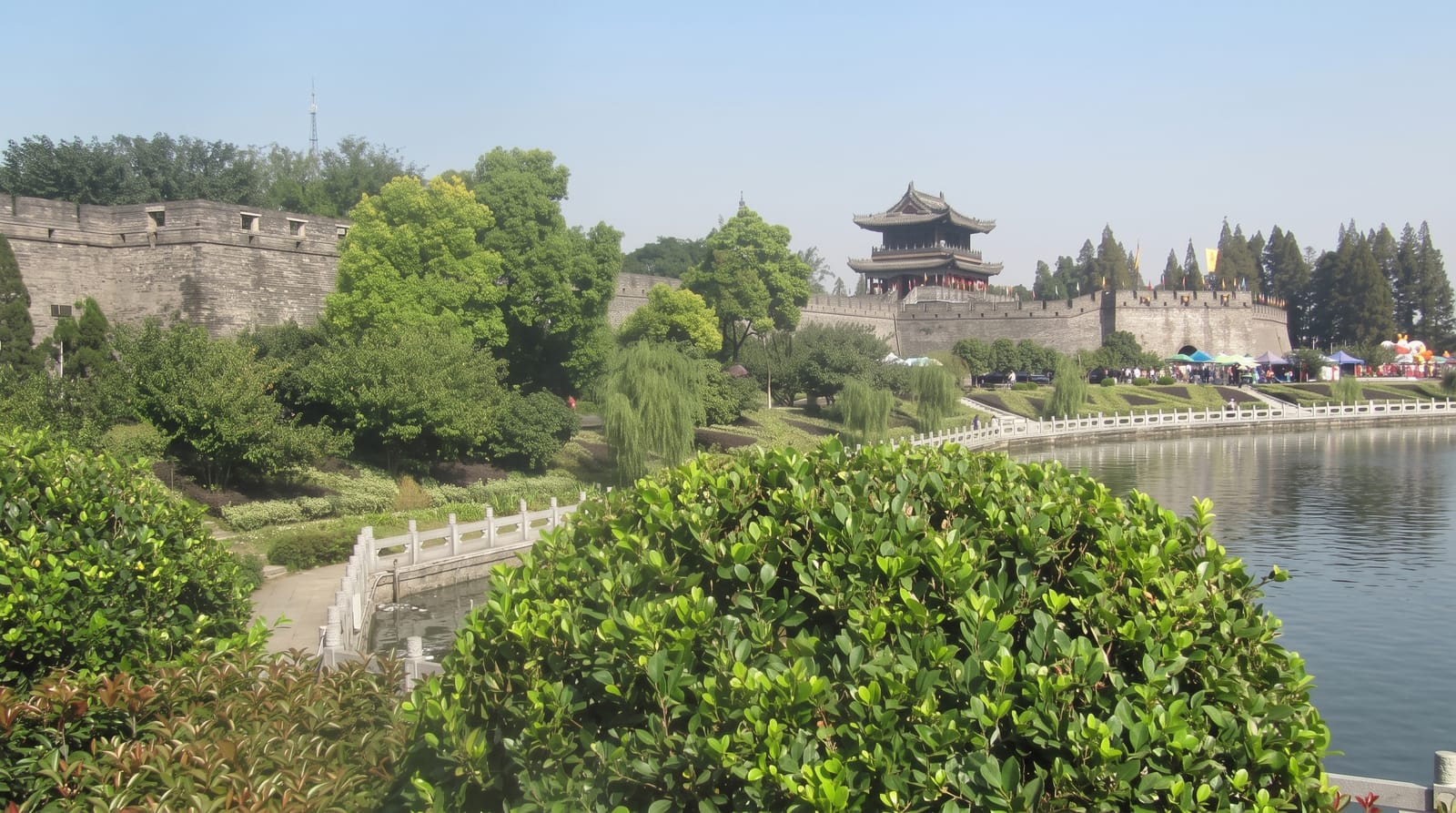
A brick city wall of eleven kilometres around a town central to Three Kingdoms history and the novel that retells it.
Updated 4 September 2026
AI illustration
Jingzhou controlled the middle Yangtze and was fought over repeatedly during the Three Kingdoms period, when Guan Yu held it for Liu Bei and lost it, an episode that occupies many chapters of Romance of the Three Kingdoms and is known to every reader of the novel. The present wall, about eleven kilometres around with six gates and towers, is largely a Qing rebuilding on Ming foundations, and it survives complete enough to walk substantial sections. The Jingzhou Museum holds a remarkably preserved male body from a Han tomb, along with lacquerware and silk. A large statue of Guan Yu was built in 2016, then dismantled and relocated after regulatory objections to its scale.
What you'll find
- The city wall - eleven kilometres of brick rampart with six gates.
- The Three Kingdoms associations - sites tied to Guan Yu's tenure and loss of the city.
- The Jingzhou Museum - Han lacquerware, silk and a preserved body.
- The gate towers - restored structures over the main entrances.
When to go
March to May and September to November; Hubei summers are hot and humid. The wall is exposed with little shade. The city is quieter than Wuhan or Yichang and sees mostly domestic visitors.
Practical notes
The Three Kingdoms significance is literary and historical rather than visible, and means little without knowing the novel. Sections of the wall are ticketed separately. English interpretation is minimal.
Nearby
Yichang and the dam lie west; Wuhan is east.
Key facts
Source: Wikidata, item Q15917437, read on 18 October 2026.
What to pack for Jingzhou Ancient City
Chosen from what this place is for. Tap a kit for the full checklist.
- Strong insect repellent - DEET or picaridin; the jungle is where bites and disease risk are highest. Find on Amazon
- Comfortable walking shoes - Sightseeing means kilometres of pavement and cobbles daily. Find on Amazon
- Long, light, quick-dry clothing - Covers skin from insects and sun without cooking you in the humidity. Find on Amazon
- A slim anti-theft daypack - Zips that close properly; keep it in front in crowds and on transit. Find on Amazon
Some links on this page are Amazon affiliate links - if you buy through them we may earn a small commission at no extra cost to you.
All packing kitsPlan your trip
Where to start if Jingzhou Ancient City is going on the list.
Booking links on this page are affiliate links - if you book through them we may earn a small commission at no extra cost to you. It never changes what we write about a place.
Opening times, ticket prices and seasonal closures change - check the official source before you go: official site.