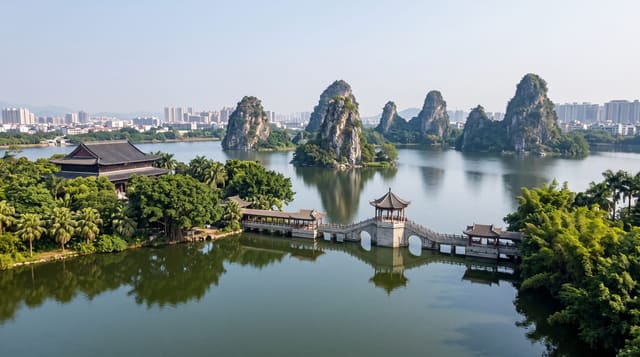
Huguangyan
A lake in a volcanic explosion crater whose mud layers record over a hundred thousand years of climate.
Updated 4 September 2026
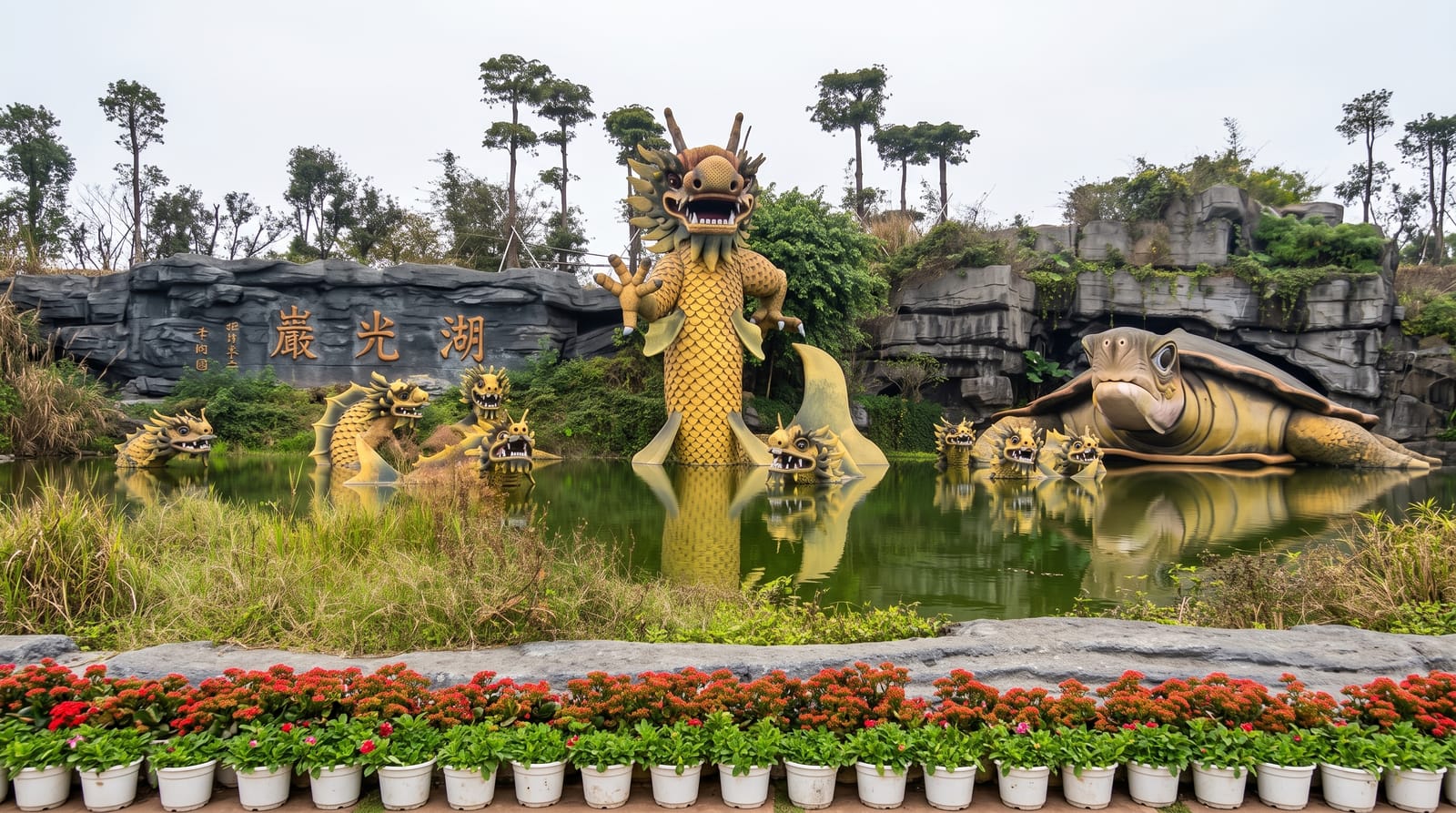
AI illustration
Huguangyan is a maar, a crater formed when rising magma met groundwater and exploded, leaving a shallow bowl rather than a cone; it filled with water and has held a lake for something like a hundred and forty thousand years. Because nothing disturbs the bottom, the sediment has accumulated in fine annual layers that give one of the longest continuous continental climate records in East Asia, and cores drilled here are studied internationally. For visitors it is a quiet round lake ringed by wooded crater walls, with a temple on the shore, walking paths, boats and a small volcano museum, set in a UNESCO Global Geopark that includes other craters on the Leizhou peninsula.
Highlights
- The crater lake - a round maar lake inside its explosion rim.
- The lake sediments - the layered record studied for palaeoclimate.
- The shore temple - a small monastery on the crater edge.
- The geopark exhibits - volcano displays and the wider Leizhou craters.
When to go
October to April for mild dry weather; the Leizhou peninsula is hot and humid in summer with typhoon risk from July to September. Weekends bring Zhanjiang families.
What to expect
The scientific interest is largely invisible to visitors; what you see is a pleasant lake. Zhanjiang is far from other destinations. Interpretation is mostly in Chinese.
Nearby
Zhanjiang lies northeast; Hailing Island is along the coast east.
Key facts
Source: Wikidata, item Q7221583, read on 18 October 2026.
What to pack for Huguangyan
Chosen from what this place is for. Tap a kit for the full checklist.
- Broken-in walking shoes or boots - Grip and ankle support matter more than looks; never hike in brand-new boots. Find on Amazon
- Strong insect repellent - DEET or picaridin; the jungle is where bites and disease risk are highest. Find on Amazon
- Modest clothing - Shoulders and knees covered - the single most common requirement. Find on Amazon
- Layers + a waterproof shell - Mountain weather turns fast; a packable rain jacket saves the day. Find on Amazon
Some links on this page are Amazon affiliate links - if you buy through them we may earn a small commission at no extra cost to you.
All packing kitsPlan your trip
Where to start if Huguangyan is going on the list.
Booking links on this page are affiliate links - if you book through them we may earn a small commission at no extra cost to you. It never changes what we write about a place.
Opening times, ticket prices and seasonal closures change - check the official source before you go: official site.