Harbin Central Street
A cobbled avenue of European facades built by Russian merchants, paved with bread-loaf stones laid in 1925.
Updated 21 October 2026

AI illustration
Zhongyang Dajie runs about a kilometre and a half through central Harbin, laid out from 1898 as the city grew around the Chinese Eastern Railway and built up by Russian, Jewish, Polish and other merchants in Renaissance, Baroque, Art Nouveau and eclectic styles, more than seventy of the buildings now protected. The surface is its other distinction: granite blocks the size and shape of a loaf, laid by hand in 1925, said to have cost a silver rouble each at the time. The street ends at the Songhua River and the Stalin Park embankment. Modern Harbin institutions along it include the Modern Hotel of 1906 and shops selling Russian-style bread, sausage and ice cream eaten outdoors even at minus twenty.
History
The street was laid out in 1898, while the Chinese Eastern Railway across Manchuria was being built and Harbin was becoming a railway hub. In 1925 it was paved, at great cost, with cobblestones to stop erosion from the nearby Songhua River; by the 1920s it had become an international street of more than a hundred shops whose people were Russian, Jewish, Chinese, Japanese and more, and in 1986 the Harbin government listed it for preservation (Wikipedia, Central Street - Harbin).
What's there
- The bread-loaf paving - granite blocks laid by hand in 1925.
- The European facades - seventy-odd protected buildings in mixed styles.
- The ice cream in winter - a local habit of eating it outdoors in deep cold.
- The river end - Stalin Park and the Songhua embankment.
When to go
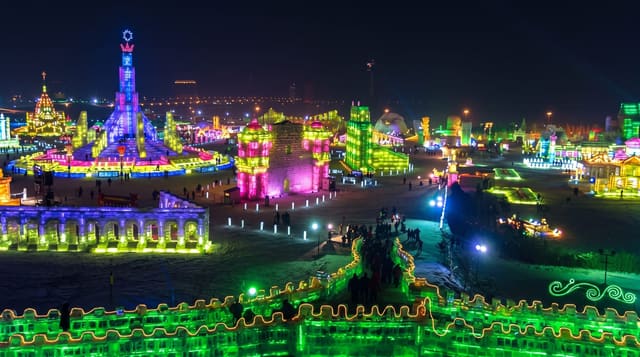
December to February for the ice festival season, when the street is coldest and busiest, or June to September for mild weather. Winter temperatures fall below minus twenty-five, which is part of the experience but demands proper clothing.
Things to know
The street is thoroughly commercial with chain shops behind the historic facades. Winter cold is severe and outdoor time is limited without serious clothing. Ice festival season fills the street shoulder to shoulder.
Nearby
Saint Sophia Cathedral is a short walk; the ice festival grounds lie across the river.
Key facts
Source: Wikidata, item Q10875064, read on 18 October 2026.
What to pack for Harbin Central Street
Chosen from what this place is for. Tap a kit for the full checklist.
- Comfortable walking shoes - Sightseeing means kilometres of pavement and cobbles daily. Find on Amazon
- Modest clothing - Shoulders and knees covered - the single most common requirement. Find on Amazon
- A slim anti-theft daypack - Zips that close properly; keep it in front in crowds and on transit. Find on Amazon
- A scarf or shawl - To cover the head or shoulders on entry; women especially at mosques. Find on Amazon
Some links on this page are Amazon affiliate links - if you buy through them we may earn a small commission at no extra cost to you.
All packing kitsPlan your trip
Where to start if Harbin Central Street is going on the list.
Booking links on this page are affiliate links - if you book through them we may earn a small commission at no extra cost to you. It never changes what we write about a place.
Opening times, ticket prices and seasonal closures change - check the official source before you go: official site.