Badain Jaran Desert
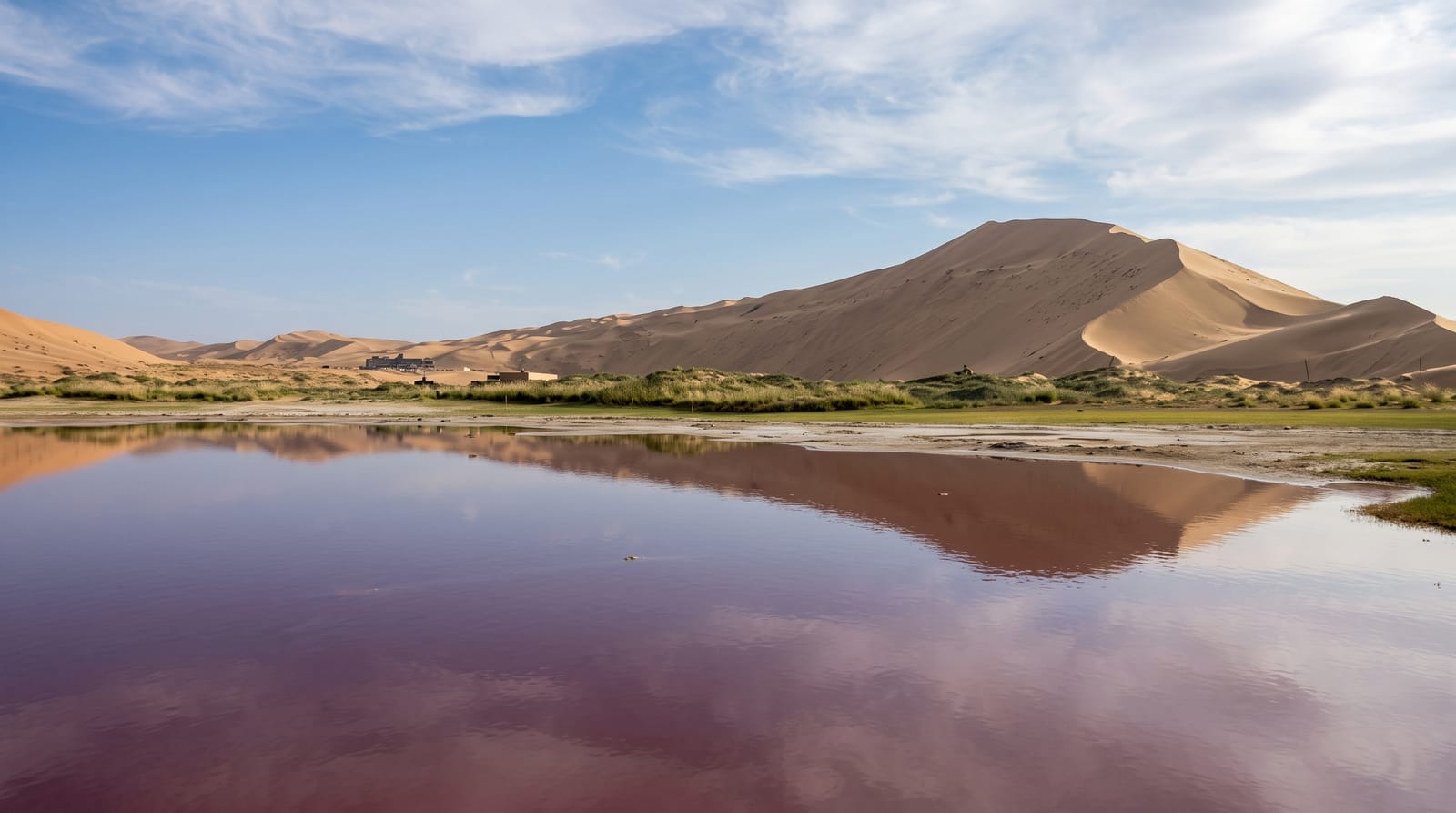
The tallest stationary dunes on earth, some over five hundred metres, with spring-fed lakes lying between them.
Updated 20 October 2026
AI illustration
UNESCO World Heritage
The Badain Jaran holds the highest fixed dunes in the world, some of them rising more than five hundred metres, and among them lie more than a hundred lakes fed by groundwater, some fresh and some so saline they crust with salt, ringed by reeds with small temple settlements beside a few. The combination of mega-dunes and permanent water is what makes the desert unusual, and the source of the groundwater, possibly from far distant mountains, is still debated. A temple built in 1868 stands beside one lake with a pagoda visible above the dunes. The desert became UNESCO World Heritage in 2024.
What you'll find
- The mega-dunes - the tallest stationary dunes on earth, over five hundred metres.
- The desert lakes - more than a hundred spring-fed lakes among the sand.
- Badain Jaran Temple - the 1868 temple beside a lake within the dunes.
- The salt crusts - white rims around the more saline lakes.
When to go
May to October; summer heat is severe and winter nights fall well below freezing. Access is by organised four-wheel drive only, and independent driving into the dunes is prohibited and dangerous. Tours run from the desert-edge settlements.
What to expect
There is no independent access: guided four-wheel drive with experienced drivers is required, and it is expensive. Accommodation inside is basic guesthouse rooms in tiny settlements. The drive over the dunes is rough and not for the queasy.
Nearby
Alxa Right Banner lies west; Zhangye and the Hexi Corridor are southwest.
Key facts
Source: Wikidata, item Q939033, read on 18 October 2026.
What to pack for Badain Jaran Desert
Chosen from what this place is for. Tap a kit for the full checklist.
- Broken-in walking shoes or boots - Grip and ankle support matter more than looks; never hike in brand-new boots. Find on Amazon
- Loose, light, long clothing - Covering up beats bare skin in the desert - and locals dress this way for a reason. Find on Amazon
- Modest clothing - Shoulders and knees covered - the single most common requirement. Find on Amazon
- Layers + a waterproof shell - Mountain weather turns fast; a packable rain jacket saves the day. Find on Amazon
Some links on this page are Amazon affiliate links - if you buy through them we may earn a small commission at no extra cost to you.
All packing kitsPlan your trip
Where to start if Badain Jaran Desert is going on the list.
Booking links on this page are affiliate links - if you book through them we may earn a small commission at no extra cost to you. It never changes what we write about a place.
Opening times, ticket prices and seasonal closures change - check the official source before you go: official site.