Sao Nicolau
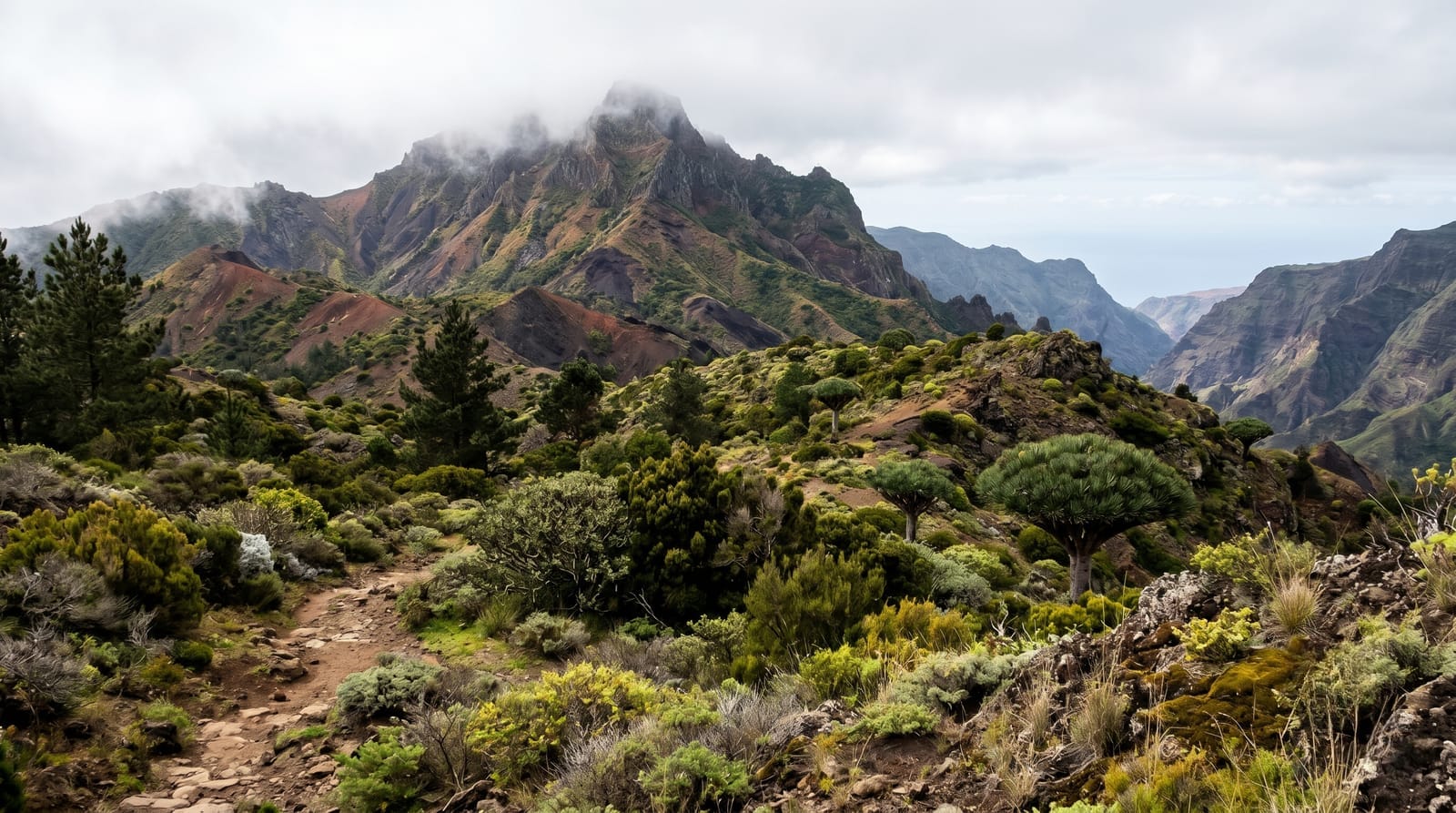
The hikers' island the crowds skip - Monte Gordo's cloud forest, dragon trees in the ravines and the sea-sculpted rocks of Carbeirinho.
Updated 18 October 2026
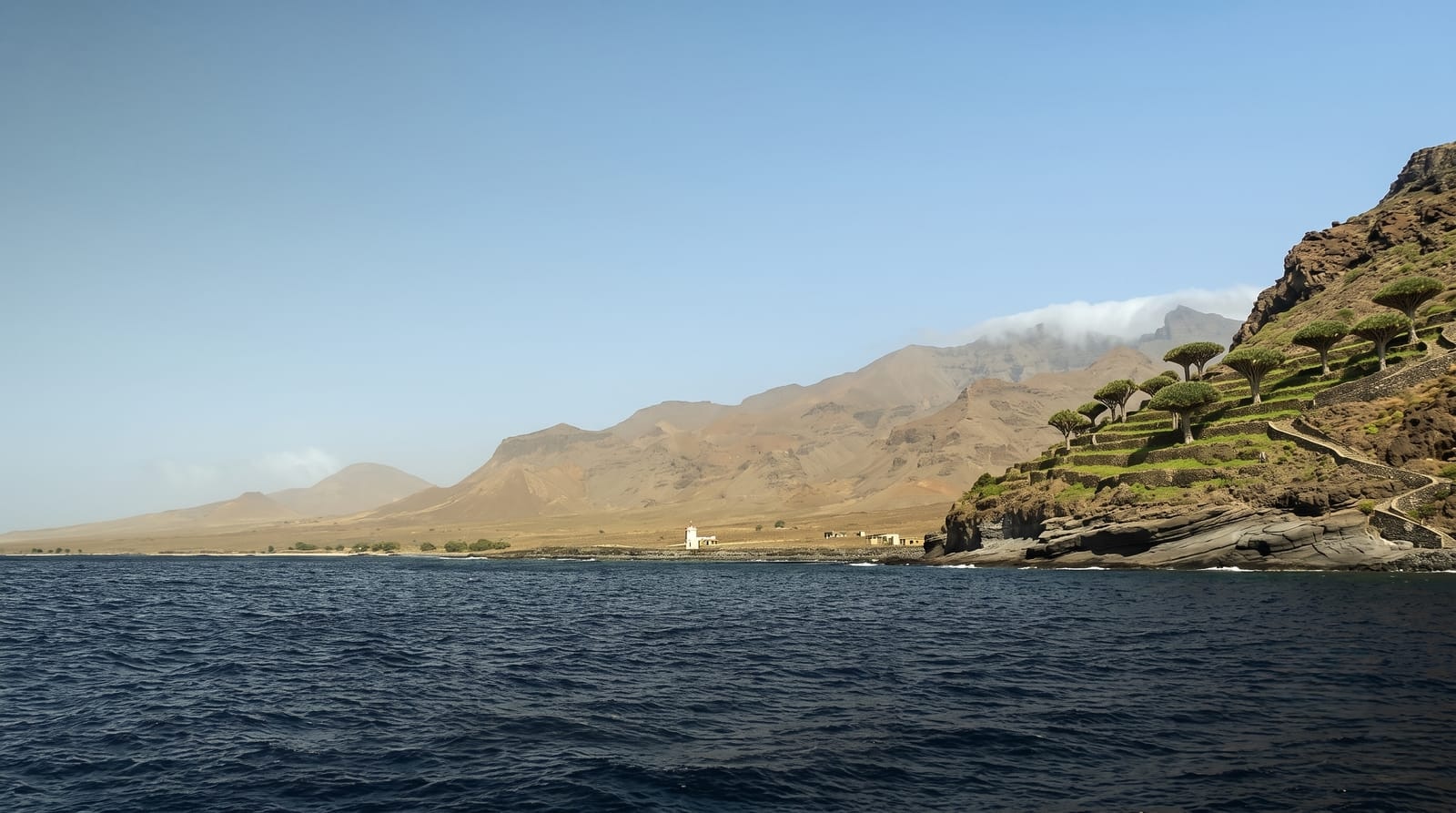
AI illustration
Sao Nicolau does what Santo Antao does - knife-edge ridges, cobbled paths, valleys of sugarcane and mango - with a fraction of the walkers. The island climbs to Monte Gordo's natural park, where cloud forest endemics grow inside an old volcanic amphitheatre, and its ravines shelter dragoeiros - dragon trees, the improbable umbrella-shaped relics that are the island's emblem. Ribeira Brava, the little capital deep in its canyon, keeps carnival traditions and a seminary-town dignity; and on the northwest coast at Carbeirinho, the sea has carved layered volcanic rock into smooth, surreal galleries that have become the island's photographic signature.
History
The island was discovered in 1461 or 1462 by Diogo Afonso, along with São Vicente and Santo Antão, and first settled in the 17th century. Pirate attacks led to the abandonment of the coastal settlement of Porto de Lapa in 1653, and Ribeira Brava was founded inland instead; from 1786 to 1943 the island was the seat of the Roman Catholic Diocese of Santiago de Cabo Verde. In the 19th century the roadstead of Tarrafal became an anchorage for whaling ships, and Tarrafal is now the island's largest settlement (Wikipedia, São Nicolau, Cape Verde).
What's there
- Monte Gordo - the cloud-forest summit park and its endemics.
- The dragon trees - dragoeiro stands in the Faja valley ravines.
- Carbeirinho - the wave-sculpted layered rocks of the northwest shore.
- Ribeira Brava - the canyon-bottom capital and its church square.
When to go
November to June for stable hiking weather; the northeast trades keep the heights fresh year round. August to October greens the terraces when the rains cooperate. Ferry and flight schedules are thin - build slack.
What to expect
Infrastructure is modest: a handful of guesthouses, aluguer minibuses that leave when full, and restaurants that appreciate warning. Trails are steep, cobbled and exposed in stretches - proper shoes, sun cover and water discipline apply. It is the right island for walkers content with early nights; it is the wrong one for beach-resort expectations.
Nearby
Sao Vicente's Mindelo by ferry, Santo Antao beyond and Raso islet's seabird waters offshore.
Key facts
Source: Wikidata, item Q492509, read on 18 October 2026.
Opening times, ticket prices and seasonal closures change - check the official source before you go: official site.
Plan your trip
Where to start if Sao Nicolau is going on the list.
Booking links on this page are affiliate links - if you book through them we may earn a small commission at no extra cost to you. It never changes what we write about a place.
What to pack for Sao Nicolau
Chosen from what this place is for. Tap a kit for the full checklist.
- Broken-in walking shoes or boots - Grip and ankle support matter more than looks; never hike in brand-new boots. Find on Amazon
- Reef-safe sunscreen - High SPF that will not bleach the coral you are swimming over. Find on Amazon
- Strong insect repellent - DEET or picaridin; the jungle is where bites and disease risk are highest. Find on Amazon
- Layers + a waterproof shell - Mountain weather turns fast; a packable rain jacket saves the day. Find on Amazon
Some links on this page are Amazon affiliate links - if you buy through them we may earn a small commission at no extra cost to you.
All packing kits