Nisga'a Lava Beds
The youngest lava flow in Canada, from an eruption around 1700 that killed about two thousand Nisga'a.
Updated 4 September 2026
AI illustration
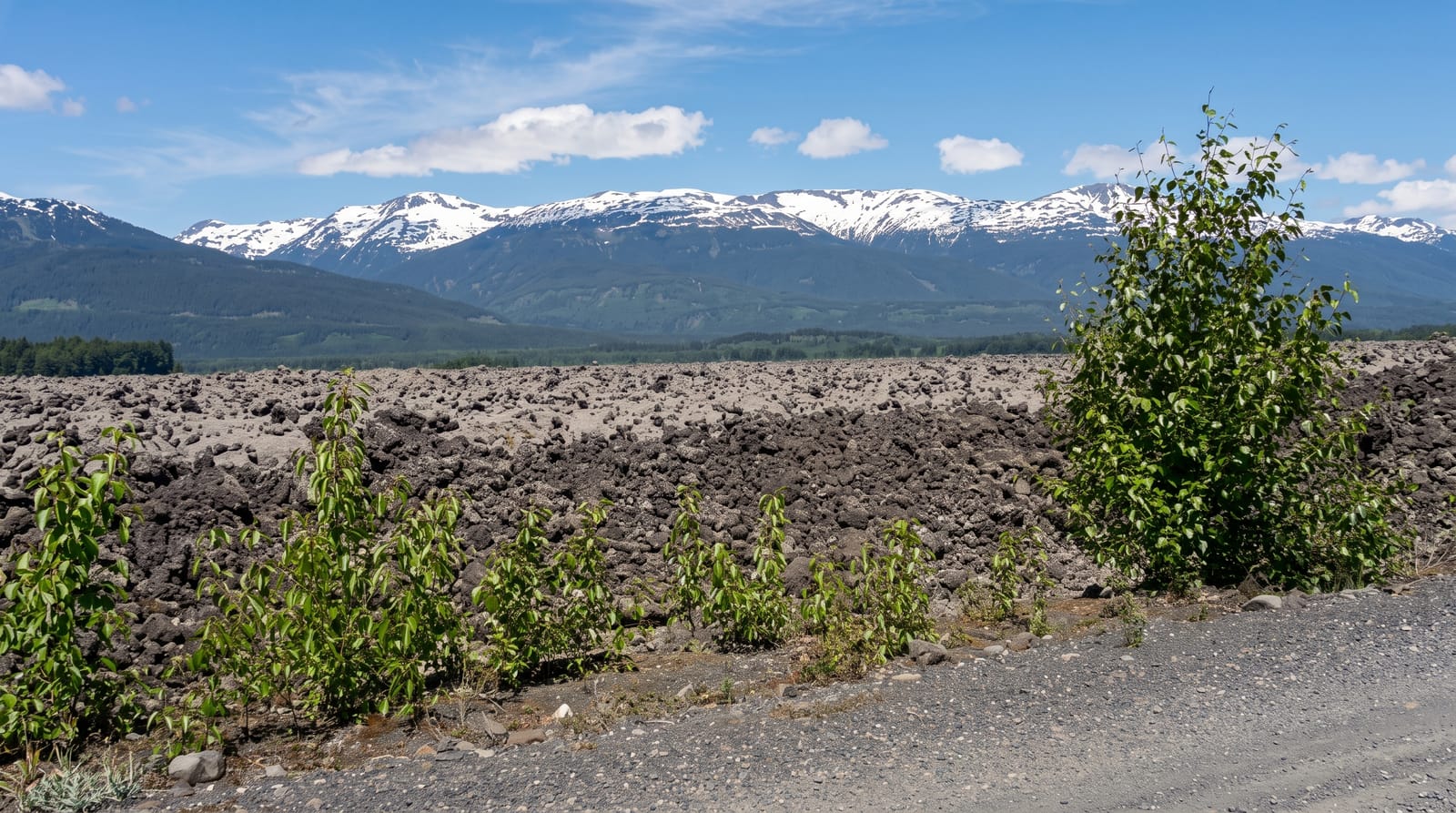
Around the year 1700 a cinder cone erupted in the Nass Valley, sending lava about twenty-two kilometres down the river and burying two Nisga'a villages; oral history records roughly two thousand deaths, making it the deadliest known geological event in Canada. Nisga'a accounts attribute it to children mistreating salmon, and the telling is part of the law taught in the valley. The lava field is the youngest in the country, still largely bare rock with tree islands. Anhluut'ukwsim Laxmihl Angwinga'asanskwhl Nisga'a, the memorial park, was the first in British Columbia jointly managed with a First Nation, established in 1992.
What's there
- The lava field - bare basalt running twenty-two kilometres down the valley.
- The cinder cone - the vent, visited only with a Nisga'a guide.
- The tree islands - patches of forest the flow went around.
- The memorial pole - a pole raised to those who died in the eruption.
When to go
June to September; the cone hike runs on a guided schedule in summer only. The valley road is long and remote. Snow closes the higher ground in winter.
Before you go
Walking on the lava outside marked trails is prohibited, both for safety and because the field is a burial ground. The cone can only be climbed with a Nisga'a guide on scheduled days. Services in the valley are minimal.
Nearby
Terrace lies south; 'Ksan is southeast.
What to pack for Nisga'a Lava Beds
Chosen from what this place is for. Tap a kit for the full checklist.
- Broken-in walking shoes or boots - Grip and ankle support matter more than looks; never hike in brand-new boots. Find on Amazon
- Warm base layers - Merino or synthetic against the skin - never cotton, which chills when damp. Find on Amazon
- Layers + a waterproof shell - Mountain weather turns fast; a packable rain jacket saves the day. Find on Amazon
- An insulated + windproof jacket - A down or synthetic layer under a hard shell handles most cold. Find on Amazon
Some links on this page are Amazon affiliate links - if you buy through them we may earn a small commission at no extra cost to you.
All packing kitsPlan your trip
Where to start if Nisga'a Lava Beds is going on the list.
Booking links on this page are affiliate links - if you book through them we may earn a small commission at no extra cost to you. It never changes what we write about a place.
Opening times, ticket prices and seasonal closures change - check the official source before you go: official site.