Hecla-Grindstone Provincial Park
An island settled by Icelanders and later emptied by the province, its village kept as a heritage site.
Updated 19 October 2026
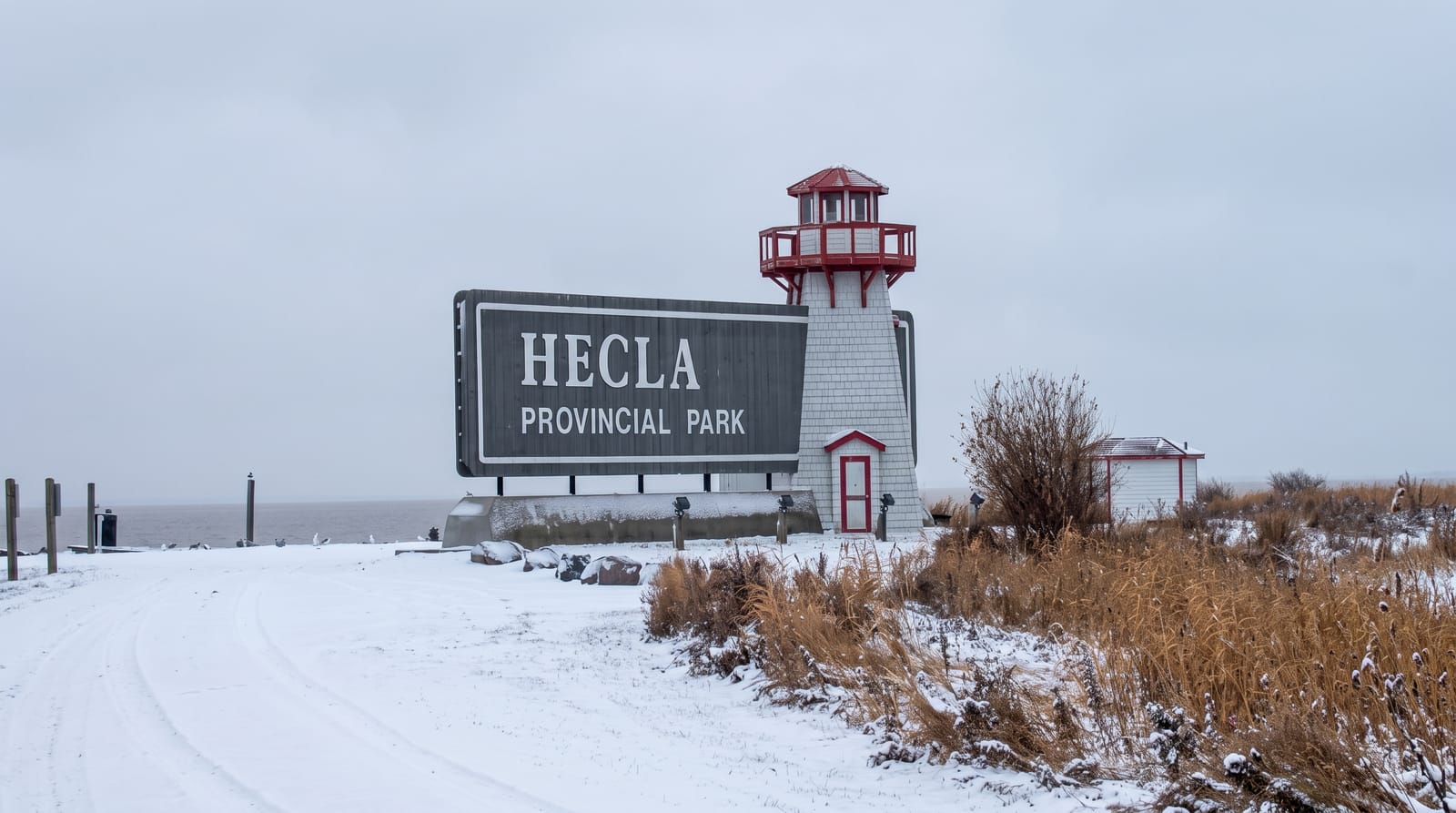
AI illustration
Hecla Island was settled from 1876 by Icelanders who fished the lake and farmed, and the village kept its own school, church and boats into the twentieth century. When the province created the park in 1969 residents were bought out and moved off, a decision still resented locally; the village was preserved as a heritage site with the church, school, fish station and several houses standing and interpreted. A causeway now links the island to the mainland. Grindstone Point across the water adds marsh and beach. The park is a strong birding area, with a marsh boardwalk and moose commonly seen at dawn on the island roads.
History
The island was settled in 1876 by the second wave of Icelandic immigrants, who called it Mikley, the magnificent island, and the community thrived for years until hard winters, disease and the poor prospects of commercial fishing and farming wore it down; its only school closed in 1970. Manitoba made Hecla Island a provincial park in 1969, and Grindstone was added in 1997 to form Hecla-Grindstone Provincial Park (Wikipedia, Hecla-Grindstone Provincial Park).
What you'll find
- Hecla Village - the preserved Icelandic settlement with church and school.
- The fish station - buildings from the lake commercial fishery.
- The marsh boardwalk - a wetland walk with waterfowl and marsh birds.
- The moose - animals regularly seen on island roads at dawn and dusk.
When to go
June to September for the village, beaches and birds; winter brings skiing and ice fishing with most services closed. Moose are most visible early morning in spring and autumn.
Practical notes
The village buildings have limited interior access and staffing. Lake algae blooms affect swimming in some summers. The resort on the island has changed hands and services vary.
Nearby
Gimli lies south; Grand Beach is across the lake on the eastern shore.
Key facts
Source: Wikidata, item Q1571016, read on 18 October 2026.
What to pack for Hecla-Grindstone Provincial Park
Chosen from what this place is for. Tap a kit for the full checklist.
- Broken-in walking shoes or boots - Grip and ankle support matter more than looks; never hike in brand-new boots. Find on Amazon
- Travel rod + reel - A packable multi-piece rod fits in a case and covers most holiday fishing. Find on Amazon
- Reef-safe sunscreen - High SPF that will not bleach the coral you are swimming over. Find on Amazon
- Layers + a waterproof shell - Mountain weather turns fast; a packable rain jacket saves the day. Find on Amazon
Some links on this page are Amazon affiliate links - if you buy through them we may earn a small commission at no extra cost to you.
All packing kitsPlan your trip
Where to start if Hecla-Grindstone Provincial Park is going on the list.
Booking links on this page are affiliate links - if you book through them we may earn a small commission at no extra cost to you. It never changes what we write about a place.
Opening times, ticket prices and seasonal closures change - check the official source before you go: official site.