Oak Hammock Marsh
A restored fragment of a marsh that was drained for farmland, now holding hundreds of thousands of birds.
Updated 18 October 2026
AI illustration
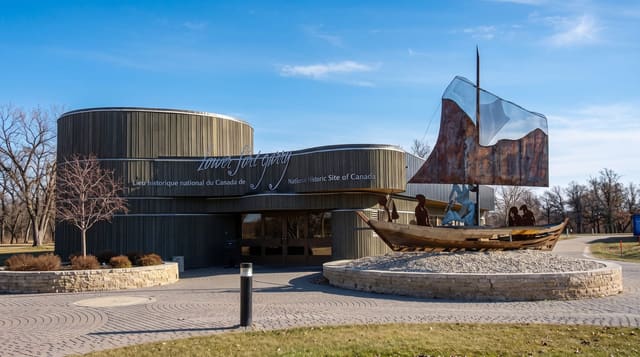
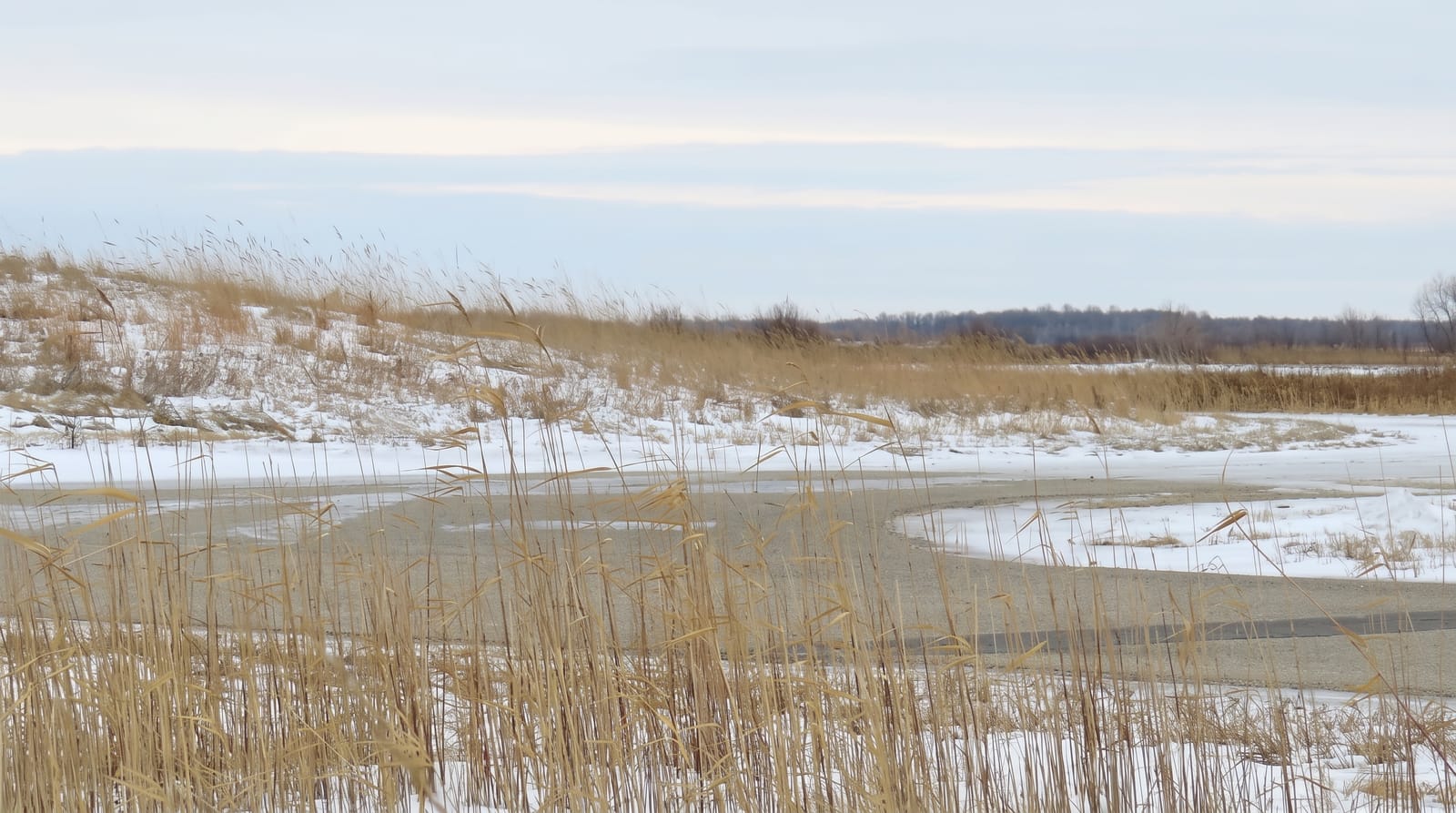
St. Andrews Bog covered around forty-seven thousand hectares before it was drained for farmland from 1897 onwards; Oak Hammock is a restoration of a small part of it, begun in the late 1960s, and it now draws enormous numbers of migrating waterfowl, with autumn peaks of several hundred thousand ducks and geese. Around three hundred bird species have been recorded. The interpretive centre is built into an earth berm with a green roof so it barely breaks the horizon, and about thirty kilometres of trails and floating boardwalks run into the marsh. It is a joint Ducks Unlimited and provincial project.
History
The marsh is a remnant of 470 square kilometres of marsh and fen, once known in English as St. Andrews Bog, that reached from the edge of Winnipeg north to Teulon and west to Lake Winnipeg. Its name dates from the early 1870s, when settlers picnicked on an oak-covered knoll at the bog's edge on land owned by Aaron MacDonald, and it became official with the Oak Hammock post office. Drainage for farming began in 1897, and by the early 1960s all but 60 hectares had gone. Restoration began in 1967 with the governments of Manitoba and Canada and Ducks Unlimited Canada; by 1974, 3,450 hectares had been bought and 22 kilometres of dykes built to hold water in three compartments with 58 nesting islands, and a fourth compartment followed an agreement of 1984. The conservation centre, built in 1991 for CA$11 million and opened in 1993, is also the national headquarters of Ducks Unlimited Canada (Wikipedia, Oak Hammock Marsh).
The landscape
- The autumn concentration - hundreds of thousands of waterfowl in October.
- The floating boardwalks - paths running out over open marsh.
- The buried centre - an interpretive building set into a berm with a green roof.
- The restoration story - a fragment of a vast drained bog brought back.
When to go
April and May for spring migration, September and October for the autumn peak, which is the bigger spectacle. Summer has breeding birds in smaller numbers. Winter is quiet.
Before you go
Numbers depend entirely on migration timing and weather. The trails are exposed with no shade and wind off the marsh is constant. Mosquitoes in summer are severe.
Nearby
Narcisse snake dens lie north; Winnipeg is south.
Key facts
Source: Wikidata, item Q7073534, read on 18 October 2026.
What to pack for Oak Hammock Marsh
Chosen from what this place is for. Tap a kit for the full checklist.
- Broken-in walking shoes or boots - Grip and ankle support matter more than looks; never hike in brand-new boots. Find on Amazon
- Layers + a waterproof shell - Mountain weather turns fast; a packable rain jacket saves the day. Find on Amazon
- Daypack with rain cover - 20-30 litres holds water, snacks, layers and a first-aid kit. Find on Amazon
- Offline maps + a power bank - Download the trail before you lose signal; carry backup charge. Find on Amazon
Some links on this page are Amazon affiliate links - if you buy through them we may earn a small commission at no extra cost to you.
All packing kitsPlan your trip
Where to start if Oak Hammock Marsh is going on the list.
Booking links on this page are affiliate links - if you book through them we may earn a small commission at no extra cost to you. It never changes what we write about a place.
Opening times, ticket prices and seasonal closures change - check the official source before you go: official site.