Marais Poitevin
A drained marsh of canals under ash trees, worked from flat-bottomed boats pushed with a pole.
Updated 4 September 2026
AI illustration
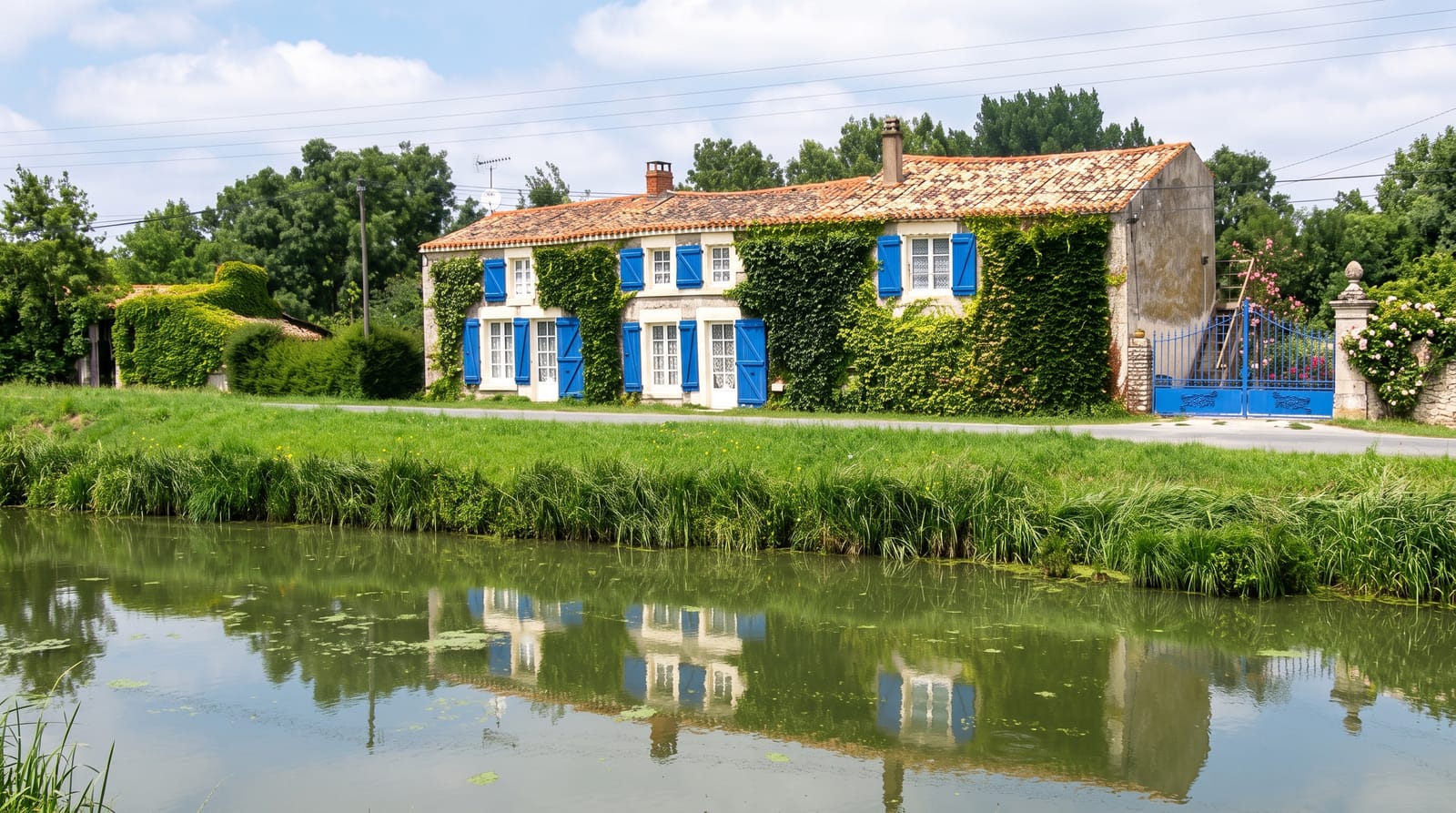
This was a gulf until monks began draining it in the eleventh century, cutting a network of canals that still divides the wet marsh into small plots reachable only by water. The inner zone, the Marais Mouille, is the one people come for: narrow channels under pollarded ash, so overhung in summer that the light turns green, which is where the name Green Venice comes from. Flat-bottomed boats called plates are pushed along with a pole, either self-hired or with a guide who will usually demonstrate the trick of setting marsh gas alight by stirring the bed and holding a flame to the bubbles.
The landscape
- The green canals - channels roofed by pollarded ash in summer.
- The plates - flat-bottomed boats pushed with a pole.
- The marsh gas trick - guides igniting bubbles stirred from the bed.
- The plot landscape - fields reachable only by water, some still farmed that way.
When to go
May to September, when the ash is in leaf and the tunnel effect works; the canals are bare and open in winter. Boat hire is seasonal and busiest in August.
Before you go
Outside the leafy months the green tunnel effect disappears entirely. Self-punting is harder than it looks and shoulders complain. The wider marsh is ordinary farmland; the interest is concentrated in a small area.
Nearby
Niort lies east; La Rochelle is southwest.
Key facts
Source: Wikidata, item Q1754337, read on 18 October 2026.
What to pack for Marais Poitevin
Chosen from what this place is for. Tap a kit for the full checklist.
- Broken-in walking shoes or boots - Grip and ankle support matter more than looks; never hike in brand-new boots. Find on Amazon
- Layers + a waterproof shell - Mountain weather turns fast; a packable rain jacket saves the day. Find on Amazon
- Daypack with rain cover - 20-30 litres holds water, snacks, layers and a first-aid kit. Find on Amazon
- Offline maps + a power bank - Download the trail before you lose signal; carry backup charge. Find on Amazon
Some links on this page are Amazon affiliate links - if you buy through them we may earn a small commission at no extra cost to you.
All packing kitsPlan your trip
Where to start if Marais Poitevin is going on the list.
Booking links on this page are affiliate links - if you book through them we may earn a small commission at no extra cost to you. It never changes what we write about a place.
Opening times, ticket prices and seasonal closures change - check the official source before you go: official site.