The Royal Palaces of Abomey
The seat of the mighty Dahomey kingdom - a UNESCO complex of earthen royal palaces in Abomey, the capital of one of West Africa's most powerful pre-colonial states, preserving the throne rooms, bas-reliefs and treasures of its warrior kings.
Updated 18 October 2026
AI illustration
UNESCO World Heritage
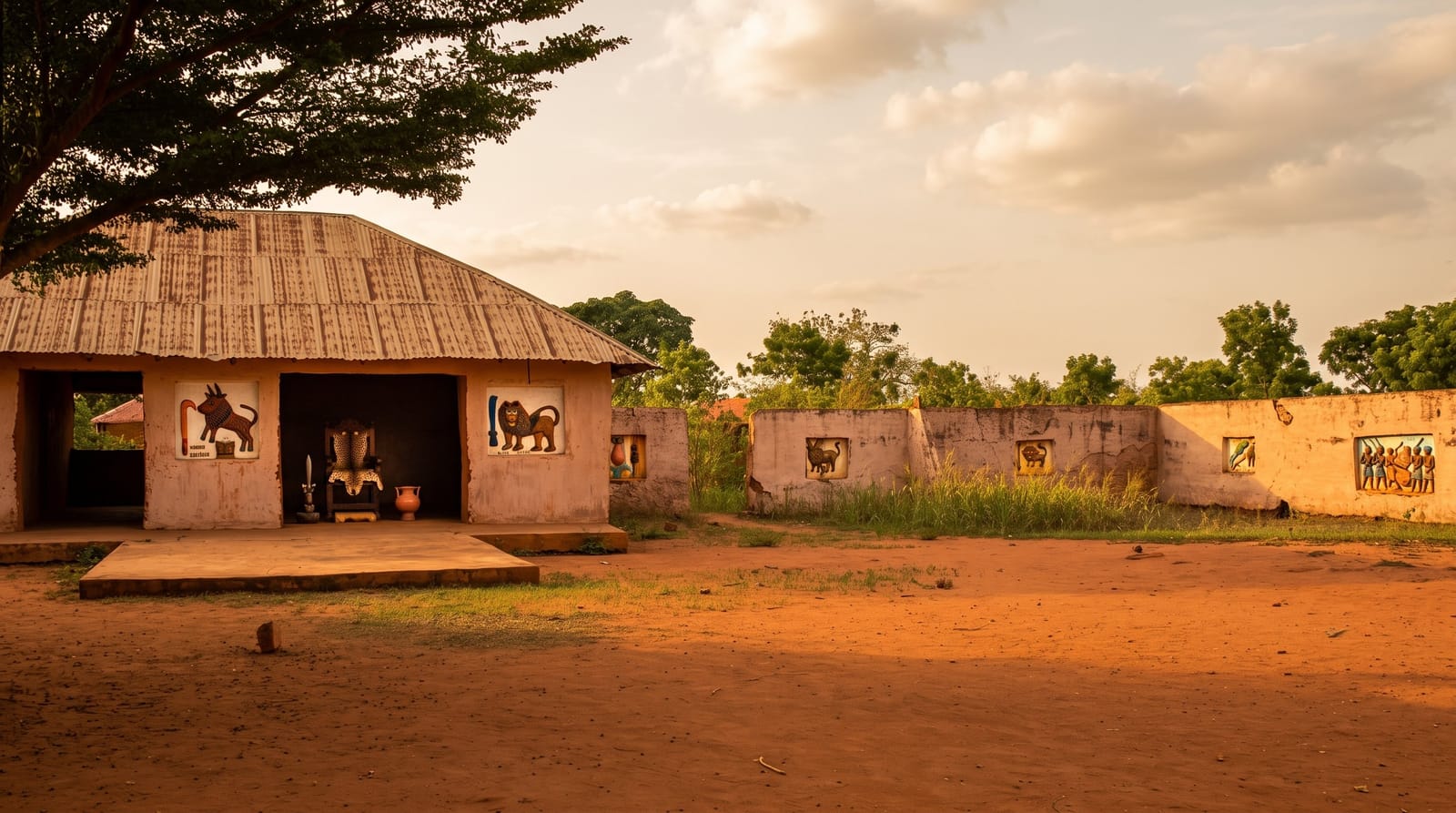
The Royal Palaces of Abomey, a UNESCO World Heritage Site, are the historic heart of the Kingdom of Dahomey, one of the most powerful and remarkable states in pre-colonial West Africa, which flourished from the seventeenth to nineteenth centuries. Over generations, its kings built a vast complex of earthen palaces here, and the surviving structures, now partly a museum, preserve the throne rooms, ceremonial spaces and treasures of the dynasty. Most striking are the vivid polychrome bas-reliefs adorning the palace walls, which recorded the kingdom's history, myths and the deeds of its rulers, and the relics of the famed all-female warrior regiment, the so-called Dahomey Amazons.
History
Twelve kings ruled the Kingdom of Dahomey from 1625 to 1900, and the palaces they built inside the enclosure of Abomey served as its cultural centre between 1695 and 1900; the first to build was King Houegbadja (1645-1685), who founded the city and set out the kingdom's laws and rules of succession. King Agaja defeated Allada in 1724 and Whydah in 1727, the start of Dahomey's dominance of the slave trade with Europeans through the port of Ouidah, and in the 19th century King Guézo turned the economy towards exports of farm products such as corn and palm oil. In the war with France of 1892 to 1894 the last independent king, Béhanzin, fled north as French troops entered the capital and was later deported to Martinique. The palaces were inscribed on the World Heritage List and, after a tornado struck Abomey on 15 March 1984, on the List of World Heritage in Danger, from which UNESCO removed them in July 2007 once restoration was complete; the palaces of King Ghézo and King Glélé now house the Historical Museum of Abomey (Wikipedia, Royal Palaces of Abomey).
What you'll find
- The earthen palaces - the royal complex of the Dahomey kings.
- The bas-reliefs - the vivid wall carvings recording the kingdom's story.
- The palace museum - the thrones, treasures and royal relics.
- The Amazon history - the legacy of the famed female warriors.
When to go
November to February, the drier, cooler season, for the most comfortable travel to the interior town of Abomey; the palaces and museum are best explored with a guide who can explain the rich, complex history of the Dahomey kingdom and interpret the symbolic bas-reliefs and relics.
What to expect
The palaces are earthen structures, and much of the vast original complex has been lost or is fragile, so a visit is partly museum and partly imagination, greatly enriched by a knowledgeable guide to bring the powerful history of Dahomey, including its role in the slave trade and its famed female warriors, to life. As the seat of one of West Africa's great pre-colonial kingdoms, with its unique bas-reliefs and remarkable history, though, Abomey is a fascinating and important site.
Nearby
The interior towns and the route to Cotonou and the coast are within reach.
Key facts
Source: Wikidata, item Q2425839, read on 18 October 2026.
What to pack for The Royal Palaces of Abomey
Chosen from what this place is for. Tap a kit for the full checklist.
- Comfortable walking shoes - Sightseeing means kilometres of pavement and cobbles daily. Find on Amazon
- A slim anti-theft daypack - Zips that close properly; keep it in front in crowds and on transit. Find on Amazon
- A refillable water bottle - Many cities have public fountains; save money and plastic. Find on Amazon
- A light layer + compact umbrella - For museum air-con and a sudden shower. Find on Amazon
Some links on this page are Amazon affiliate links - if you buy through them we may earn a small commission at no extra cost to you.
All packing kitsPlan your trip
Where to start if The Royal Palaces of Abomey is going on the list.
Booking links on this page are affiliate links - if you book through them we may earn a small commission at no extra cost to you. It never changes what we write about a place.
Opening times, ticket prices and seasonal closures change - check the official source before you go: official site.