Half Moon Caye
Belize's first protected area, a caye on Lighthouse Reef holding a colony of red-footed boobies and a wall dropping into deep water.
Updated 20 October 2026

AI illustration
UNESCO World Heritage
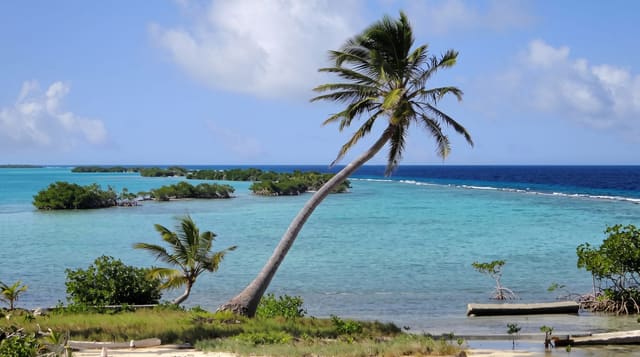
Half Moon Caye sits on the eastern rim of Lighthouse Reef and was protected as a bird sanctuary from 1924 and in 1981 became Belize's first nature reserve under the National Park Systems Act. Its colony of red-footed boobies is one of the few viable breeding grounds of the species in the western Caribbean, several thousand birds nesting in the orange-flowered ziricote trees at the eastern end, watched from a platform built up into the canopy so you look across the tops of the nests with frigatebirds harassing the boobies overhead. Off the western point the reef drops away into a wall in exceptional visibility. The Great Blue Hole is on the same atoll, and most trips combine the two.
The landscape
- The booby colony - thousands of red-footed boobies, from a canopy platform.
- The wall dive - the drop-off at the western point.
- The lighthouse - the old light at the eastern end of the caye.
- The beach - white sand with hermit crabs and nesting turtles in season.
When to go
December to April is the dry season with the calmest crossings. Boobies nest year-round with a peak in the winter months. Trips are long, two to three hours each way, and are cancelled in wind. Overnight camping is possible with a permit.
Practical notes
The crossing is long and often rough; day trips from Ambergris are six hours of boat time. Most Blue Hole tours include this caye as a lunch stop with very little time ashore, which undersells it. There are no facilities beyond a ranger station and basic camping. The reef here has suffered from bleaching events.
Nearby
The Great Blue Hole is on the same atoll; Ambergris Caye is two hours west.
Key facts
Source: Wikidata, item Q5641714, read on 18 October 2026.
What to pack for Half Moon Caye
Chosen from what this place is for. Tap a kit for the full checklist.
- Reef-safe sunscreen - High SPF that will not bleach the coral you are swimming over. Find on Amazon
- Binoculars - The single best wildlife tool - even a compact pair transforms a sighting. Find on Amazon
- Shelter suited to the place - Tent, tarp or hut booking - match it to the terrain and rules. Find on Amazon
- Quick-dry towel - A microfibre towel packs small and dries in minutes. Find on Amazon
Some links on this page are Amazon affiliate links - if you buy through them we may earn a small commission at no extra cost to you.
All packing kitsPlan your trip
Where to start if Half Moon Caye is going on the list.
Booking links on this page are affiliate links - if you book through them we may earn a small commission at no extra cost to you. It never changes what we write about a place.
Opening times, ticket prices and seasonal closures change - check the official source before you go: official site.