Glover's Reef
The southernmost of Belize's three atolls, a World Heritage component with a lagoon full of coral patches and six small cayes.
Updated 20 October 2026

AI illustration
UNESCO World Heritage
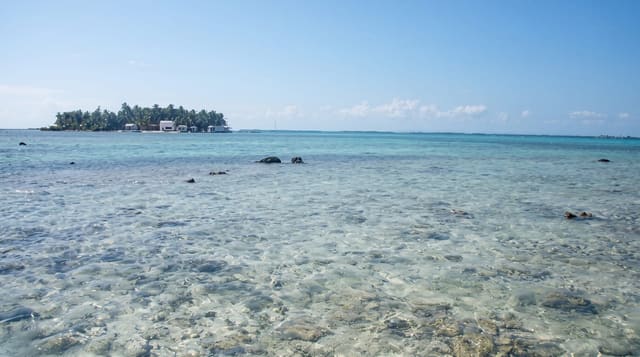
Glover's Reef lies about forty-five kilometres off the Belizean coast, the southernmost of the three atolls, and it is part of the Belize Barrier Reef World Heritage inscription. Its lagoon holds around 850 separate coral patch reefs and pinnacles, which is an unusual density and makes the inside water as interesting as the outside wall. Six small cayes sit on the southeastern rim, most of them holding a single small lodge or research station each. The Wildlife Conservation Society has run a research station here since the 1990s, and the atoll has been used for long-term reef and shark monitoring.
Highlights
- The lagoon patch reefs - hundreds of coral heads inside the atoll.
- The wall - the outer edge, with excellent visibility.
- The research station - long-term reef and shark monitoring.
- The cayes - six small islands, mostly one lodge each.
When to go
December to April is the dry season with the calmest crossings. The crossing takes two to three hours and is cancelled in wind, sometimes for days. Lodges run fixed transfer days rather than daily boats.
What to expect
Access is by lodge package with fixed transfer days, so this is a week rather than a night, and it is expensive. The crossing is long and often rough. Facilities on the cayes are simple, with generator power and limited water. Coral bleaching has affected the atoll, as it has the whole region.
Nearby
Dangriga and Hopkins are the mainland departure points.
Key facts
Source: Wikidata, item Q3772508, read on 18 October 2026.
What to pack for Glover's Reef
Chosen from what this place is for. Tap a kit for the full checklist.
- Reef-safe sunscreen - High SPF that will not bleach the coral you are swimming over. Find on Amazon
- Binoculars - The single best wildlife tool - even a compact pair transforms a sighting. Find on Amazon
- Quick-dry towel - A microfibre towel packs small and dries in minutes. Find on Amazon
- A zoom camera or long lens - Animals rarely come close; reach beats megapixels. Find on Amazon
Some links on this page are Amazon affiliate links - if you buy through them we may earn a small commission at no extra cost to you.
All packing kitsPlan your trip
Where to start if Glover's Reef is going on the list.
Booking links on this page are affiliate links - if you book through them we may earn a small commission at no extra cost to you. It never changes what we write about a place.
Opening times, ticket prices and seasonal closures change - check the official source before you go: official site.