Garifuna Cooking
Cassava bread pressed and baked on a griddle, hudut of fish in coconut broth with pounded plantain, and the sea-and-cassava tradition behind them.
Updated 2 September 2026
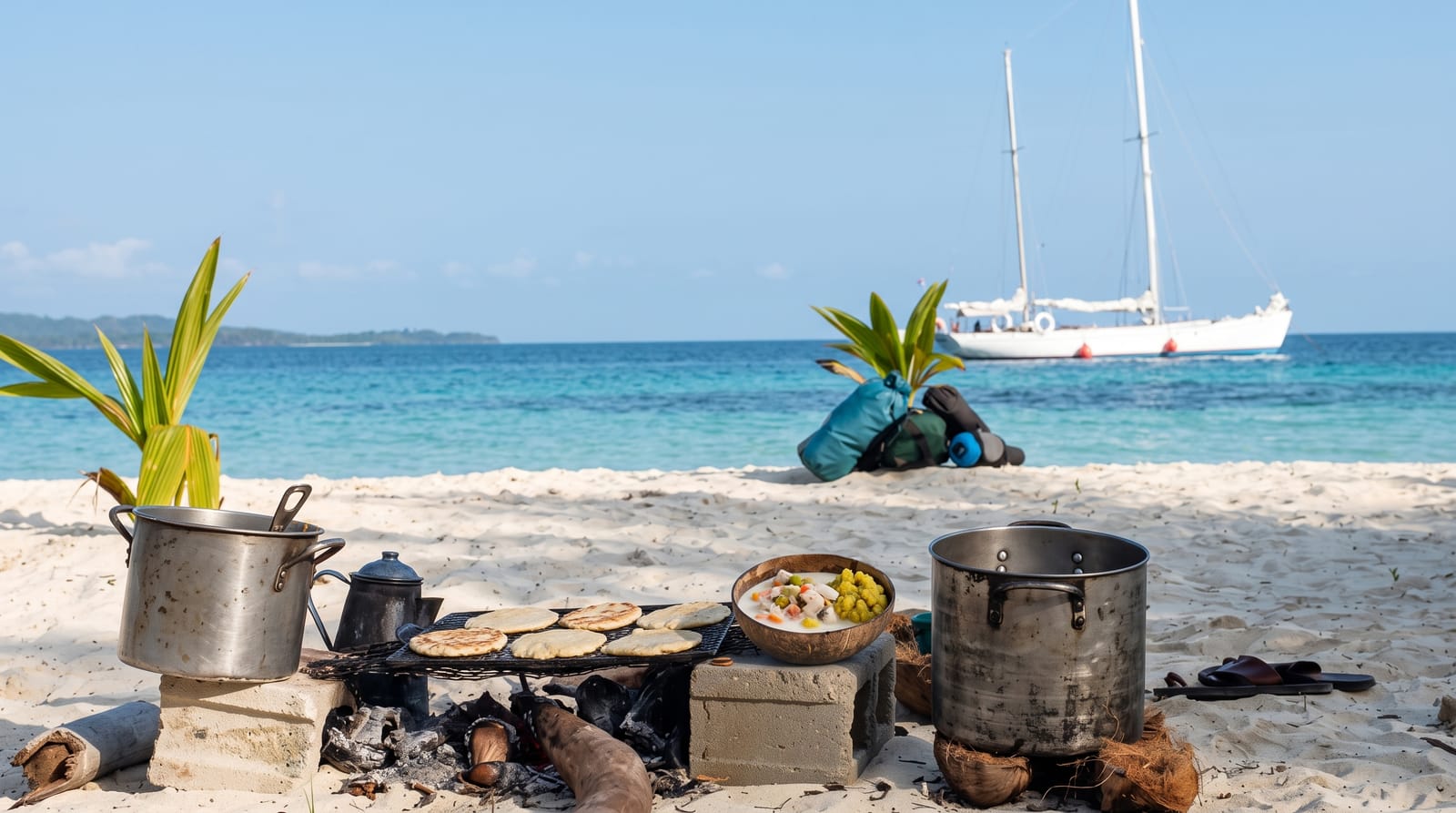
AI illustration
Garifuna cooking rests on two things: cassava and the sea. Ereba, cassava bread, is made by grating bitter cassava, pressing the toxic juice out through a woven tube called a ruguma hung from a beam, drying the meal and baking it flat on a griddle, a process that takes a day and is done communally. Hudut is the dish visitors meet first: fish simmered in a coconut broth, served with fufu, green and ripe plantain pounded together in a mortar until smooth. Around them sit sere, bundiga, cassava pudding and a strong tradition of home-brewed drinks.
Highlights
- Ereba - cassava bread pressed through a ruguma and baked flat.
- Hudut - fish in coconut broth with pounded plantain fufu.
- The ruguma - the woven press that makes bitter cassava safe.
- Cassava demonstrations - run by community groups in Hopkins and Dangriga.
When to go
Year-round. Hudut usually needs ordering ahead because of the pounding and the cooking. Community cassava-making demonstrations run in Hopkins and Dangriga by arrangement. Settlement Day in November is when everything appears at once.
Before you go
Hudut takes time and most places want notice; ordering on the day often means waiting an hour or more, which is the correct answer rather than a problem. Bitter cassava is toxic until processed, which is what the ruguma is for; this is not something to attempt yourself. Restaurant versions in tourist areas are often simplified.
Nearby
Hopkins and Dangriga are the centres; Punta Gorda has its own cooks.
What to pack for Garifuna Cooking
Chosen from what this place is for. Tap a kit for the full checklist.
- A reusable bag or container - For market produce and cutting down on packaging. Find on Amazon
- Wet wipes + hand sanitiser - Street food and washbasins do not always go together. Find on Amazon
Some links on this page are Amazon affiliate links - if you buy through them we may earn a small commission at no extra cost to you.
All packing kitsPlan your trip
Where to start if Garifuna Cooking is going on the list.
Booking links on this page are affiliate links - if you book through them we may earn a small commission at no extra cost to you. It never changes what we write about a place.
Opening times, ticket prices and seasonal closures change - check the official source before you go: official site.