Japanese Cuisine
One of the world's most refined food cultures - from sushi and ramen to tempura and kaiseki, an art of seasonality, precision and respect for the finest ingredients.
Updated 14 October 2026
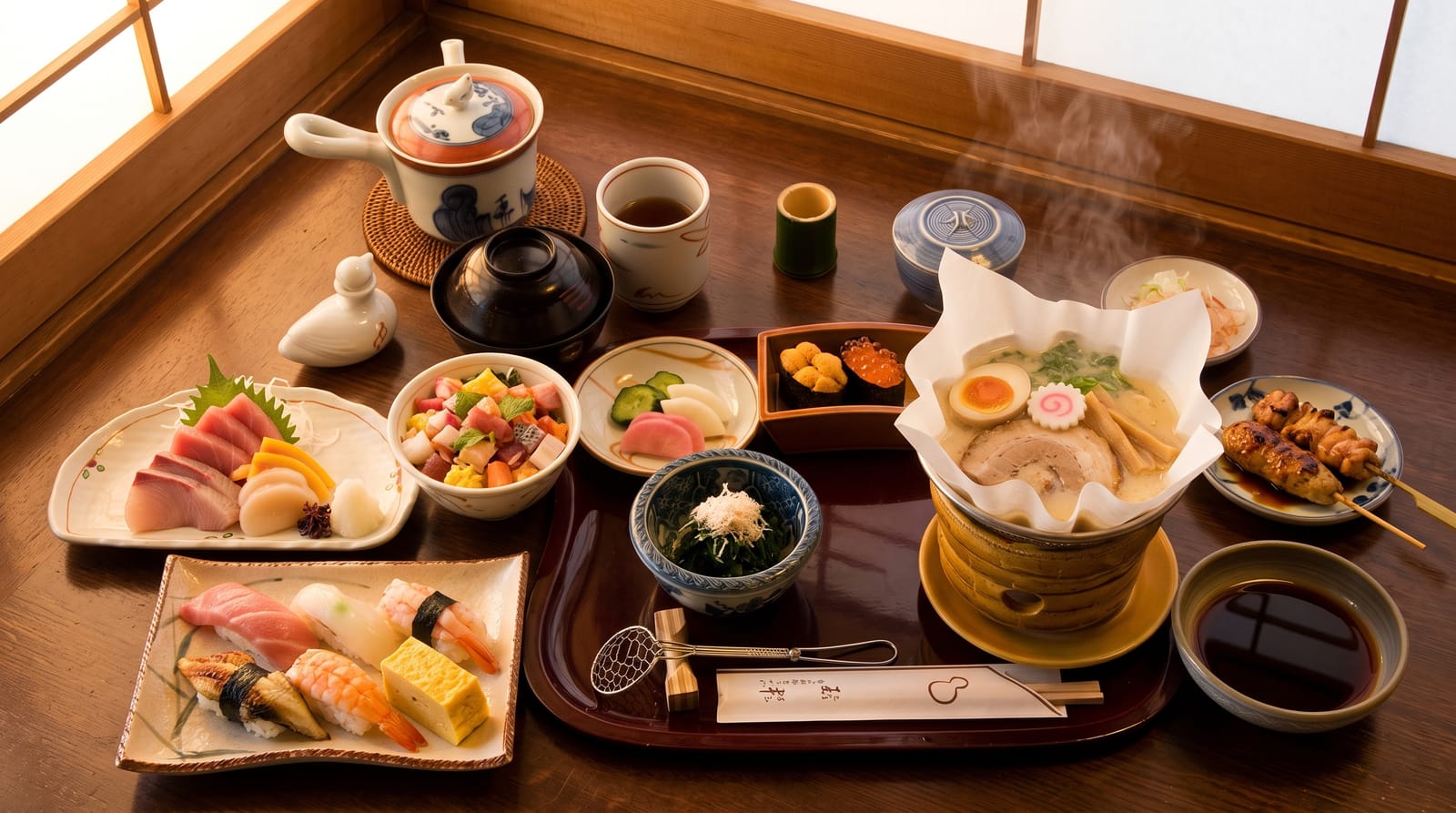
AI illustration
UNESCO Intangible Cultural Heritage
Japanese cuisine, or washoku, is one of the most refined food cultures in the world, recognised by UNESCO, built on seasonality, precision and deep respect for the finest ingredients. From the artistry of sushi and sashimi and the comfort of a steaming bowl of ramen to crisp tempura, grilled yakitori and the exquisite multi-course kaiseki, eating is a national passion, from Michelin temples to humble noodle counters.
What to look for
- Sushi and sashimi - the art of raw fish and vinegared rice.
- Ramen and noodles - the beloved noodle bowls, from ramen to udon and soba.
- Tempura and yakitori - the crisp fried seafood and grilled skewers.
- Kaiseki and the izakaya - the refined multi-course meal and the lively pub.
When to go
Year-round; each season brings its own specialities, celebrated on the plate. A morning visit to a fish market, a lunchtime noodle counter and an evening in an izakaya together capture the range of the food culture.
Practical notes
The finest sushi and kaiseki restaurants can be very expensive and hard to book, some requiring an introduction, but superb food is also cheap and everywhere, from noodle counters to convenience stores. Dining etiquette matters, and language can be a barrier at smaller places, though pointing and set menus help.
Nearby
Every region has its specialities; Osaka is famed as Japan's kitchen and Tokyo is one of the world's great restaurant cities.
What to pack for Japanese Cuisine
Chosen from what this place is for. Tap a kit for the full checklist.
- A reusable bag or container - For market produce and cutting down on packaging. Find on Amazon
- Modest clothing - Shoulders and knees covered - the single most common requirement. Find on Amazon
- Wet wipes + hand sanitiser - Street food and washbasins do not always go together. Find on Amazon
- A scarf or shawl - To cover the head or shoulders on entry; women especially at mosques. Find on Amazon
Some links on this page are Amazon affiliate links - if you buy through them we may earn a small commission at no extra cost to you.
All packing kitsPlan your trip
Where to start if Japanese Cuisine is going on the list.
Booking links on this page are affiliate links - if you book through them we may earn a small commission at no extra cost to you. It never changes what we write about a place.
Opening times, ticket prices and seasonal closures change - check the official source before you go: official site.