Leuven
A university town with a town hall of almost absurd Gothic detail and one of the largest squares in the country for beer.
Updated 18 October 2026
AI illustration
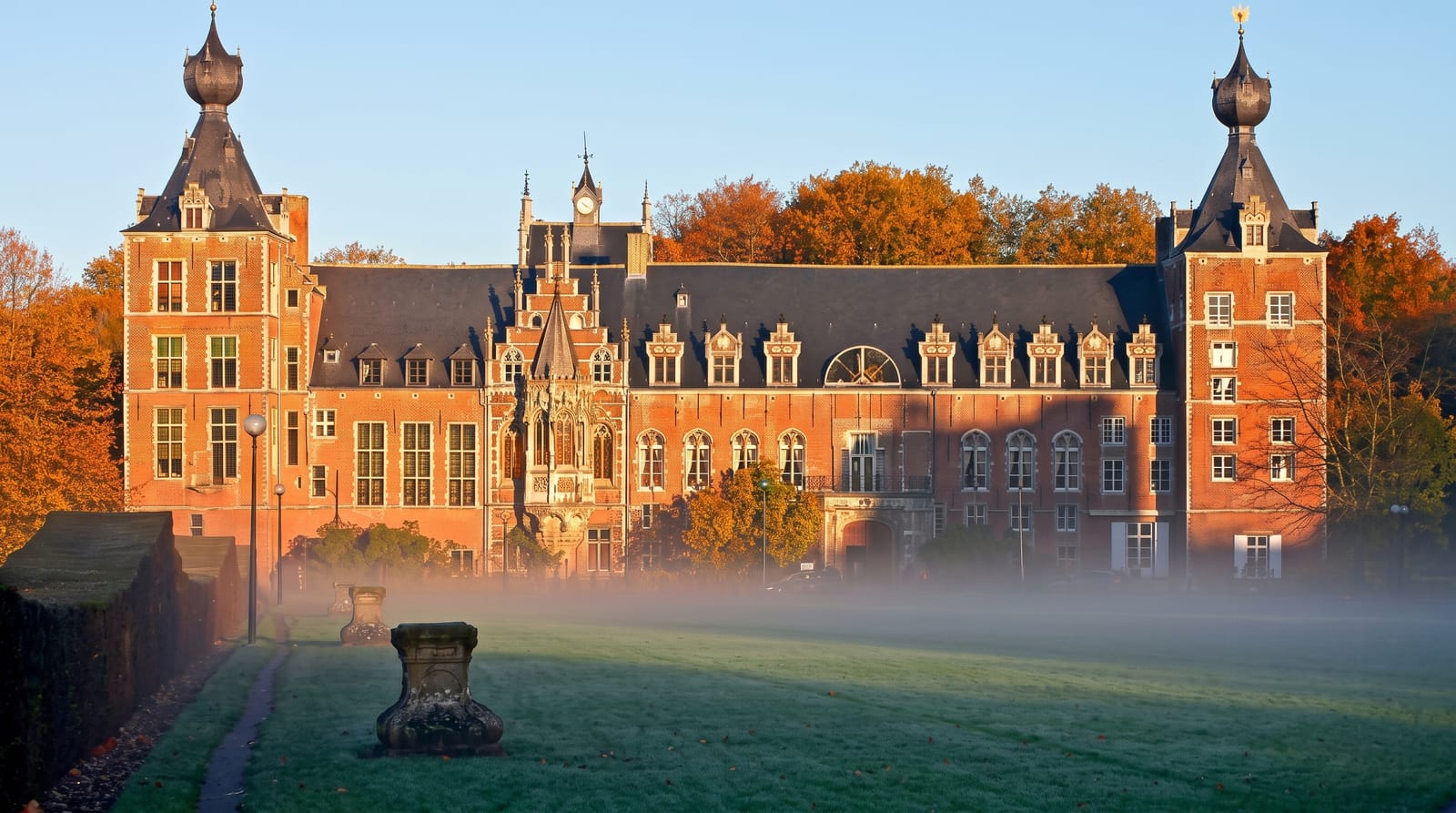
Leuven has been a university city since 1425 and it still runs on that: a student population that fills the squares in term time and empties the city in summer. Its landmark is the fifteenth-century town hall, a Gothic building so densely covered in pinnacles, niches and statues that it looks more like a reliquary than an office, with over two hundred figures on the facade. Opposite stands St Peter's church, whose interior holds two paintings by Dieric Bouts. The Oude Markt is a square lined end to end with bars, promoted locally as the longest bar in the world, on the basis that the terraces run continuously. The Groot Begijnhof, a walled complex of brick houses and lanes once home to a lay religious community, is now student housing and UNESCO-listed.
History
Leuven, as Loven, is first named in 891, when the Frankish king Arnulf of Carinthia defeated a Viking army here, and beside the Dyle and near the stronghold of the dukes of Brabant it became the duchy's leading trading town between the 11th and 14th centuries, so famed for cloth that plain linen was called lewyn. A new golden age began with the founding of the university in 1425, the oldest in the Low Countries, when the town hall and St. Peter's Church were built and Dirk Bouts painted here; Erasmus worked in Leuven, Hieronymus van Busleyden founded the Collegium Trilingue in 1517, Thomas More's Utopia was printed here in 1516, and in 1708 Sebastien Artois became master brewer at the Den Horn brewery, which took his name in 1717 (Wikipedia, Leuven).
What's there
- The town hall - the extraordinarily ornate Gothic facade with hundreds of statues.
- Groot Begijnhof - a walled brick village of lanes and courtyards, now university housing.
- St Peter's Church - the Bouts altarpieces and the treasury.
- Oude Markt - the square of continuous bar terraces, at its liveliest in term time.
When to go
April to October for terrace weather. The city is transformed by term dates: lively from October to June, noticeably quiet in July and August when students leave. It works well as a day trip from Brussels or as a base near the airport.
What to expect
In summer the student energy that makes Leuven distinctive is largely absent. The Oude Markt is a drinking square and gets loud late; hotels around it are not for light sleepers. The town hall interior is visitable only on guided tours at set times, so the facade is what most visitors actually see.
Nearby
Brussels is twenty minutes by train; Mechelen lies between the two.
Key facts
Source: Wikidata, item Q118958, read on 18 October 2026.
What to pack for Leuven
Chosen from what this place is for. Tap a kit for the full checklist.
- Comfortable walking shoes - Sightseeing means kilometres of pavement and cobbles daily. Find on Amazon
- A slim anti-theft daypack - Zips that close properly; keep it in front in crowds and on transit. Find on Amazon
- A refillable water bottle - Many cities have public fountains; save money and plastic. Find on Amazon
- A light layer + compact umbrella - For museum air-con and a sudden shower. Find on Amazon
Some links on this page are Amazon affiliate links - if you buy through them we may earn a small commission at no extra cost to you.
All packing kitsPlan your trip
Where to start if Leuven is going on the list.
Booking links on this page are affiliate links - if you book through them we may earn a small commission at no extra cost to you. It never changes what we write about a place.
Opening times, ticket prices and seasonal closures change - check the official source before you go: official site.