Turov
An ancient Polesie town with stone crosses said to grow from the ground and floodplain meadows full of waders.
Updated 18 October 2026
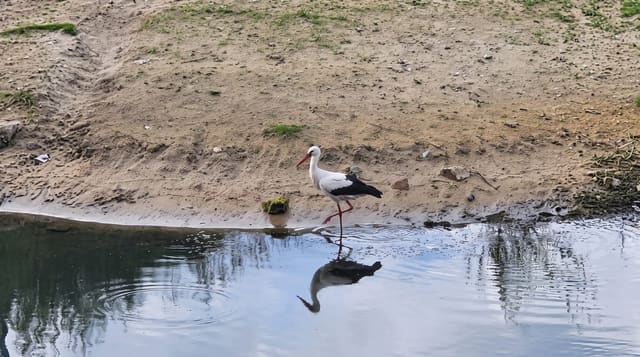
Turov is first recorded in 980 and was the capital of a principality on the Pripyat, a centre of early Christianity in these lands and the seat of Cyril of Turov, a twelfth-century bishop and writer. Little medieval fabric survives above ground beyond excavated church foundations under a protective cover. What draws people are the stone crosses: several in the old cemetery are held locally to rise slowly out of the ground, and pilgrims come to them. Outside the town the Pripyat floodplain, protected as the Turov meadow reserve, floods each spring and becomes one of the most important stopover sites in the region for migrating waders, with a ringing station and observation points.
History
Turov was the old capital of the Dregovich tribe and is first mentioned in the Tale of Bygone Years for 980; legend says Duke Tur founded it where the Yazda and Strumen meet, though the name may come from tur, the Slavic name of the aurochs. Its rivers flow to the Pripyat, the Dnieper and the Black Sea, a route the Vikings used, and under a branch of the Rurik dynasty, Izyaslav I, son of Yaroslav the Wise, among them, it became one of the leading trading cities of Kievan Rus' on the route from the Baltic to Byzantium (Wikipedia, Turov, Belarus).
Highlights
- The growing crosses - the stone crosses in the old cemetery.
- The church foundations - the excavated remains under cover.
- Turov meadow - the floodplain and its migrating waders in spring.
- The Pripyat - the river and its seasonal flooding.
When to go
April and May for the spring flood and the wader migration, which is the reserve's peak; the meadow is at its most alive then. Summer and autumn are quieter. Access to the floodplain depends on water levels.
What to expect
Little of the ancient town survives to see. The floodplain is only accessible when water levels allow and a scope is needed for the birds. Facilities in Turov are minimal. Mosquitoes are severe in summer.
Nearby
Pripyatsky national park lies east; David-Haradok is west.
Key facts
Source: Wikidata, item Q265670, read on 18 October 2026.
What to pack for Turov
Chosen from what this place is for. Tap a kit for the full checklist.
- Comfortable walking shoes - Sightseeing means kilometres of pavement and cobbles daily. Find on Amazon
- Modest clothing - Shoulders and knees covered - the single most common requirement. Find on Amazon
- A slim anti-theft daypack - Zips that close properly; keep it in front in crowds and on transit. Find on Amazon
- A scarf or shawl - To cover the head or shoulders on entry; women especially at mosques. Find on Amazon
Some links on this page are Amazon affiliate links - if you buy through them we may earn a small commission at no extra cost to you.
All packing kitsPlan your trip
Where to start if Turov is going on the list.
Booking links on this page are affiliate links - if you book through them we may earn a small commission at no extra cost to you. It never changes what we write about a place.
Opening times, ticket prices and seasonal closures change - check the official source before you go: official site.