National Arboretum Canberra
A hundred forests of rare and threatened trees planted on land burnt in 2003, overlooking Canberra from the west.
Updated 18 October 2026
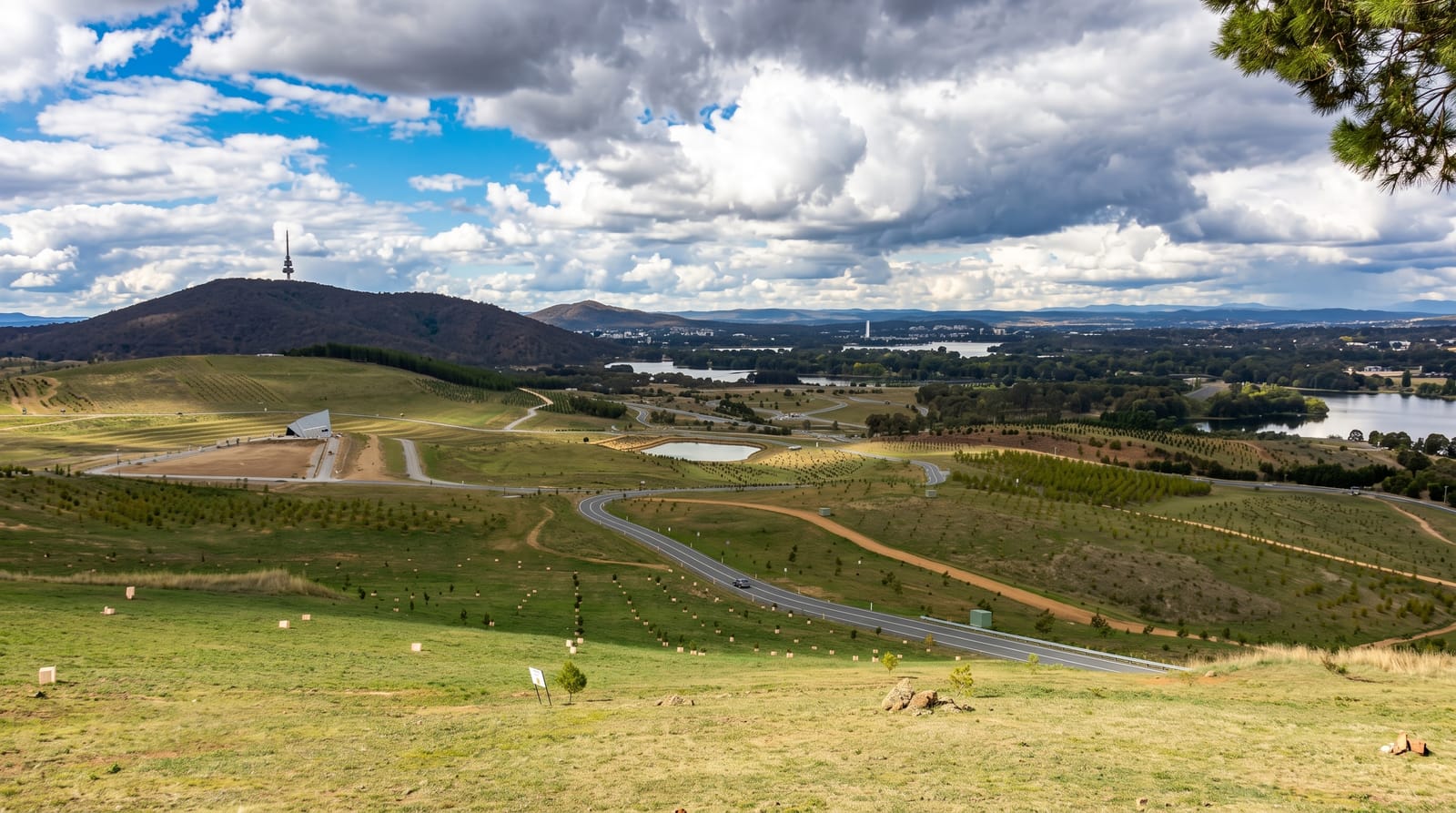
AI illustration
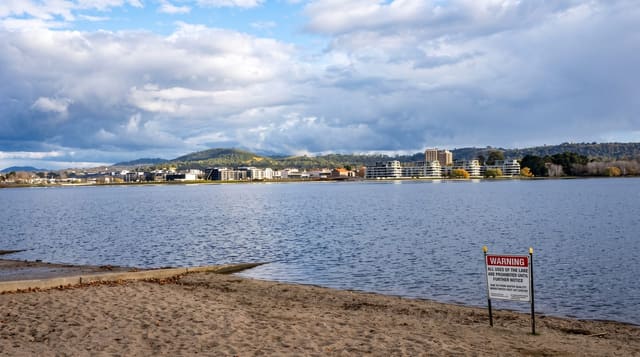
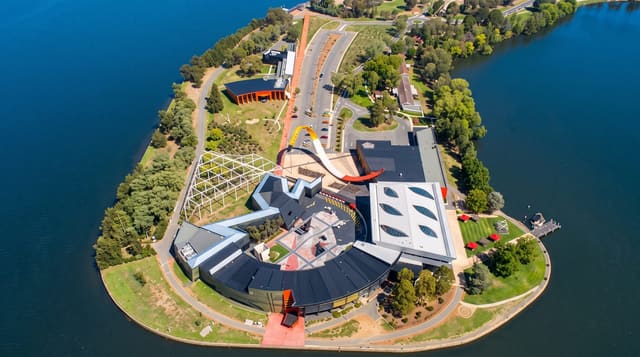
The National Arboretum was created on land west of Canberra that burned in the 2003 firestorm, and its concept is unusual: rather than a mixed collection, it plants a hundred forests of a hundred trees, each a single species chosen for being rare, threatened or symbolically significant, laid out in blocks across two hundred and fifty hectares of hillside. Two older stands survived the fire and were kept: a cork oak plantation from the 1920s and a stand of Himalayan cedars. The village centre building, with a curved timber roof, holds a café and the National Bonsai and Penjing Collection, and the Pod Playground below has acorn-shaped climbing structures. The view over the lake and city is wide.
History
The arboretum exists because of fire: the Christmas 2001 and January 2003 bushfires burned out the commercial radiata pine plantation on the site and killed about a third of the Himalayan cedar forest. In 2004 the ACT government ran a national design competition as part of the recovery, won by the landscape architects Taylor Cullity Lethlean and the architects Tonkin Zulaikha Greer with a plan of 100 forests and 100 gardens of threatened, rare and symbolic trees from around the world. Planting began in 2005, visiting heads of government and ambassadors have added ceremonial trees, and it officially opened on 1 February 2013 (Wikipedia, National Arboretum Canberra).
What to look for
- The hundred forests - blocks of rare and threatened species across the hillside.
- The bonsai collection - the national bonsai and penjing display.
- The surviving stands - 1920s cork oaks and Himalayan cedars that escaped the fire.
- The city view - Canberra and the lake seen from the terrace.
When to go
September to May; spring and autumn give the best colour, and the site is exposed and cold in winter with frequent frost. Summer afternoons are hot with young trees offering little shade. Parking is charged and fills at weekends.
Good to know
Most of the trees are young and the forests will look far better in decades than they do now, which underwhelms some visitors. Shade is minimal. Parking costs and the hilly walking between forests catch people out.
Nearby
Black Mountain and the Telstra Tower lie east; the city centre is a short drive.
Key facts
Source: Wikidata, item Q737132, read on 18 October 2026.
What to pack for National Arboretum Canberra
Chosen from what this place is for. Tap a kit for the full checklist.
- Comfortable walking shoes - Sightseeing means kilometres of pavement and cobbles daily. Find on Amazon
- A slim anti-theft daypack - Zips that close properly; keep it in front in crowds and on transit. Find on Amazon
- A refillable water bottle - Many cities have public fountains; save money and plastic. Find on Amazon
- A light layer + compact umbrella - For museum air-con and a sudden shower. Find on Amazon
Some links on this page are Amazon affiliate links - if you buy through them we may earn a small commission at no extra cost to you.
All packing kitsPlan your trip
Where to start if National Arboretum Canberra is going on the list.
Booking links on this page are affiliate links - if you book through them we may earn a small commission at no extra cost to you. It never changes what we write about a place.
Opening times, ticket prices and seasonal closures change - check the official source before you go: official site.