Moonta
The heart of Australia's Little Cornwall, a copper town of Cornish miners with engine houses standing in the scrub.
Updated 18 October 2026
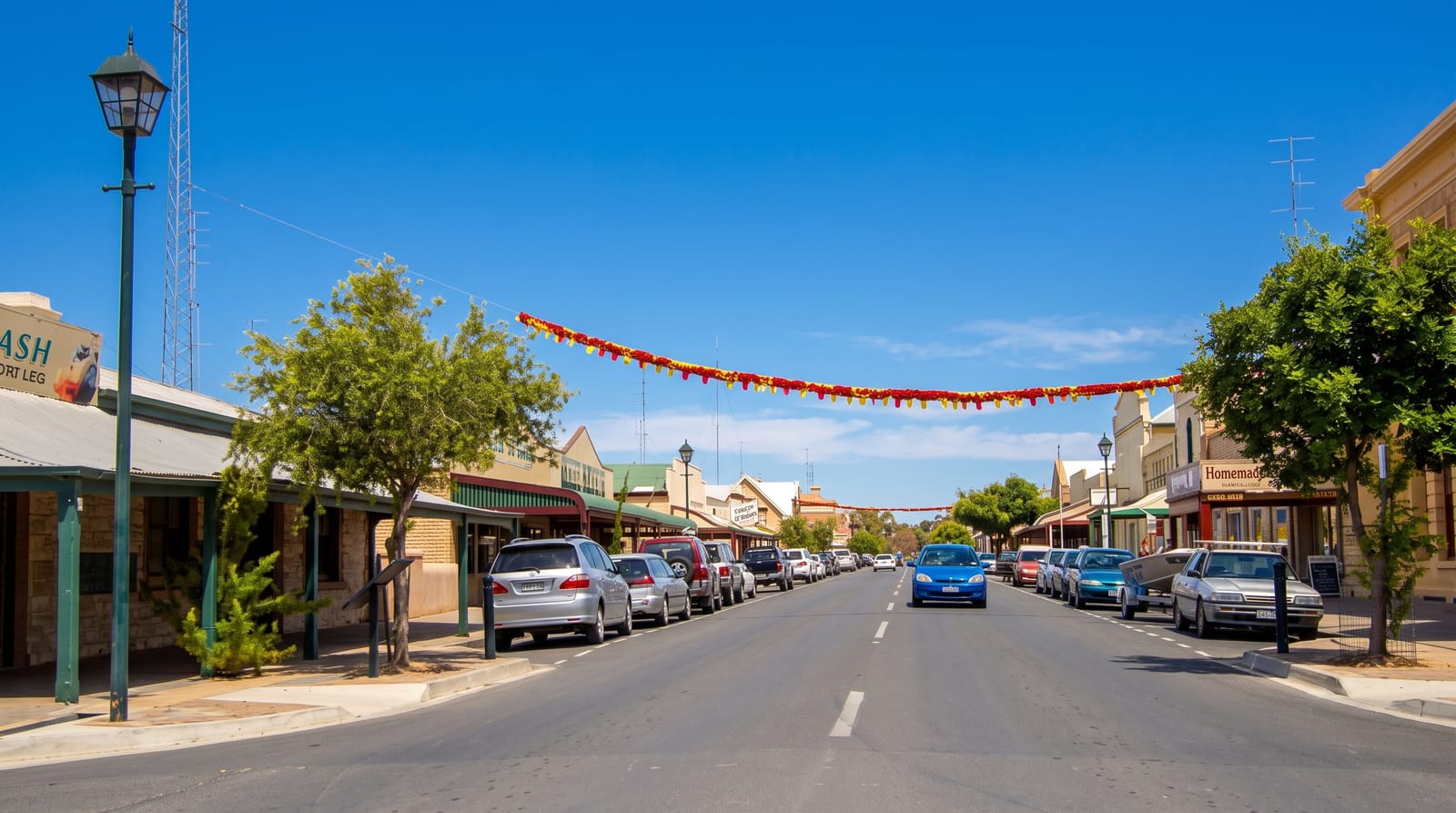
AI illustration
Copper found at Moonta in 1861 brought thousands of Cornish miners to the Yorke Peninsula, and with Kadina and Wallaroo the district became known as Little Cornwall, at one point the richest copper producer in Australia. The mines closed in 1923, and what remains is a state heritage area: engine houses, chimneys, mullock heaps and the miners' cottages scattered across open scrub, with the Moonta Mines museum in the old school and a small tourist railway running through the workings. Cornish traditions persist in the pasties sold in local bakeries and in the Kernewek Lowender festival held in odd-numbered years, described as the largest Cornish festival in the world.
History
The area is part of the lands of the Narungga, and its name is said to come from an Aboriginal word for thick scrub. Matthew Flinders and Nicolas Baudin sailed this coast in 1802, John Hill and Thomas Burr were landed near Moonta Bay on 28 April 1840 and rode back to Adelaide reporting excellent country, and a few pastoralists came in the 1840s, though the scrub and lack of water held back settlement. In 1861 the shepherd Patrick Ryan found rich copper here, the Wheal Hughes mine and others followed, and the government town was surveyed in March 1863 beside the miners' own settlement at Moonta Mines (Wikipedia, Moonta, South Australia).
What you'll find
- The engine houses - stone pumping houses and chimneys across the mine field.
- The Moonta Mines museum - the district's history in the old mines school.
- The tourist railway - a small train running through the old workings.
- The Cornish traditions - pasties, chapels and the biennial festival.
When to go
April to October for comfortable weather; the Kernewek Lowender festival falls in May of odd-numbered years and fills the district. Summer on the peninsula is hot and dry with little shade at the mine sites.
Before you go
The museum and railway operate on limited days, mostly weekends and holidays. Old shafts across the heritage area are hazardous and fenced in places but not everywhere. The towns are quiet outside festival time.
Nearby
Kadina and Wallaroo complete the copper triangle; Innes National Park lies south.
Key facts
Source: Wikidata, item Q3323606, read on 18 October 2026.
What to pack for Moonta
Chosen from what this place is for. Tap a kit for the full checklist.
- Comfortable walking shoes - Sightseeing means kilometres of pavement and cobbles daily. Find on Amazon
- A slim anti-theft daypack - Zips that close properly; keep it in front in crowds and on transit. Find on Amazon
- A refillable water bottle - Many cities have public fountains; save money and plastic. Find on Amazon
- A light layer + compact umbrella - For museum air-con and a sudden shower. Find on Amazon
Some links on this page are Amazon affiliate links - if you buy through them we may earn a small commission at no extra cost to you.
All packing kitsPlan your trip
Where to start if Moonta is going on the list.
Booking links on this page are affiliate links - if you book through them we may earn a small commission at no extra cost to you. It never changes what we write about a place.
Opening times, ticket prices and seasonal closures change - check the official source before you go: official site.