Coober Pedy
An opal town where most of the population lives underground in dugouts, including churches, hotels and a bookshop.
Updated 18 October 2026
AI illustration
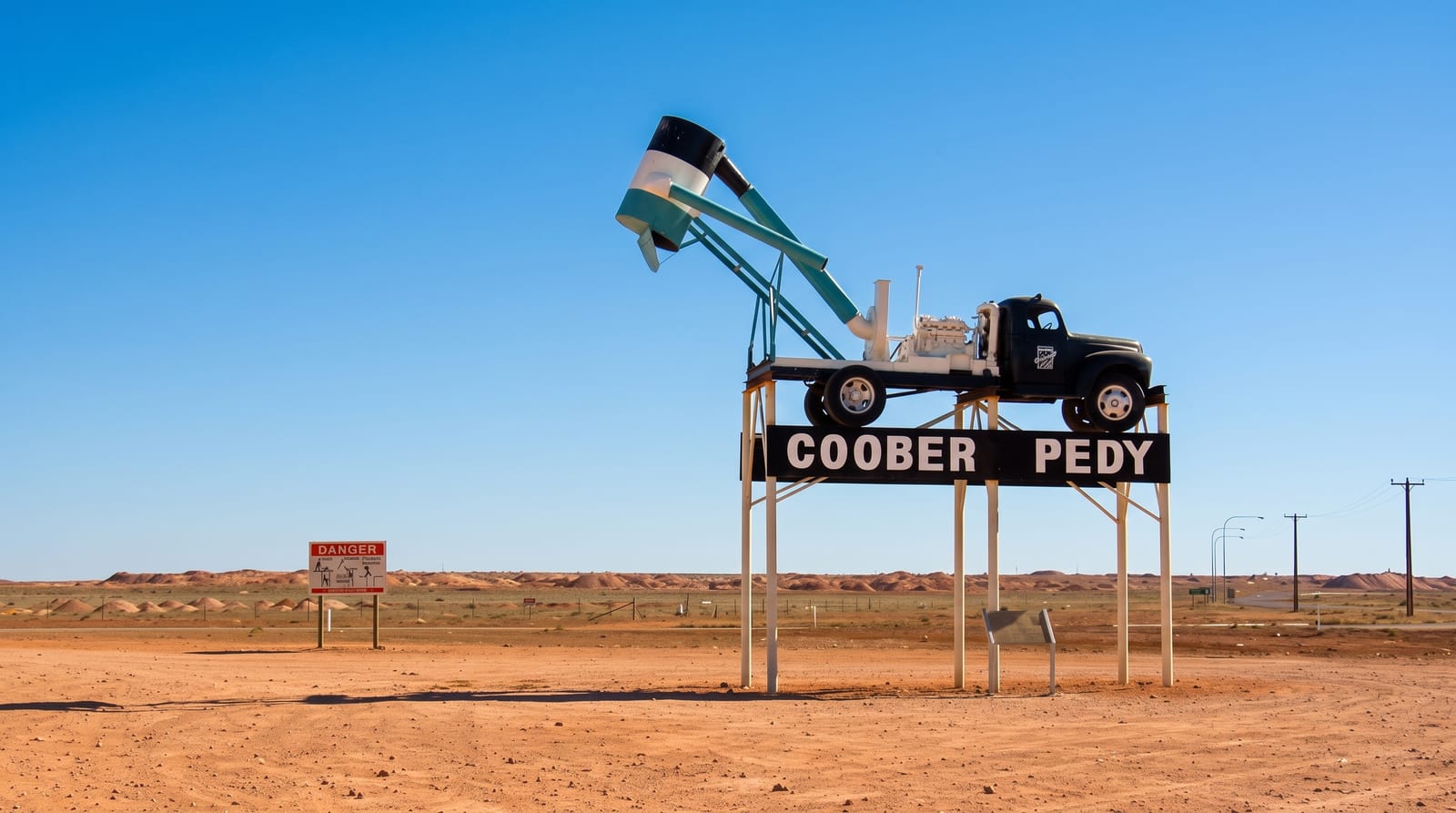
Coober Pedy produces a large share of the world's opal and takes its name from an Aboriginal term generally translated as white man's hole in the ground, which describes what the town became. Summer temperatures regularly pass forty-five degrees, so residents dug: homes, churches, a bookshop, hotels and museums are cut into the sandstone hills, staying around twenty-three degrees year round. Above ground the landscape is a moonscape of mullock heaps and shafts stretching for kilometres, used repeatedly as a film location for science fiction. Visitors tour underground homes and churches, go noodling on public mullock heaps for overlooked opal, and see the Breakaways, coloured mesas north of town.
History
The area is traditionally Arabana country, with ties to the Kokatha, Yankunytjatjara and Antakirinja peoples, and Western Desert people travelled to the Stuart Range for quartz to make axes and knives. John McDouall Stuart passed near the site in 1858, and on 1 February 1915 Wille Hutchison found the first opal here, after which miners moved in from 1916; the name, settled in 1920, is thought to come from the Kokatha kupa piti, usually translated as white man's hole in the ground, and in 1975 the local Aboriginal people adopted the name Umoona, long life (Wikipedia, Coober Pedy).
The main sights
- The dugout homes - underground houses, churches and hotels open to visitors.
- The mullock landscape - thousands of mine shafts and spoil heaps around town.
- The Breakaways - flat-topped ochre mesas in the desert north of town.
- The noodling areas - public heaps where visitors can search for opal.
When to go
April to September; summer heat is extreme and much of the town shuts down through the middle of the day. Winter nights are cold. The Breakaways are best at sunrise or sunset when the colours are strongest.
Good to know
Unfenced shafts across the fields are lethal and walking off marked areas is prohibited. The town is functional and rough in appearance, not scenic. Water is expensive and desalinated. Summer travel here is genuinely uncomfortable.
Nearby
The Breakaways and the dog fence lie north; the Painted Desert is northeast.
Key facts
Source: Wikidata, item Q779188, read on 18 October 2026.
What to pack for Coober Pedy
Chosen from what this place is for. Tap a kit for the full checklist.
- Head torch + spare batteries - Hands-free light is essential; caves are truly dark. Find on Amazon
- Loose, light, long clothing - Covering up beats bare skin in the desert - and locals dress this way for a reason. Find on Amazon
- Comfortable walking shoes - Sightseeing means kilometres of pavement and cobbles daily. Find on Amazon
- Grippy closed shoes - Cave floors are wet, muddy and slick with formations. Find on Amazon
Some links on this page are Amazon affiliate links - if you buy through them we may earn a small commission at no extra cost to you.
All packing kitsPlan your trip
Where to start if Coober Pedy is going on the list.
Booking links on this page are affiliate links - if you book through them we may earn a small commission at no extra cost to you. It never changes what we write about a place.
Opening times, ticket prices and seasonal closures change - check the official source before you go: official site.

