Carnarvon Gorge
A white sandstone gorge in central Queensland holding palms, cycads, side canyons and major Aboriginal rock art.
Updated 21 October 2026

AI illustration
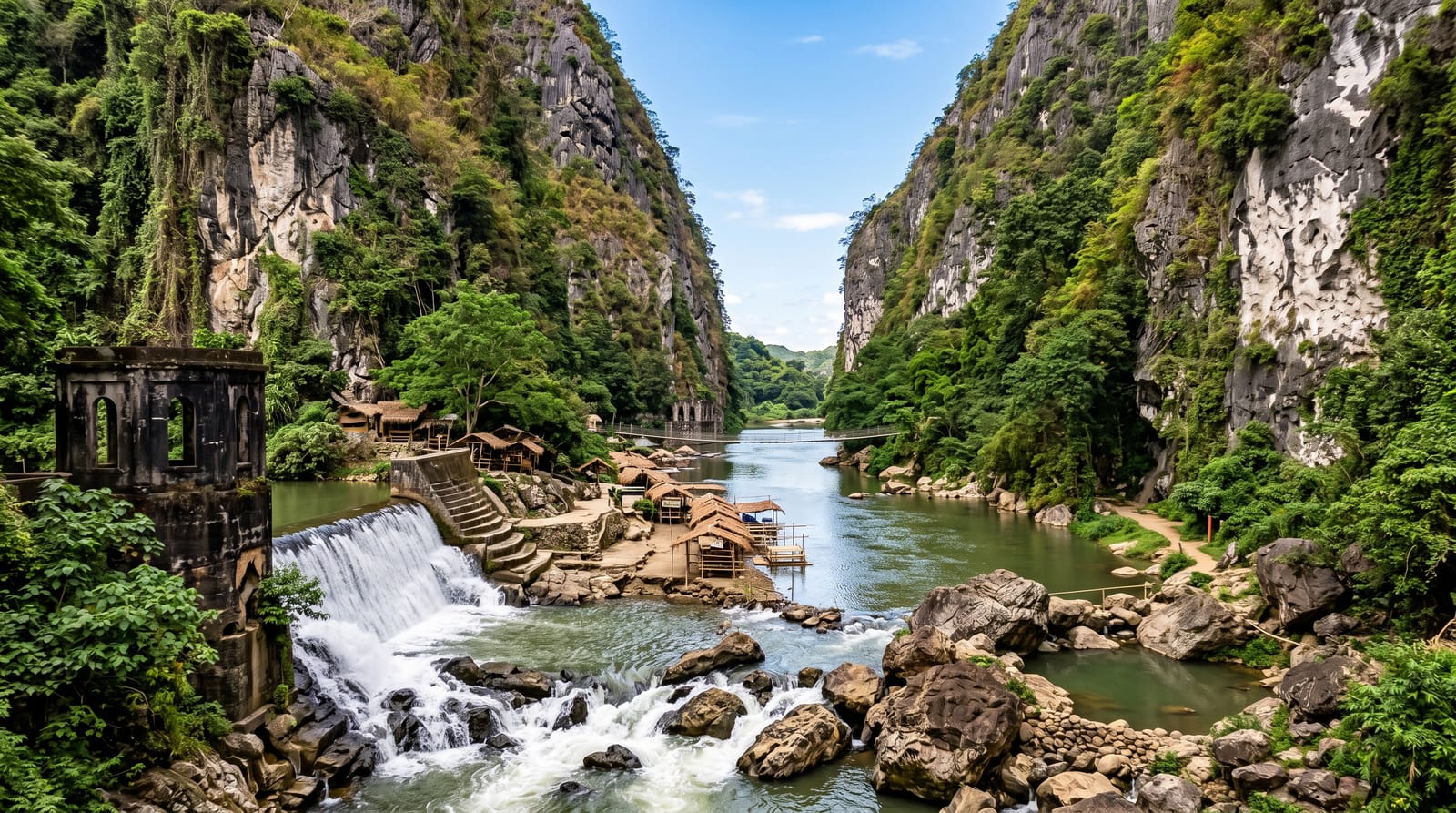
Carnarvon Gorge cuts thirty kilometres into the sandstone of the Consuelo Tableland, its white cliffs up to two hundred metres high enclosing a creek lined with cabbage palms, river oaks and ferns, and side gorges holding relict species left over from wetter times: king ferns, cycads and mosses that survive in permanently shaded slots. The main track follows the creek, crossing it repeatedly on stepping stones, with side trips to the Amphitheatre, a chamber reached by a ladder through a crack, the Moss Garden, Ward's Canyon and Aljon Falls. The gorge holds some of Australia's most significant rock art, with stencils, engravings and ochre paintings at the Art Gallery and Cathedral Cave sites.
History
Some researchers think Aboriginal people did not live in the gorge permanently, for defence or for lack of food, others that it was too sacred to live in, and Dreaming stories tell of the Rainbow Serpent that made the gorges and still lives in their waterholes. Ludwig Leichhardt passed nearby in 1844 on his way to Port Essington, and Thomas Mitchell, passing to the west two years later, named the Carnarvon Range; reports of good grass and water brought settlers and a period of bloody conflict with the Aboriginal people (Wikipedia, Carnarvon Gorge).
What's there
- The rock art - extensive stencils and engravings at the Art Gallery and Cathedral Cave.
- The Amphitheatre - a hidden chamber entered by ladder through a cleft.
- The Moss Garden - a permanently damp side gorge of ferns and moss.
- The palm-lined creek - cabbage palms and cycads along the main track.
When to go
April to September for cool walking; summer is very hot and the access road can be cut by rain. The full main track plus side trips is around twenty kilometres in a day. Winter nights are cold, occasionally near freezing.
Before you go
The last stretch of road is unsealed and crosses creeks that flood, sometimes closing access for days. Accommodation is limited to a campground and two lodges, booked well ahead, especially in school holidays. There is no fuel or shop at the gorge itself.
Nearby
Rolleston and Injune are the nearest towns; the Gemfields lie north.
Key facts
Source: Wikidata, item Q5043790, read on 18 October 2026.
What to pack for Carnarvon Gorge
Chosen from what this place is for. Tap a kit for the full checklist.
- Broken-in walking shoes or boots - Grip and ankle support matter more than looks; never hike in brand-new boots. Find on Amazon
- Reef-safe sunscreen - High SPF that will not bleach the coral you are swimming over. Find on Amazon
- Head torch + spare batteries - Hands-free light is essential; caves are truly dark. Find on Amazon
- Modest clothing - Shoulders and knees covered - the single most common requirement. Find on Amazon
Some links on this page are Amazon affiliate links - if you buy through them we may earn a small commission at no extra cost to you.
All packing kitsPlan your trip
Where to start if Carnarvon Gorge is going on the list.
Booking links on this page are affiliate links - if you book through them we may earn a small commission at no extra cost to you. It never changes what we write about a place.
Opening times, ticket prices and seasonal closures change - check the official source before you go: official site.