Capertee Valley
A sandstone-walled valley wider than any other in the world except one, and among Australia's great birdwatching sites.
Updated 18 October 2026

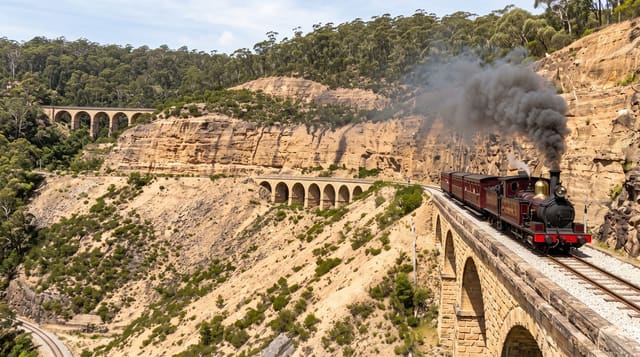
AI illustration
The Capertee Valley is often described as the widest canyon in the world after the Grand Canyon, cut into the same sandstone as the Blue Mountains and ringed by orange cliffs and pagoda formations with Pantoneys Crown, an isolated mesa, standing near its centre. The Pearsons Lookout on the Castlereagh Highway gives the classic view across it. For birdwatchers it is a destination in its own right: around two hundred and forty species have been recorded, and the valley is one of the few reliable places to see the critically endangered regent honeyeater, which breeds here, with organised planting and monitoring programmes running for decades. Small farms and a few guesthouses occupy the floor.
History
The Wiradjuri people are the original inhabitants of the land around the valley, and rock art some 2,000 years old shows stencilled hands, boomerangs and throwing sticks. The explorer James Blackman first crossed the valley in 1821, sheep farming produced fine wool from the 1840s, the gold rush from 1851 grew Capertee village out of a few inns, and coal, shale oil and limestone were mined; the railway came in 1882, Henry Lawson mentioned the valley in a poem of 1891, and in the 1930s its deposits gained new importance with the Glen Davis shale oil works (Wikipedia, Capertee Valley).
Highlights
- The valley view - the immense sandstone amphitheatre from Pearsons Lookout.
- Pantoneys Crown - the isolated mesa standing in the valley.
- The birdlife - some 240 species including the rare regent honeyeater.
- The pagoda cliffs - weathered sandstone formations along the rim.
When to go
March to November for comfortable conditions; spring is best for birds, with regent honeyeaters most likely from August to November in good years. Summer is hot in the valley. Roads on the floor are partly unsealed and rough after rain.
Things to know
The regent honeyeater is critically endangered and sightings are far from guaranteed. Services in the valley are minimal, with no fuel or shops beyond Capertee village. Much of the land is private and access requires permission.
Nearby
Glen Davis at the valley's end has the ruins of a shale oil works; Lithgow lies south.
Key facts
Source: Wikidata, item Q5035296, read on 18 October 2026.
What to pack for Capertee Valley
Chosen from what this place is for. Tap a kit for the full checklist.
- Broken-in walking shoes or boots - Grip and ankle support matter more than looks; never hike in brand-new boots. Find on Amazon
- Binoculars - The single best wildlife tool - even a compact pair transforms a sighting. Find on Amazon
- Layers + a waterproof shell - Mountain weather turns fast; a packable rain jacket saves the day. Find on Amazon
- A zoom camera or long lens - Animals rarely come close; reach beats megapixels. Find on Amazon
Some links on this page are Amazon affiliate links - if you buy through them we may earn a small commission at no extra cost to you.
All packing kitsPlan your trip
Where to start if Capertee Valley is going on the list.
Booking links on this page are affiliate links - if you book through them we may earn a small commission at no extra cost to you. It never changes what we write about a place.
Opening times, ticket prices and seasonal closures change - check the official source before you go: official site.