Bush Tucker and Native Foods
The native plants and animals eaten across Australia for tens of thousands of years, now appearing in restaurants and on supermarket shelves.
Updated 4 September 2026
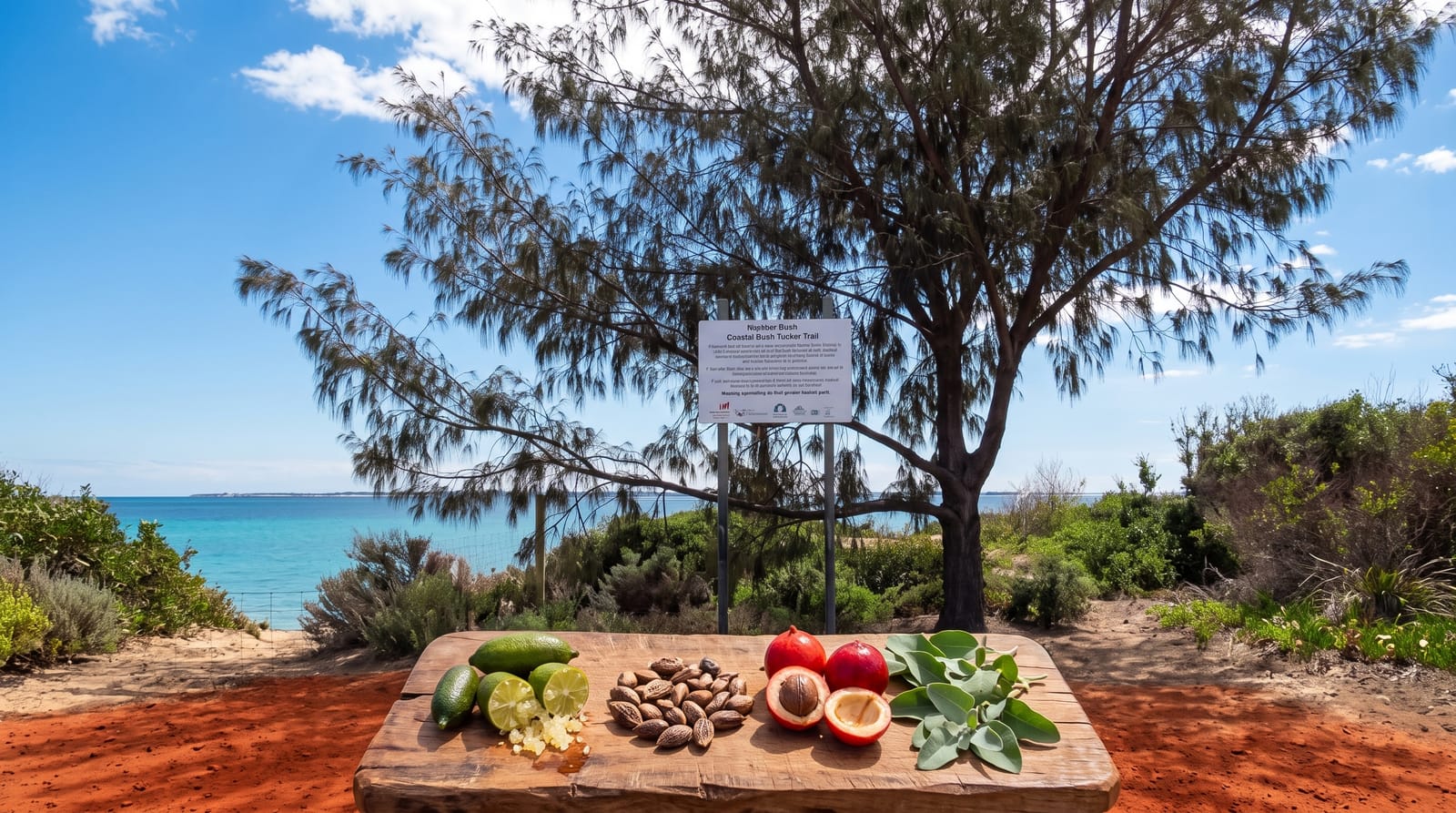
AI illustration
Aboriginal and Torres Strait Islander peoples have eaten native plants and animals across this continent for tens of thousands of years, and the knowledge of which species are edible, when, and how they must be prepared is specific to each country and still held by its people. A small number of those foods have entered the wider market: macadamia, the one native crop grown at commercial scale worldwide, plus finger lime, quandong, wattleseed, lemon myrtle, saltbush, bush tomato and Kakadu plum. Kangaroo and emu are sold as meat in supermarkets. Guided walks run near Alice Springs, Darwin and in Queensland, usually led by Aboriginal guides who explain the plants on their own country rather than as a general list.
What's there
- Guided walks on country - Aboriginal guides identifying plants and their preparation where they actually grow.
- Native ingredients in city markets - finger lime, wattleseed, lemon myrtle and saltbush sold dried or fresh.
- Kangaroo and emu - native meats sold in ordinary supermarkets, lean and easily overcooked.
- Kakadu plum and quandong - desert and tropical fruits used in preserves, drinks and sauces.
When to go
The dry season, roughly May to September, is when guided walks in the centre and the north are comfortable and roads are open. Different plants fruit at different times, so what you see depends entirely on the month. City restaurants using native ingredients operate year-round. Tours in remote areas need booking ahead and sometimes run only in season.
Good to know
Much of what is marketed as bush tucker is a garnish on a conventional dish rather than traditional food. Prices for native ingredients are high because harvests are small and often wild-collected. Only a minority of the native food industry is Aboriginal-owned, an active concern within it. Do not forage yourself: several native plants are toxic without correct preparation, and much of the land is under permit.
Nearby
Central Australia around Alice Springs and the tropical Top End are the main places to learn on country.
What to pack for Bush Tucker and Native Foods
Chosen from what this place is for. Tap a kit for the full checklist.
- A reusable bag or container - For market produce and cutting down on packaging. Find on Amazon
- Loose, light, long clothing - Covering up beats bare skin in the desert - and locals dress this way for a reason. Find on Amazon
- Wet wipes + hand sanitiser - Street food and washbasins do not always go together. Find on Amazon
- A wide-brim hat + sunglasses - Shade for your face and eyes where there is none overhead. Find on Amazon
Some links on this page are Amazon affiliate links - if you buy through them we may earn a small commission at no extra cost to you.
All packing kitsPlan your trip
Where to start if Bush Tucker and Native Foods is going on the list.
Booking links on this page are affiliate links - if you book through them we may earn a small commission at no extra cost to you. It never changes what we write about a place.
Opening times, ticket prices and seasonal closures change - check the official source before you go: official site.


