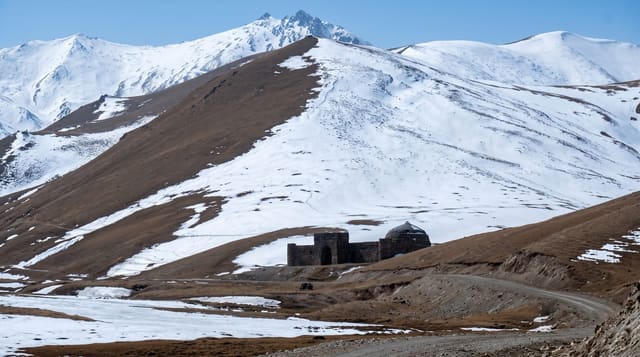
Alice Springs Telegraph Station
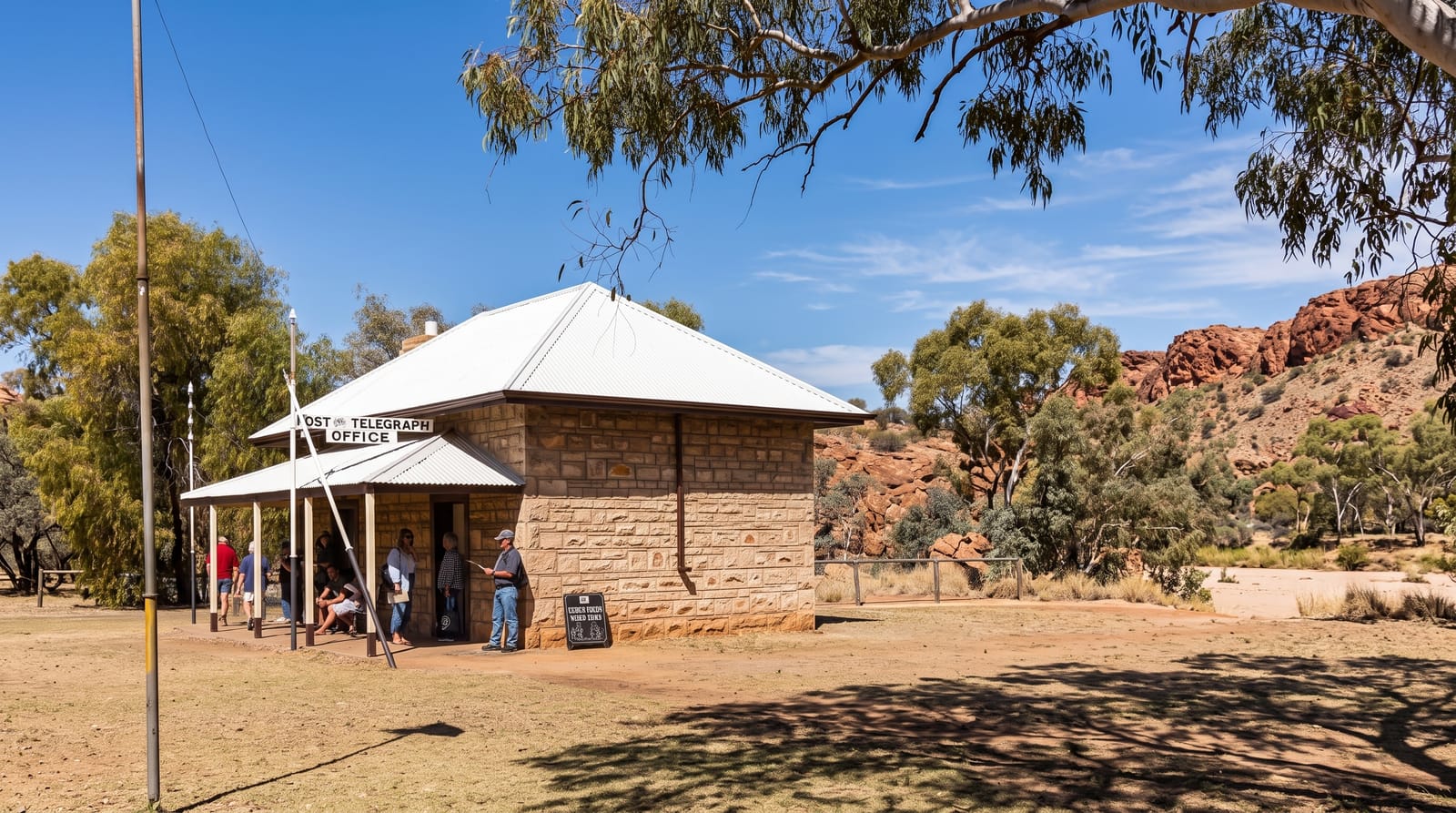
The stone repeater station of 1872 beside the waterhole that named Alice Springs, one link in the line that connected Australia to the world.
Updated 18 October 2026
AI illustration
The Overland Telegraph Line was strung between Adelaide and Darwin in the early 1870s, with repeater stations built every few hundred kilometres to boost the signal on its way. This one went up in 1872 beside a waterhole in the Todd River, and it gave the town its name. The buildings are low and stone, whitewashed inside, arranged around a yard: telegraph office, station master's house, kitchen, blacksmith. They are restored and furnished, and the interpretation covers the technical side alongside the daily life of a very remote posting. The site also tells a harder later chapter, when the station was used as a home for Aboriginal children. Walking or cycling out along the river path is the better approach.
History
In March 1871 the surveyor William Mills, looking for a route for the Overland Telegraph Line through the MacDonnell Ranges, came to a waterhole that was an important camping and ceremonial site of the Arrernte people and named it Alice Springs after Alice Todd, wife of the project's head, Charles Todd. An Arrernte account, recalled by Errumphana to his granddaughter, tells that he and other warriors met the party at Honeymoon Gap and led them to the water in friendship, and the station, built in 1872 to relay messages between Darwin and Adelaide, was one of twelve on the line and the first European settlement in central Australia (Wikipedia, Alice Springs Telegraph Station).
The main sights
- The telegraph office - the working room with its equipment and the line that ran through it.
- The station buildings - restored stone quarters, kitchen and blacksmith set around the yard.
- The original waterhole - the spring in the Todd River bed that the town was named for.
- The river path - the walking and cycling route out from town along the Todd.
When to go
April to September is the comfortable half of the year; from October daytime temperatures climb steadily and the walk out is best done at dawn. The site opens daily and has a cafe, with guided talks at set times. Winter mornings here are cold enough for frost. Late afternoon from the ridge behind the station looks back over the ranges.
Practical notes
It is a modest site, and anyone not interested in the technology of the line may find the buildings repetitive. Entry is charged and cafe prices are Alice Springs prices. The walk out from town is exposed with no water along the way. Parts of the history told here are uncomfortable, which is deliberate, and it does not make for a light outing.
Nearby
Alice Springs itself, with the West MacDonnell gorges starting half an hour west.
Key facts
Source: Wikidata, item Q1373400, read on 18 October 2026.
What to pack for Alice Springs Telegraph Station
Chosen from what this place is for. Tap a kit for the full checklist.
- Padded shorts - The one thing that makes a full day in the saddle bearable. Find on Amazon
- Comfortable walking shoes - Sightseeing means kilometres of pavement and cobbles daily. Find on Amazon
- Shelter suited to the place - Tent, tarp or hut booking - match it to the terrain and rules. Find on Amazon
- Helmet - Bring your own if you have a good one; rentals vary wildly. Find on Amazon
Some links on this page are Amazon affiliate links - if you buy through them we may earn a small commission at no extra cost to you.
All packing kitsPlan your trip
Where to start if Alice Springs Telegraph Station is going on the list.
Booking links on this page are affiliate links - if you book through them we may earn a small commission at no extra cost to you. It never changes what we write about a place.
Opening times, ticket prices and seasonal closures change - check the official source before you go: official site.