Papiamento
A creole built from Portuguese, Spanish, Dutch, African languages and Arawak words, spoken by nearly everyone on Aruba and taught in schools.
Updated 18 October 2026
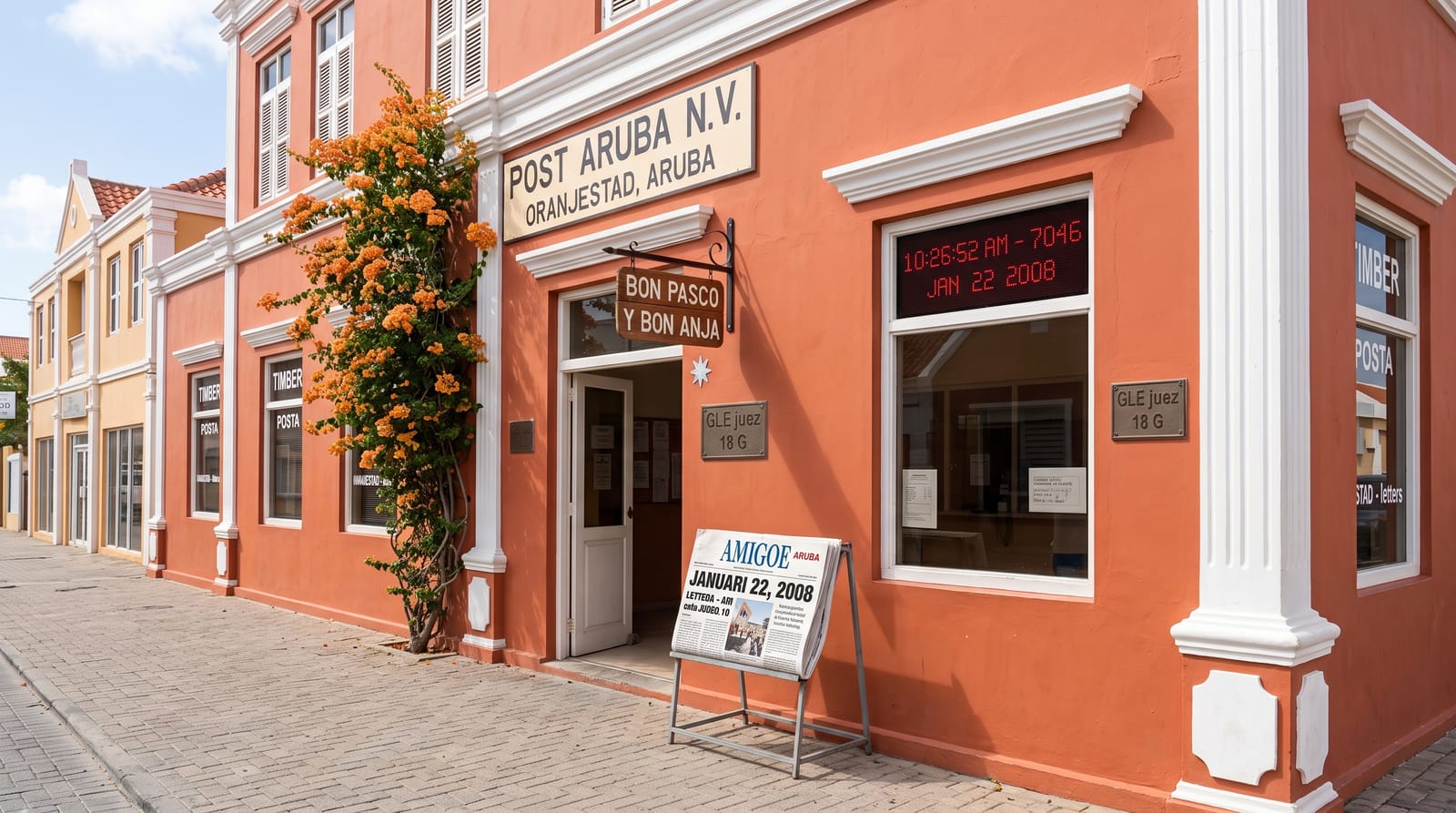
AI illustration
Papiamento is the first language of nearly everyone on Aruba, Bonaire and Curaçao, and it is unusual among Caribbean creoles in having Iberian rather than English or French as its main lexical source, with Portuguese and Spanish supplying most of the vocabulary and Dutch, West African languages and Arawak adding the rest. It has been written since the nineteenth century and is now an official language alongside Dutch, taught in schools and used in parliament and newspapers. Aruban spelling differs from the Curaçao and Bonaire standard, which locals will point out. Most Arubans also speak Dutch, English and Spanish.
History
The language's exact history is not established: its parent is West Iberian Romance, but scholars dispute whether it grew from Portuguese and the Portuguese creoles of West Africa, with which it shares many features, or from Spanish, while Dutch and Spanish influence came from the 17th century on. One local theory has it developing in the Caribbean from a Portuguese-African pidgin with later Dutch, Spanish and some Arawak elements, and the name comes from papia, to speak, from Portuguese and the Cape Verdean and Guinea-Bissau creoles, with the suffix -mento (Wikipedia, Papiamento).
The main sights
- The Iberian base - Portuguese and Spanish vocabulary, unusually for the region.
- Official status - alongside Dutch, in schools, parliament and press.
- The Aruban spelling - differing from the Curaçao and Bonaire standard.
- Bon bini - the welcome you will hear everywhere.
When to go
Year-round. Radio and newspapers are in Papiamento daily. The dande competition at new year and carnival tumba lyrics are the most concentrated exposure. Most Arubans switch to English immediately with visitors.
Good to know
Almost everyone switches to English the moment they hear a visitor, so hearing Papiamento in conversation takes listening rather than participating. Spanish speakers catch fragments and then lose the thread entirely. A few words, particularly the greeting and the thanks, are genuinely appreciated.
Nearby
Heard across all three ABC islands with local variations.
What to pack for Papiamento
Chosen from what this place is for. Tap a kit for the full checklist.
- Comfortable walking shoes - Sightseeing means kilometres of pavement and cobbles daily. Find on Amazon
- A slim anti-theft daypack - Zips that close properly; keep it in front in crowds and on transit. Find on Amazon
- A refillable water bottle - Many cities have public fountains; save money and plastic. Find on Amazon
- A light layer + compact umbrella - For museum air-con and a sudden shower. Find on Amazon
Some links on this page are Amazon affiliate links - if you buy through them we may earn a small commission at no extra cost to you.
All packing kitsPlan your trip
Where to start if Papiamento is going on the list.
Booking links on this page are affiliate links - if you book through them we may earn a small commission at no extra cost to you. It never changes what we write about a place.
Opening times, ticket prices and seasonal closures change - check the official source before you go: official site.