Aruba Aloe
A crop that once covered much of the island and made Aruba the world's largest exporter of aloe gum, still processed at the same factory.
Updated 18 October 2026
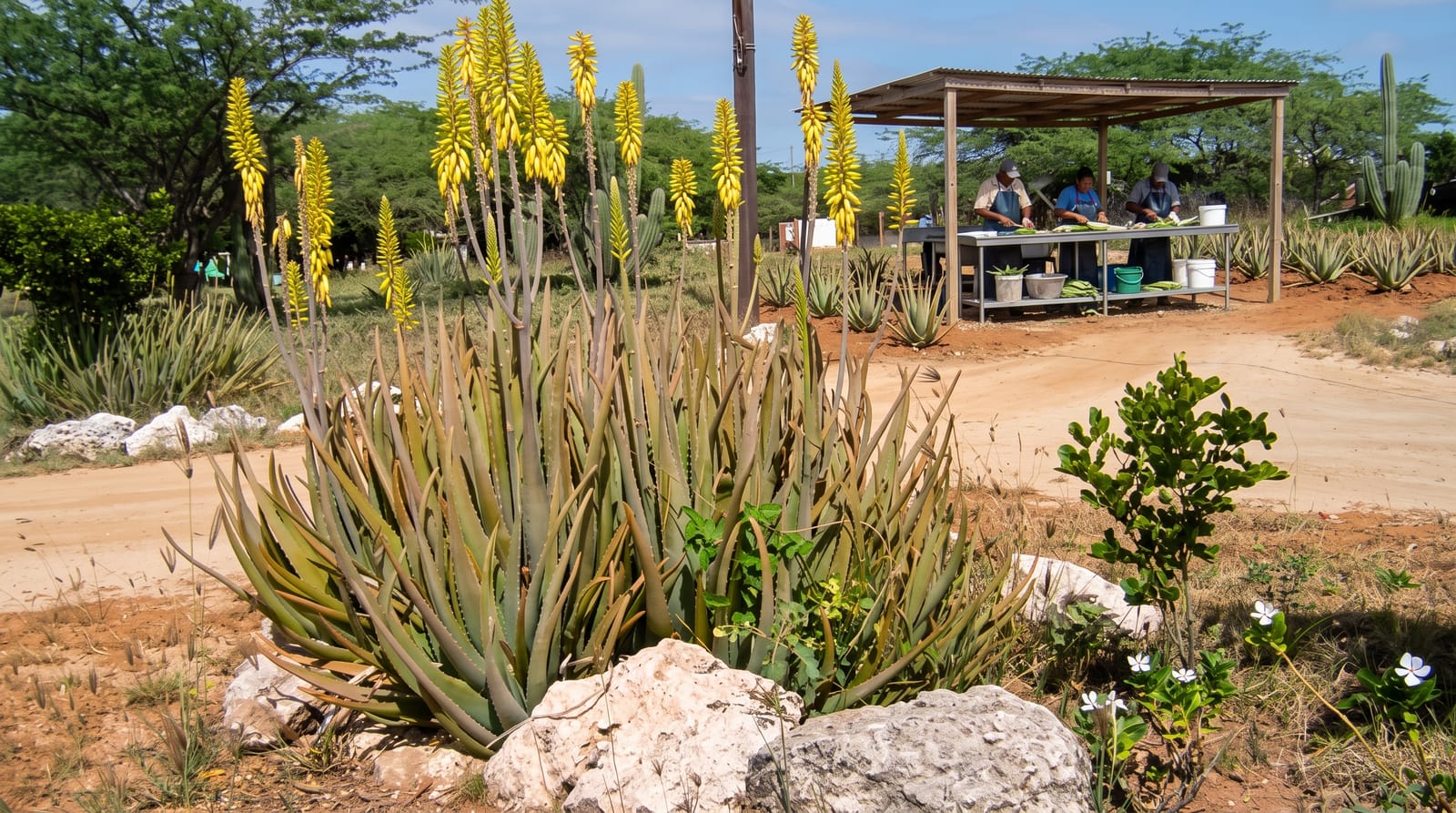
AI illustration
Aloe vera was brought to Aruba in 1840 and turned out to suit the island exactly: dry, hot, poor soil and constant sun produce a plant with unusually high concentration in the gel. By the early twentieth century, on the Aruba Aloe company's own account, two thirds of the island was under aloe and Aruba was the largest exporter of aloe gum in the world, with the plant on the coat of arms. The company operating today has been running since 1890 and still grows, cuts, fillets and processes on the island, and the factory at Hato runs tours through the fields, the cutting hall and the production line, with a museum covering the industry's history.
History
Cornelis Eman founded the company in 1890, and it is still owned by the Eman family, growing, harvesting and processing its aloe on the same site; in 2021 it became the first company outside the Netherlands to receive the royal predicate, Koninklijk, for more than a hundred years in business (Wikipedia, Royal Aruba Aloe).
What's there
- The fields - aloe under cultivation as it has been since 1840.
- The cutting and filleting - leaves processed by hand at the factory.
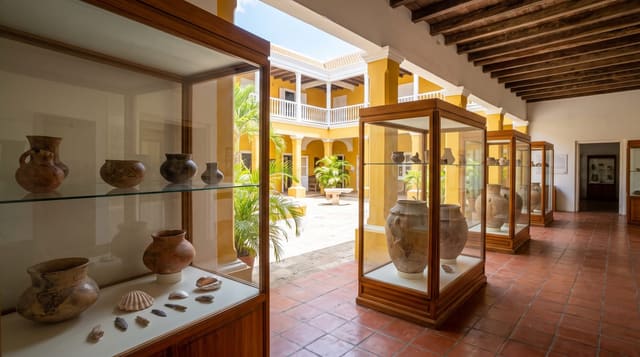
- The museum - the history of an industry that once covered much of the island.
- The coat of arms - the aloe on the national symbol.
When to go
Year-round; factory tours run on weekdays with a reduced weekend schedule. Cutting and processing happen on weekdays, so a weekday visit shows the working line. Tours take about an hour.
Things to know
It is a company tour ending in a shop, and it is frank about being one. The industry is much reduced from its peak and most of the island's aloe fields are long gone. Product prices in the shop are higher than in supermarkets. Health claims made for aloe should be treated with the usual caution.
Nearby
Oranjestad is ten minutes; Hooiberg is nearby.
What to pack for Aruba Aloe
Chosen from what this place is for. Tap a kit for the full checklist.
- Comfortable walking shoes - Sightseeing means kilometres of pavement and cobbles daily. Find on Amazon
- A slim anti-theft daypack - Zips that close properly; keep it in front in crowds and on transit. Find on Amazon
- A refillable water bottle - Many cities have public fountains; save money and plastic. Find on Amazon
- A light layer + compact umbrella - For museum air-con and a sudden shower. Find on Amazon
Some links on this page are Amazon affiliate links - if you buy through them we may earn a small commission at no extra cost to you.
All packing kitsPlan your trip
Where to start if Aruba Aloe is going on the list.
Booking links on this page are affiliate links - if you book through them we may earn a small commission at no extra cost to you. It never changes what we write about a place.
Opening times, ticket prices and seasonal closures change - check the official source before you go: official site.