Keshi Yena
A hollowed Edam or Gouda rind filled with spiced stewed chicken and baked, the ABC islands' dish and a lesson in making do.
Updated 3 September 2026
AI illustration
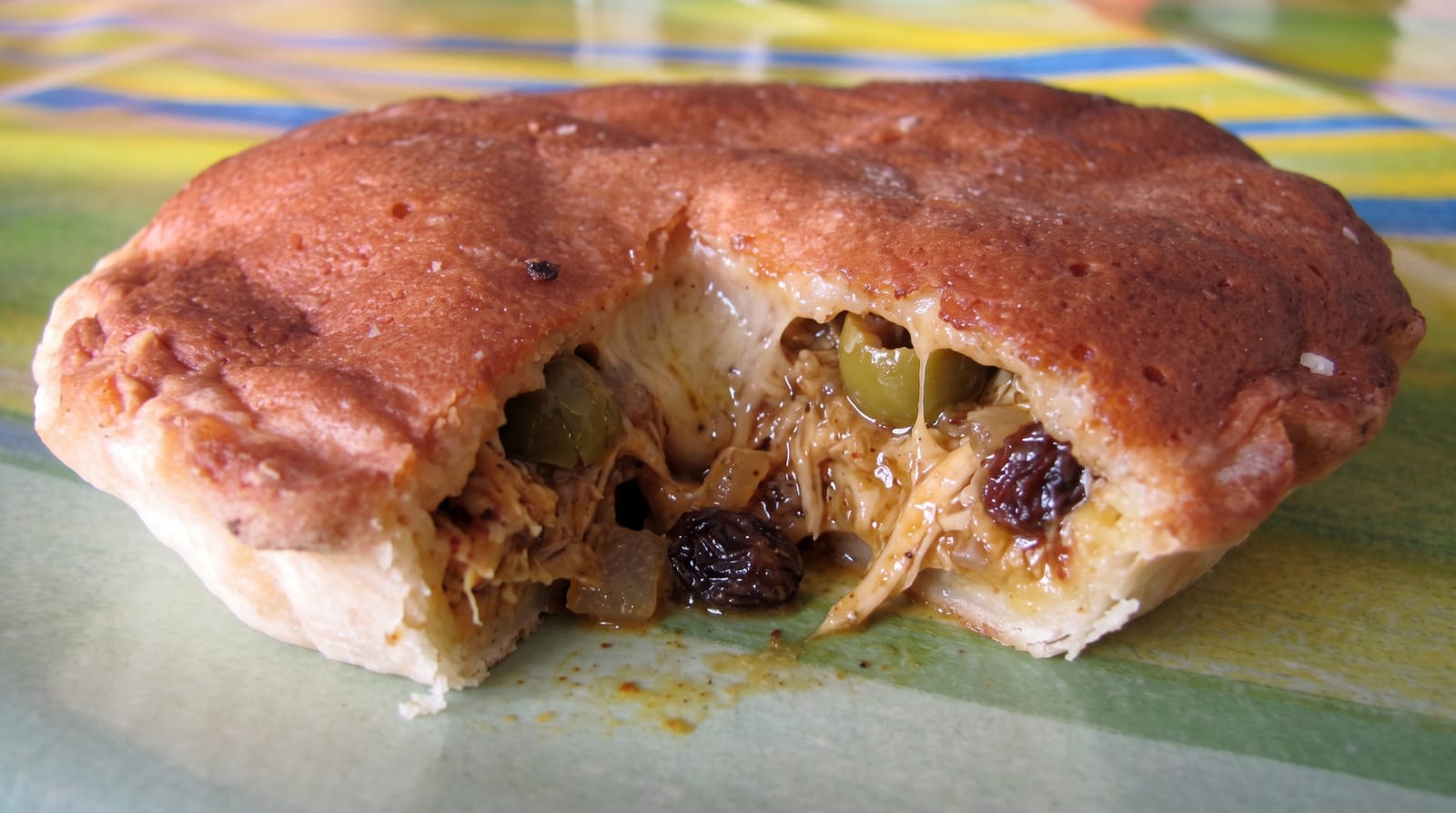
Keshi yena means stuffed cheese, and the story attached to it is that enslaved and household workers on the Dutch islands were given the emptied rinds of Edam and Gouda after the households had eaten the cheese, and filled them with whatever meat and seasoning they had. Whether or not that is precisely how it began, the dish that resulted is now the national plate of Aruba, Bonaire and Curaçao: a shell of cheese filled with chicken stewed with onion, tomato, olives, capers, raisins and prunes, then baked until the cheese melts around it. The sweet and salty combination is the point.
What you'll find
- The cheese shell - Edam or Gouda, hollowed and filled.
- The filling - chicken stewed with olives, capers, raisins and prunes.
- The sweet and salty balance - the character of the dish.
- The origin story - making a meal from what the household discarded.
When to go
Year-round. Local restaurants away from the hotel strip do it best; many resort kitchens make a lighter version in a ramekin rather than a full rind. It is a substantial plate and usually served at dinner.
Things to know
Restaurant versions vary from a proper cheese-wrapped bake to a scoop of stew with cheese on top in a dish, which is not the same thing; ask. It is very rich and a full portion defeats most people. The raisins and prunes divide opinion sharply. Vegetarian versions exist but are uncommon.
Nearby
Local restaurants across the island; the ones in Savaneta and San Nicolas are good.
What to pack for Keshi Yena
Chosen from what this place is for. Tap a kit for the full checklist.
- A reusable bag or container - For market produce and cutting down on packaging. Find on Amazon
- Wet wipes + hand sanitiser - Street food and washbasins do not always go together. Find on Amazon
Some links on this page are Amazon affiliate links - if you buy through them we may earn a small commission at no extra cost to you.
All packing kitsPlan your trip
Where to start if Keshi Yena is going on the list.
Booking links on this page are affiliate links - if you book through them we may earn a small commission at no extra cost to you. It never changes what we write about a place.
Opening times, ticket prices and seasonal closures change - check the official source before you go: official site.