Haitian Cuisine
The soulful Creole food of Haiti - the beloved griot of fried marinated pork, rice with djon-djon mushrooms, the fiery pikliz slaw, hearty stews and the symbolic soup joumou, a rich blend of African, French and Caribbean flavours bursting with spice and pride.
Updated 18 October 2026
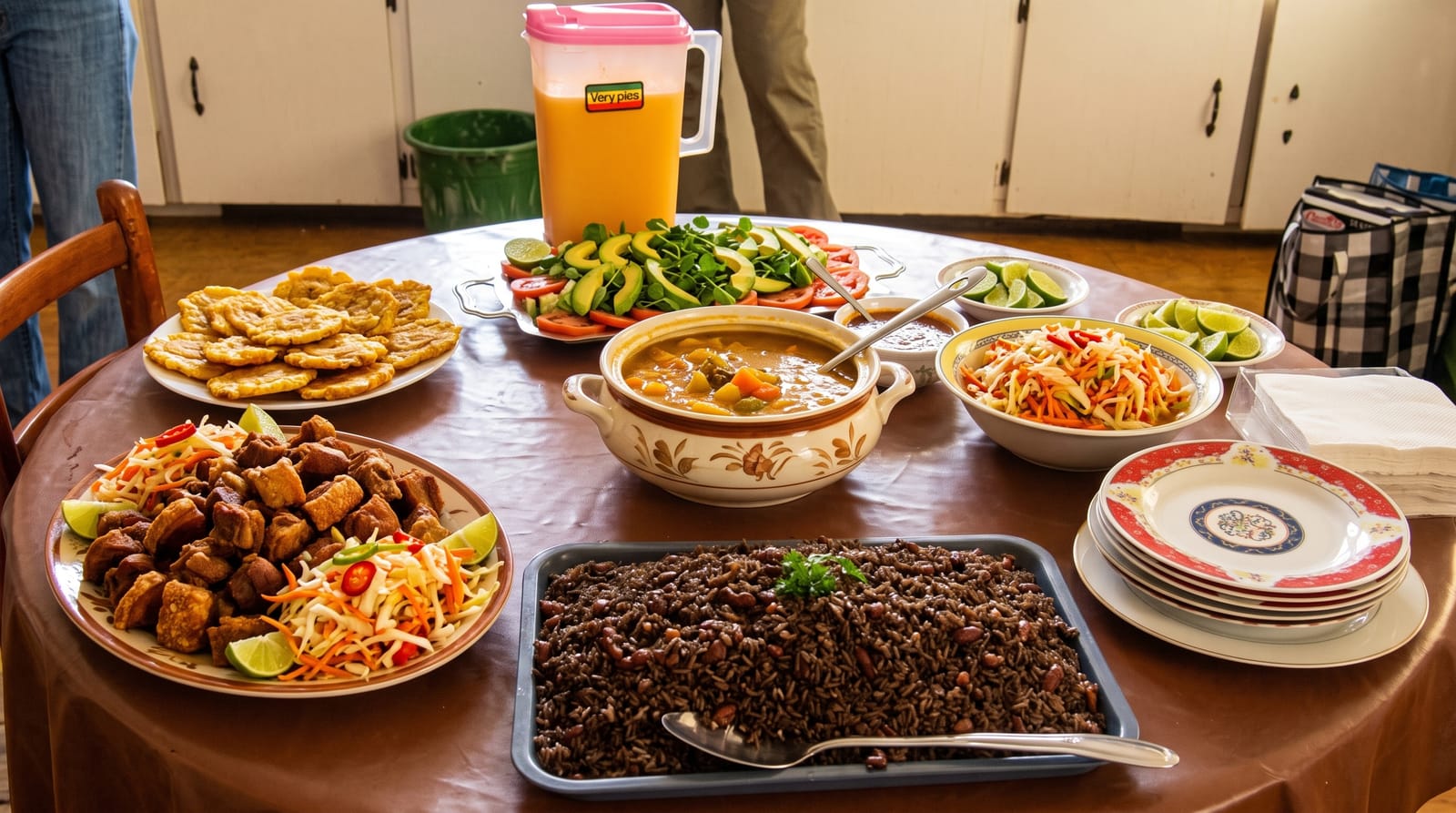
AI illustration
Haitian cuisine is soulful, flavourful Creole cooking, a rich blend of African, French, indigenous Taíno and Caribbean influences, bold with spice and deeply tied to national identity. Its most beloved dish is griot, chunks of pork marinated in citrus and spices, then braised and fried until crisp, served with the fiery pikliz, a pickled cabbage-and-chilli slaw. Rice is central, most prized as diri ak djon-djon, cooked with rare black mushrooms that turn it dark and earthy. Hearty stews, fried plantains, and fresh seafood feature widely, while soup joumou, a squash soup, carries profound symbolic meaning, eaten on Independence Day to celebrate the freedom once denied to the enslaved.
History
The island's first cooks were the Taíno, and the word barbecue itself comes from their barabicu, a frame of sticks on posts over a fire - the Spanish chronicler Gonzalo Fernández de Oviedo first printed it as barbacoa in 1526. Under Spanish and then French rule, enslaved Africans brought okra, ackee, taro, pigeon peas and spices into the kitchen, and the French colony of the 18th century grew sugar, coffee, cotton and cocoa. When the Haitian Revolution ended in 1804, thousands of refugees fled to New Orleans and took Haitian dishes with them, among them red beans and rice and mirliton, chayote; later Arab migration added a Levantine strand to the cooking (Wikipedia, Haitian cuisine).
Highlights
- Griot and pikliz - the fried marinated pork and fiery slaw.
- Diri ak djon-djon - the rice with rare black mushrooms.
- Soup joumou - the symbolic Independence Day squash soup.
- The stews and plantains - the hearty stews and fried plantains.
When to go
Year-round; local eateries, markets and homes serve the soulful Creole dishes, and soup joumou in particular is eaten on 1 January, Haiti's Independence Day, as a cherished symbol of freedom. The food is bold and often genuinely spicy, best enjoyed with the warmth of Haitian hospitality, where the situation allows.
Before you go
As a soulful, flavourful Creole cuisine, bursting with African, French and Caribbean flavours and pride, from the beloved griot and fiery pikliz to the symbolic soup joumou that celebrates hard-won freedom, Haitian food is a genuine and meaningful expression of the nation's identity.
Nearby
The eateries and markets of Port-au-Prince, Jacmel and beyond are the places.
What to pack for Haitian Cuisine
Chosen from what this place is for. Tap a kit for the full checklist.
- A reusable bag or container - For market produce and cutting down on packaging. Find on Amazon
- Wet wipes + hand sanitiser - Street food and washbasins do not always go together. Find on Amazon
Some links on this page are Amazon affiliate links - if you buy through them we may earn a small commission at no extra cost to you.
All packing kitsPlan your trip
Where to start if Haitian Cuisine is going on the list.
Booking links on this page are affiliate links - if you book through them we may earn a small commission at no extra cost to you. It never changes what we write about a place.
Opening times, ticket prices and seasonal closures change - check the official source before you go: official site.