Caquetío Rock Art
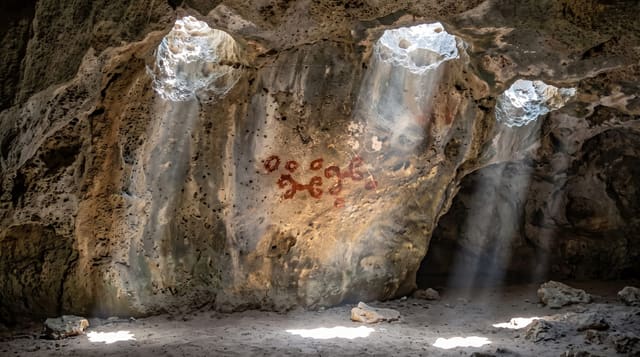
Red and brown drawings on cave ceilings and boulder faces made by the island's first people, at Fontein, Ayo and Arikok.
Updated 3 September 2026
The Caquetío lived on Aruba for centuries before European contact, Arawakan speakers closely connected to the Venezuelan mainland, and what they left in the landscape is drawings: geometric patterns, human and animal figures in red, brown and white on cave ceilings and sheltered boulder faces. The best are at Fontein in Arikok, where the ceiling of the cave carries a dense panel, and at Ayo among the boulder formations. They are hard to date and their meaning is not established, though the association with water sources and with gathering places is clear enough. Many have been damaged by graffiti and by touching.
What to look for
- Fontein cave - the densest panel, on the ceiling of the cave.
- Ayo - drawings on sheltered faces among the boulders.
- The geometric patterns - the most common motif across the sites.
- The archaeological museum - where the context is explained.
When to go
Year-round. The Arikok sites are inside the park and subject to its opening hours. Morning light is better in the caves. The archaeological museum in Oranjestad is the place to understand what you are looking at.
What to expect
The drawings are faint and many have been damaged by graffiti and by people touching them; they are now roped and should be left alone. There is minimal interpretation at the sites themselves. Photography with flash is harmful and discouraged. Without the museum first they read as smudges.
Nearby
Arikok park holds Fontein and Quadirikiri; Ayo is in the interior.
What to pack for Caquetío Rock Art
Chosen from what this place is for. Tap a kit for the full checklist.
- Head torch + spare batteries - Hands-free light is essential; caves are truly dark. Find on Amazon
- Comfortable walking shoes - Sightseeing means kilometres of pavement and cobbles daily. Find on Amazon
- Grippy closed shoes - Cave floors are wet, muddy and slick with formations. Find on Amazon
- A slim anti-theft daypack - Zips that close properly; keep it in front in crowds and on transit. Find on Amazon
Some links on this page are Amazon affiliate links - if you buy through them we may earn a small commission at no extra cost to you.
All packing kitsPlan your trip
Where to start if Caquetío Rock Art is going on the list.
Booking links on this page are affiliate links - if you book through them we may earn a small commission at no extra cost to you. It never changes what we write about a place.
Opening times, ticket prices and seasonal closures change - check the official source before you go: official site.