The Donkey Sanctuary
A refuge for the descendants of the donkeys the Spanish brought in the 1500s, which worked the island until cars arrived.
Updated 3 September 2026
AI illustration
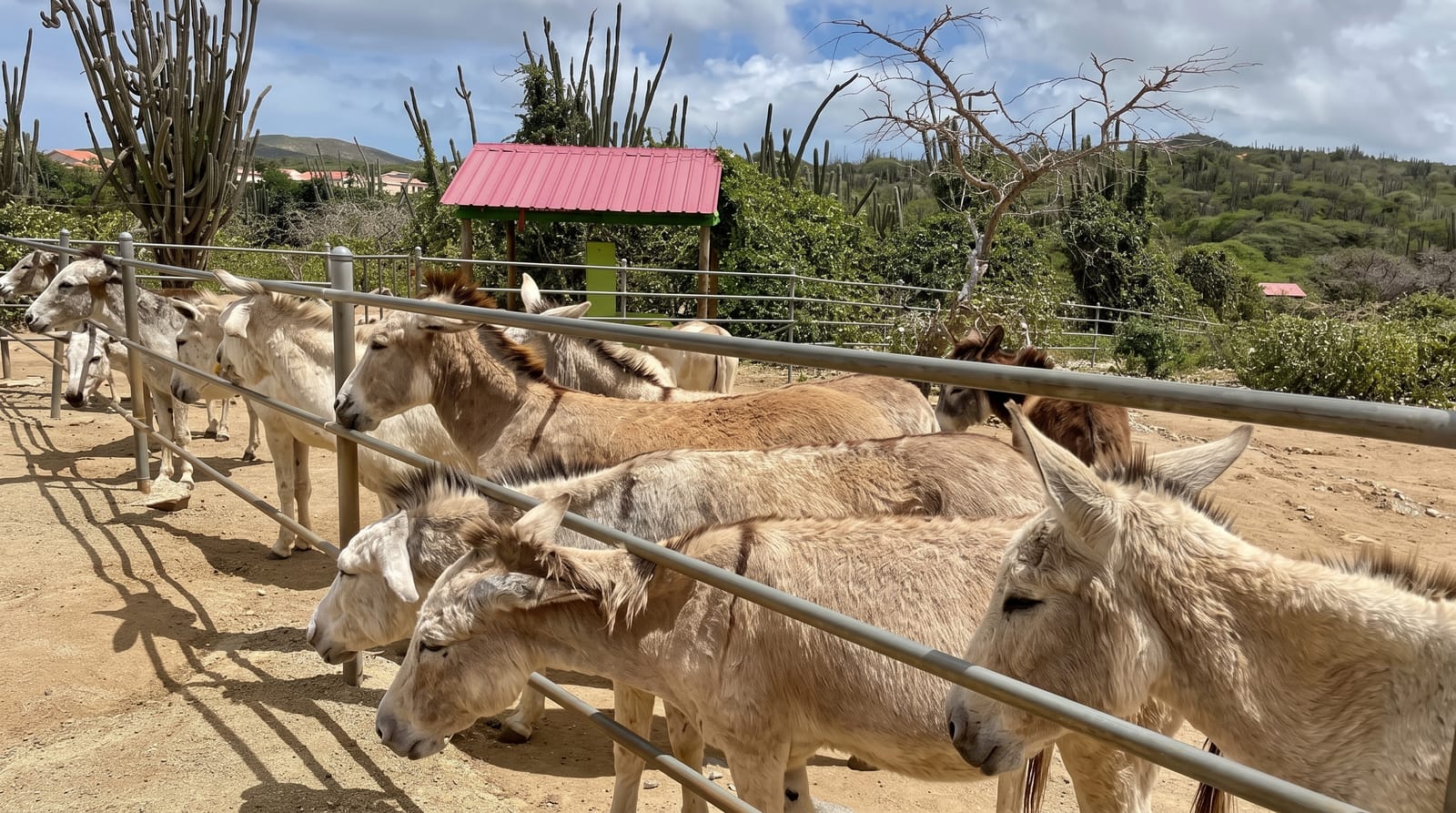
The Spanish brought donkeys to Aruba in the sixteenth century and they were the island's transport and water carriers for four hundred years, until cars arrived in the twentieth and the animals were turned loose. The feral population that resulted suffered badly on the roads and from disease, and a sanctuary was set up in the 1990s to take them in. It now holds well over a hundred, in paddocks and open ground, and runs entirely on donations and volunteers. Visitors can walk among them and feed them with food bought on site. It is unglamorous, honest and free, which is a rare combination.
The main sights
- The herd - well over a hundred donkeys in paddocks and open ground.
- The history - four centuries as the island's transport and water carriers.
- The volunteers - the operation runs entirely on them and on donations.
- Feeding - carrots and pellets bought on site.
When to go
Year-round; open daily through the middle of the day with earlier closing than most attractions. Mornings are cooler for the animals and the visitors. It runs on donations, so bringing some matters.
Good to know
It is a rescue operation rather than an attraction and the facilities reflect that: basic shade, dusty ground and no polish. Entry is free but the sanctuary depends entirely on donations. Feeding should be with the food sold on site rather than anything brought. Hours are shorter than visitors expect.
Nearby
Santa Cruz is nearby; Arikok park is east.
What to pack for The Donkey Sanctuary
Chosen from what this place is for. Tap a kit for the full checklist.
- Comfortable walking shoes - Sightseeing means kilometres of pavement and cobbles daily. Find on Amazon
- A slim anti-theft daypack - Zips that close properly; keep it in front in crowds and on transit. Find on Amazon
- A refillable water bottle - Many cities have public fountains; save money and plastic. Find on Amazon
- A light layer + compact umbrella - For museum air-con and a sudden shower. Find on Amazon
Some links on this page are Amazon affiliate links - if you buy through them we may earn a small commission at no extra cost to you.
All packing kitsPlan your trip
Where to start if The Donkey Sanctuary is going on the list.
Booking links on this page are affiliate links - if you book through them we may earn a small commission at no extra cost to you. It never changes what we write about a place.
Opening times, ticket prices and seasonal closures change - check the official source before you go: official site.