Arikok National Park
A fifth of Aruba protected - cactus desert, gold-mine ruins, caves with Arawak drawings and dunes on a coast the sea attacks.
Updated 18 October 2026
AI illustration
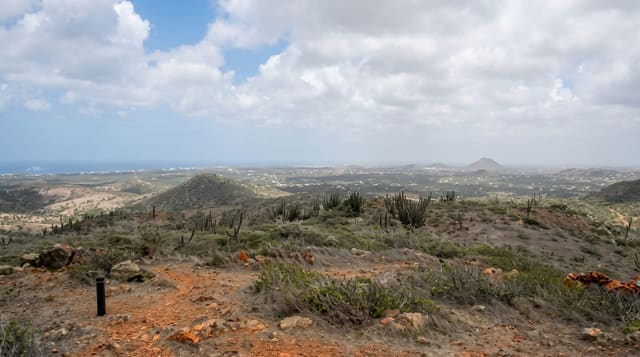
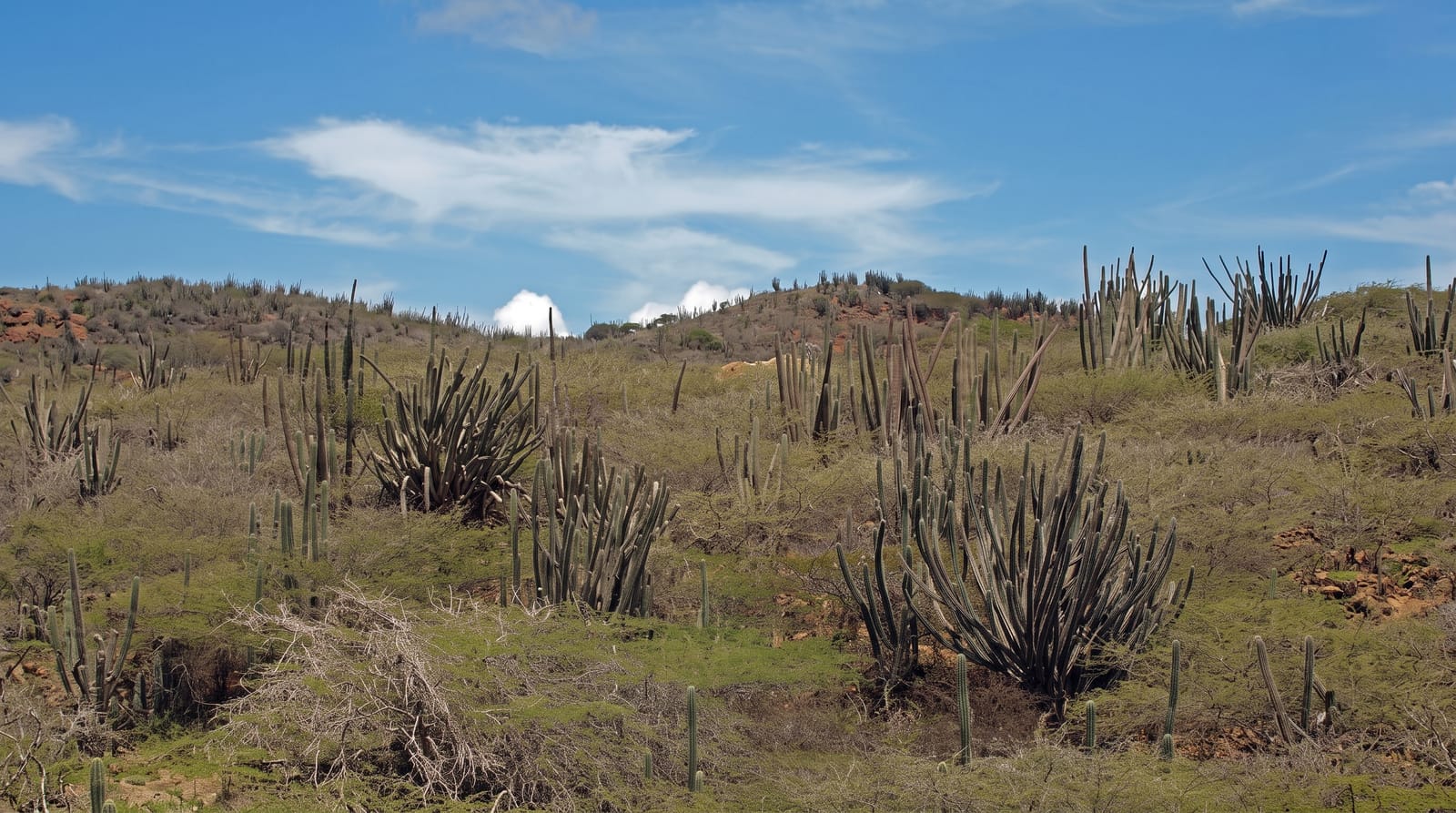
Arikok covers about twenty percent of Aruba and protects the island's dry, dramatic interior and windward coast: a landscape of columnar cactus, divi-divi trees bent by the trade wind, volcanic hills and limestone terraces dropping to a shore of surf and dunes. Caves in the limestone hold Arawak rock drawings in red and black, some of them centuries old. Ruins of nineteenth-century gold mining sit at Bushiribana, and trails climb the twin hills of Jamanota and Arikok for island-wide views. It is the antidote to the resort strip and shows what Aruba actually looks like.
History
Arawak drawings in Fontein Cave show early human activity, joined later by drawings of European settlers and modern graffiti, and the park keeps adobe farmhouses, cas di torto, among them Cunucu Arikok, the restored farmstead of Arie Kok that gave the park its name, as well as gold mines at Miralamar abandoned in 1916. A national park was first discussed in the late 1960s and planned for the Arikok-Jamanota area in 1980, a nature protection regulation of 1995 laid the groundwork, and the park was established by ministerial order in 2000 (Wikipedia, Arikok National Park).
Highlights
- Fontein and Quadirikiri caves - Arawak drawings and light shafts through the roof.
- Bushiribana gold mill ruins - the coastal stone shell of the old works.
- Boca Prins dunes - pale sand hills above a wild beach.
- Jamanota and Arikok hills - the climbs to the island's high points.
When to go
Year round, with the caveat that the park is hot and shadeless - early morning is the sensible start in any month. The trade wind is constant and takes the edge off. Rain is rare and brief.
Things to know
Most of the interior needs a 4x4; ordinary cars reach only the visitor centre and a couple of points. There is no water available inside beyond the entrance, and the heat is serious - two litres per person minimum. Swimming on the windward coast is dangerous almost everywhere except the natural pool. The island's endemic rattlesnake lives here; it is shy and bites are extremely rare, but watch where you step.
Nearby
Conchi natural pool, San Nicolas and the island's south coast.
Key facts
Source: Wikidata, item Q2028082, read on 18 October 2026.
What to pack for Arikok National Park
Chosen from what this place is for. Tap a kit for the full checklist.
- Broken-in walking shoes or boots - Grip and ankle support matter more than looks; never hike in brand-new boots. Find on Amazon
- Reef-safe sunscreen - High SPF that will not bleach the coral you are swimming over. Find on Amazon
- Quick-dry clothing - Board shorts or synthetics that shrug off spray and dry fast. Find on Amazon
- Head torch + spare batteries - Hands-free light is essential; caves are truly dark. Find on Amazon
Some links on this page are Amazon affiliate links - if you buy through them we may earn a small commission at no extra cost to you.
All packing kitsPlan your trip
Where to start if Arikok National Park is going on the list.
Booking links on this page are affiliate links - if you book through them we may earn a small commission at no extra cost to you. It never changes what we write about a place.
Opening times, ticket prices and seasonal closures change - check the official source before you go: official site.