Villa Carlos Paz
A lakeside resort city half an hour from Córdoba, with a giant cuckoo clock, summer theatre and a reservoir full of boats.
Updated 29 October 2026
AI illustration
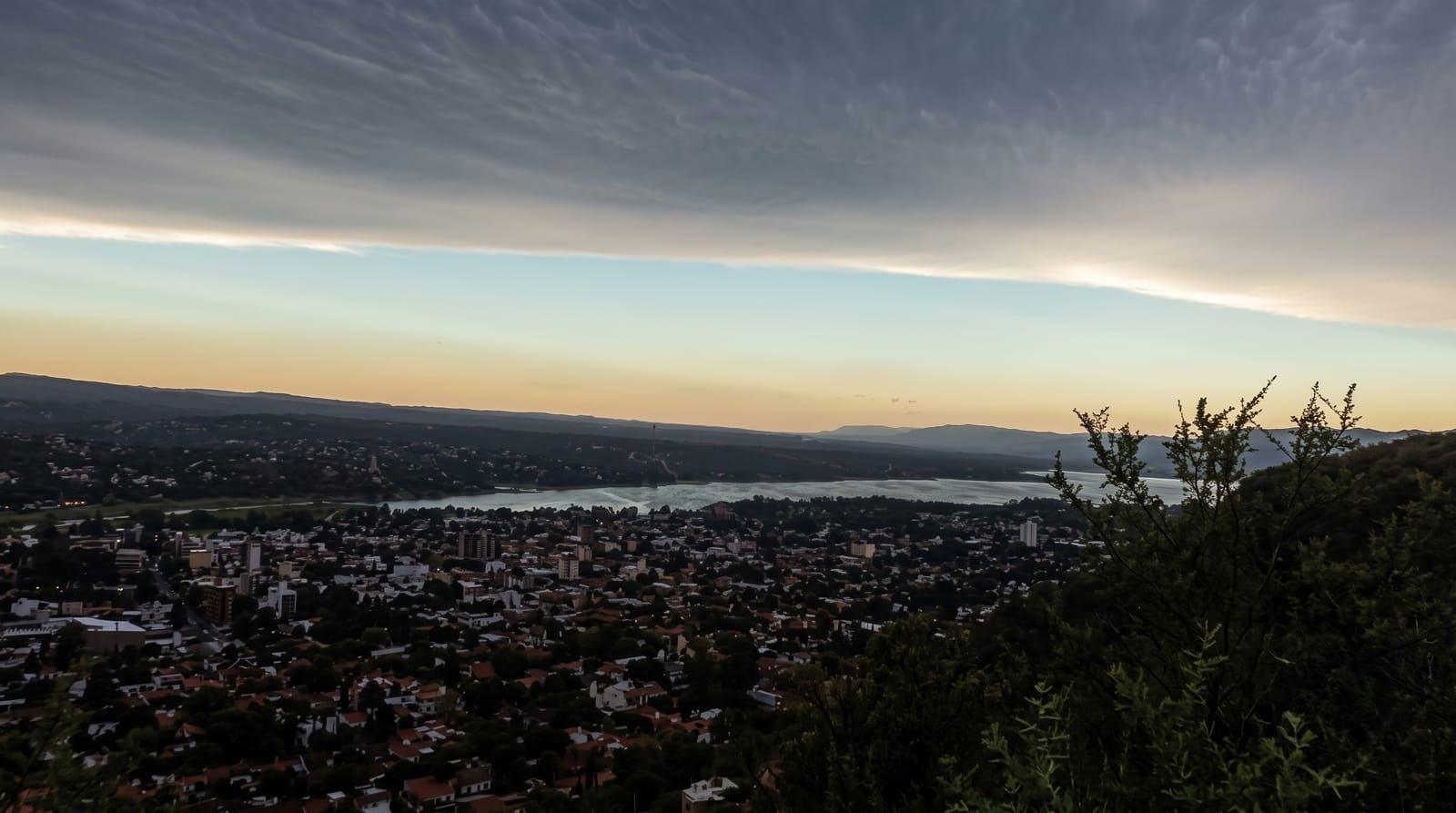
Villa Carlos Paz sits on the San Roque reservoir at the entrance to the Punilla valley, and it is the busiest holiday town in the Córdoba sierras, a place of hotels, arcades, waterfront restaurants and a nightlife that runs on Argentine summer time. Its landmark is the Reloj Cucú, an oversized cuckoo clock built in the 1950s that has become the town's emblem and meeting point. The lake carries pleasure boats, catamarans and jet skis, a chairlift climbs to a viewpoint on Cerro de la Cruz, and in January and February the town becomes a second home for Buenos Aires theatre, with big-name comedies and revues running nightly. Out of season it is far quieter, and the surrounding hills offer walking and river pools.
Background
Villa Carlos Paz is a city in the centre-north of Córdoba Province, Argentina, in the south of the Punilla Valley on the western slope of the Sierras Chicas, at an elevation of 643 metres. The rancher Carlos Nicandro Paz founded it in 1913, and in 2010 it had 75,315 inhabitants. Punilla is a major tourist destination for the whole country, and Villa Carlos Paz is its most important city, helped by lying 36 kilometres from the populous provincial capital, Córdoba. A Hanging Bridges Trail was built in 1918 to connect the town with the Traslasierra Valley, and in the 1950s the Camino de las Altas Cumbres replaced it. The town has often served as a base for Rally Argentina and hosted stages of the 2015 and 2016 Dakar Rally.
Source: Wikipedia, "Villa Carlos Paz"
What's there
- The Reloj Cucú - the giant cuckoo clock that serves as the town's emblem.
- San Roque reservoir - boat trips, catamarans and watersports on the lake.
- The chairlift - the ride up to viewpoints over lake and valley.
- The summer theatre - January and February shows drawing national performers.
When to go
December to March for the full resort season, with January the peak in crowds, prices and entertainment. Spring and autumn are calm and pleasant. Winter is quiet, with the lake cold and many attractions on reduced hours.
What to expect
This is a mass-tourism town, crowded and commercial in season, and travellers looking for quiet sierra scenery should stay elsewhere. The reservoir has suffered algal blooms in hot summers, which affects swimming. Traffic and noise in January are considerable.
Nearby
Cosquín and La Falda lie north up the Punilla valley; the Altas Cumbres road climbs west.
Key facts
Source: Wikidata, item Q48285, read on 18 October 2026.
What to pack for Villa Carlos Paz
Chosen from what this place is for. Tap a kit for the full checklist.
- Broken-in walking shoes or boots - Grip and ankle support matter more than looks; never hike in brand-new boots. Find on Amazon
- Reef-safe sunscreen - High SPF that will not bleach the coral you are swimming over. Find on Amazon
- Comfortable walking shoes - Sightseeing means kilometres of pavement and cobbles daily. Find on Amazon
- Layers + a waterproof shell - Mountain weather turns fast; a packable rain jacket saves the day. Find on Amazon
Some links on this page are Amazon affiliate links - if you buy through them we may earn a small commission at no extra cost to you.
All packing kitsPlan your trip
Where to start if Villa Carlos Paz is going on the list.
Booking links on this page are affiliate links - if you book through them we may earn a small commission at no extra cost to you. It never changes what we write about a place.
Opening times, ticket prices and seasonal closures change - check the official source before you go: official site.