Alta Gracia
A sierra town grown around a UNESCO-listed Jesuit estancia, with a colonial mill lake, an old clock tower and two unusual house museums.
Updated 18 October 2026
AI illustration
UNESCO World Heritage
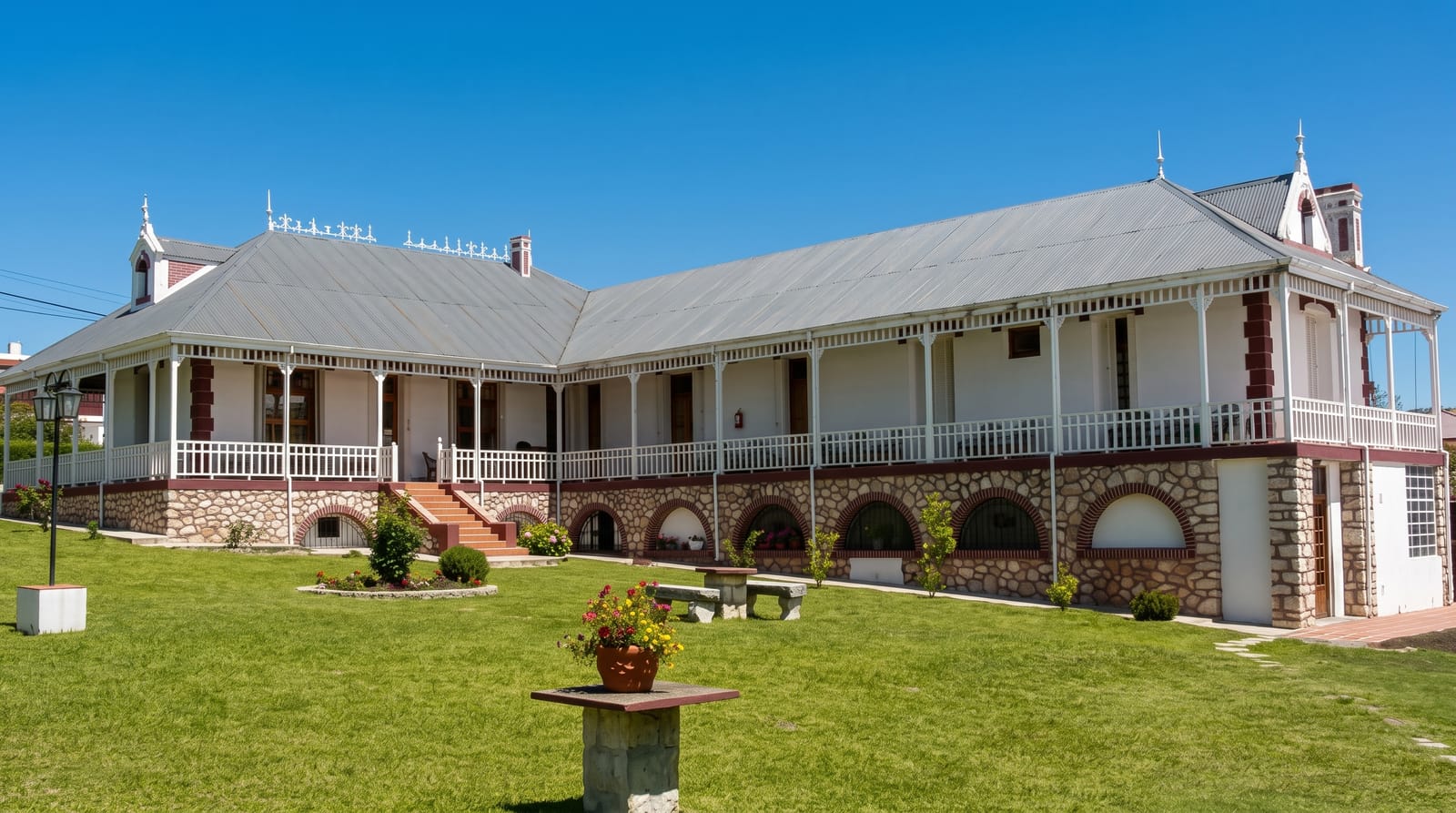
Alta Gracia grew around a Jesuit estancia founded in the seventeenth century, whose church, residence, workshops and great mill reservoir still stand at the centre of town and form part of the UNESCO listing that covers the Jesuit block of Córdoba and its estancias. The estancia's residence is now the Museo del Virrey Liniers, its rooms furnished as they would have been when the property passed to the viceroy after the Jesuits were expelled. Two other houses draw visitors for different reasons: the composer Manuel de Falla spent his last years here in a modest villa now open as a museum, and a house on Avellaneda street where Ernesto Guevara lived as an asthmatic child is preserved as a museum of his early life. The Tajamar reservoir and clock tower complete the colonial core.
History
The land was first owned in 1588 by Don Juan Nieto, who began settling the area, and in the 17th century it was a large estancia run by the Jesuits; Santiago de Liniers lived here for about five months in 1810. In 1868 José Manuel Solares, in his will, turned the estancia into a village to be called La Merced. The composer Manuel de Falla lived in Alta Gracia from 1942 until his death, and Ernesto Guevara spent twelve years here, from 1932 to 1944. In 2000 the Jesuit Block and Estancias of Córdoba were named a UNESCO World Heritage Site (Wikipedia, Alta Gracia).
What you'll find
- The Jesuit estancia - church, residence and workshops from the seventeenth century.
- El Tajamar - the colonial mill reservoir and clock tower in the centre.
- Museo Manuel de Falla - the Spanish composer's last home, kept as he left it.
- The Guevara childhood house - a museum in the family's former home.
When to go
Year-round; spring and autumn are mildest, summer brings heat and holiday crowds from Córdoba, and winter is cool and clear. Museums close on some Mondays. The town is an easy half-day trip from the city.
What to expect
The sights are small museums close together, so the visit is compact and can feel thin if you are not interested in the colonial or biographical stories. Weekends bring heavy traffic from Córdoba. Signage between the sites is patchy.
Nearby
Córdoba city lies northeast; Villa General Belgrano and the Calamuchita valley are south.
Key facts
Source: Wikidata, item Q48293, read on 18 October 2026.
What to pack for Alta Gracia
Chosen from what this place is for. Tap a kit for the full checklist.
- Comfortable walking shoes - Sightseeing means kilometres of pavement and cobbles daily. Find on Amazon
- A slim anti-theft daypack - Zips that close properly; keep it in front in crowds and on transit. Find on Amazon
- A refillable water bottle - Many cities have public fountains; save money and plastic. Find on Amazon
- A light layer + compact umbrella - For museum air-con and a sudden shower. Find on Amazon
Some links on this page are Amazon affiliate links - if you buy through them we may earn a small commission at no extra cost to you.
All packing kitsPlan your trip
Where to start if Alta Gracia is going on the list.
Booking links on this page are affiliate links - if you book through them we may earn a small commission at no extra cost to you. It never changes what we write about a place.
Opening times, ticket prices and seasonal closures change - check the official source before you go: official site.